
'Empowering Women Requires Transcending the Quota and Ensuring Their Participation in Decision-Making Positions'
Iraqi activists and researchers said women's empowerment must extend beyond parliamentary quotas to executive decision-making positions through legislation guaranteeing fair opportunities and turning equality slogans into actual institutional practice.
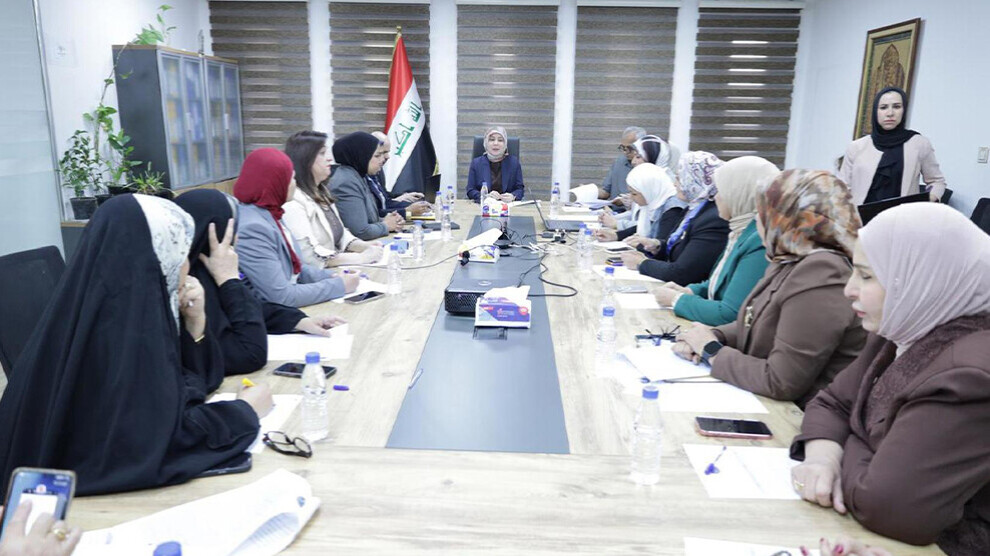
RAJAA HAMID RASHID
BAGHDAD_ The appointment of six deputies to the Prime Minister and other ministerial portfolio heads in Iraq, all of them men, sparked a debate about women's absence from senior leadership positions, and the extent of political forces' commitment to the principles of equality, equal opportunities, and enhancing women's political participation. This formation brings the spotlight back onto the reality of women's representation in decision-making positions, and the role of parties and political blocs in supporting their presence, especially in executive positions where women's representation remains limited.
The Dominance of Partisan and Masculine Quotas
Dr. Nada Al-Jubouri, a former member of the House of Representatives, political advisor, and president of the Iraqi Women and Future Organization, spoke about the appointment of four deputies to the Prime Minister and two deputies to the President of the Republic, bringing the total of these positions to six, without nominating any woman to fill one of them.
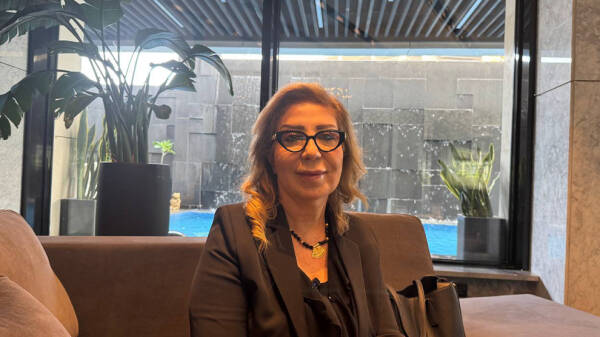
She explained that the political blocs inside the House of Representatives could have nominated at least one woman to assume one of these positions, confirming that her demand is not to grant women the position inevitably, but to provide her with the opportunity to run, with the matter later decided through voting, whether acceptance or rejection.
She attributed this absence to the nature of the political thought prevailing among the parties, which is based on partisan quota-sharing. She noted that this mechanism has in some cases led to assigning positions and ministries to figures who do not possess the required competence. She pointed to the existence of another form of quota-sharing, represented in masculine quota-sharing, which limits women's opportunities to reach decision-making positions, despite Iraq's ratification of UN Security Council Resolution 1325, which emphasizes the importance of women's participation in political decision-making at various levels.
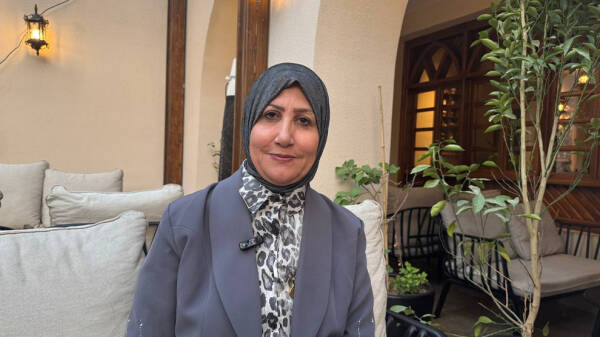
She explained that women's participation should not be limited to professional fields, such as medicine and engineering, or to membership in the House of Representatives, but must extend to various government institutions, including the executive authority.
She also noted that Article 39 of the Constitution, according to her reading, should not have its application confined to elected councils, but must include the executive authority and positions emanating from the House of Representatives. She criticized settling for a representation rate of 25%, known as the women's quota, even though the constitutional text indicates that this rate should not be less than a quarter, considering that dealing with this rate as a final ceiling empties the principle of increasing participation of its content.
Nada Al-Jubouri confirmed that merely condemning this reality is not enough to address it, expressing her hope that a parliamentary bloc would adopt a serious position and work to refer the issue to a competent judicial body. However, she explained that some blocs may hesitate to take such a step because their positions are linked to their parties' orientations, which weakens the possibility of forming effective political pressure to change this reality.
She stressed the continuation of civil society organizations in supporting Iraqi women and defending their political rights, based on the belief in equality and equal opportunities on the basis of 50% parity, instead of settling for the quarter rate. "The results of the population census in Iraq confirm that women represent half of society, which requires that this reality be reflected in opportunities for participation in various fields. Civil organizations also continue their efforts to achieve this through advocacy campaigns, awareness, education, and women's empowerment."
She addressed the challenges that accompanied the 2021 and 2025 elections, noting the recording of some corruption cases related to vote-buying, confirming that these practices are not limited to female voters, but also include male voters.
She warned that the continuation of these phenomena would weaken government institutions and the bodies participating in decision-making. "Taking serious measures to combat and limit corruption will reflect positively on female voters, female candidates, and female winners. Also, the absence of equal opportunities, especially in assuming executive positions, may push women to reconsider continuing in political work."
The Importance of Enhancing Women's Executive Participation
For her part, Dr. Fatima Saloumi addressed the reality of Iraqi women's participation in political life, noting that returning to 2005, specifically to the Iraqi Constitution, shows that women's participation in elections was organized through the quota, which set their representation rate at 25%.
She believes that this system, despite allowing women to participate in parliamentary and provincial council elections, contributed to confining their presence within a specific framework and did not necessarily achieve broad and effective political participation. "The presence of women in political institutions dates back to the stage of the National Assembly, which was formed of 275 members, and women were part of its formation."

She added that women's participation in the executive authority remains below the required level, in light of a view that diminishes their political role and sometimes deals with them as a mere echo of others' voices, not an active figure possessing the ability to influence and make decisions. She attributed this to the linking of women's access to political positions with the partisan quota system, which determines the nature of distributing positions among political forces and affects women's opportunities to assume executive responsibilities.
She gave an example of this with the abolition of the ministry that was concerned with women's affairs, considering that this step reflects one of the aspects of regression in institutional attention to women's issues. She noted that women assumed some executive positions during 2021, including the Ministry of Health and then the Ministry of Migration, but their presence remained limited in other positions, including some advisory positions concerned with women's affairs, which may be limited to a single figure.
Fatima Saloumi called for moving from theoretical talk about women's empowerment to enhancing their real presence in decision-making positions, confirming the importance of entrenching the concept of political participation as a right for women, not an attempt to compete with men or dominate them, as some may interpret it.
She stressed the necessity of establishing new laws and legislation that guarantee expanding Iraqi women's opportunities in the executive authority, and not limiting their participation to the legislative aspect or settling for their presence within specific ratios in elected councils.
The Necessity of Moving from Numerical Representation to Actual Participation
For her part, political researcher Shirin Al-Jaf addressed the issue of women's absence from executive positions from two integrated perspectives: the first is constitutional and legal, and the other is political, related to the extent of the actual realization of women's participation in decision-making positions.