
Toward an Inclusive Constitution… Empowering Women and Protecting Their Role in Syrian Decision-Making
Enshrining women’s rights in the upcoming Syrian constitution is vital to preserving their achievements, strengthening their political, social, and economic participation, and preventing regression into restrictive traditional norms.
Asmaa Mohammed
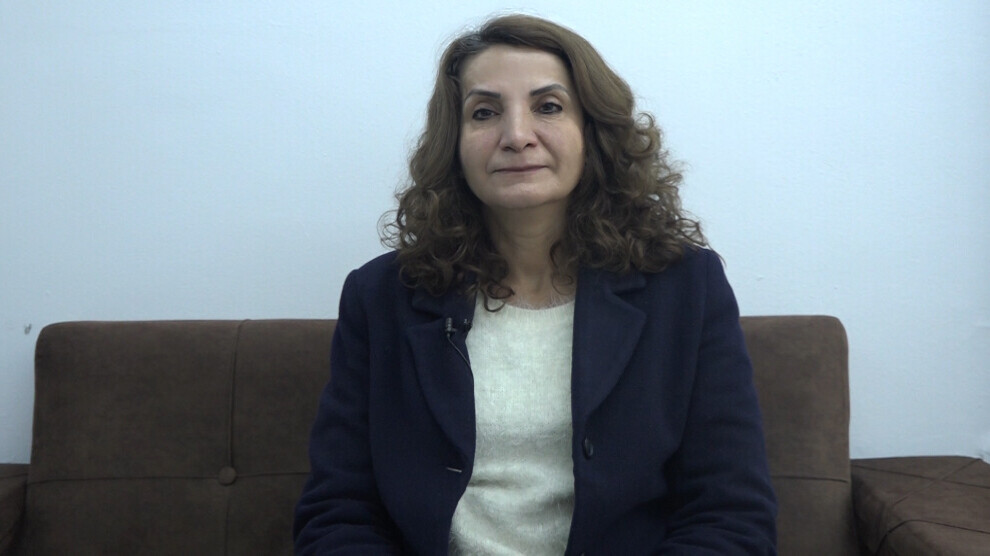
Qamishlo — Abeer Hassaf, a member of the Women’s Council in Jazira Canton, affirmed that clearly and effectively incorporating women’s rights into the upcoming Syrian constitution is not merely a symbolic demand, but an essential condition for safeguarding past gains and ensuring women’s continued active participation in shaping the country’s future.
Amid the transformations Syria has witnessed over the years, questions arise regarding the position of Syrian women in the future constitution as a key issue that will determine the future of society as a whole. Women, who have long been an active and vital part of the social, economic, and political fabric, have today become a force that cannot be ignored. Their presence continues to grow in civil, political, and economic spheres alike.
However, traditional and centralized political forces that cling to old legacies rooted in conservative religious and social structures express concerns about women’s empowerment. They seek to limit women’s presence in decision-making positions or redefine their role within traditional constraints that would confine them once again to stereotypical roles.
Women’s Reality and Cultural Heritage
In this context, Abeer Hassaf emphasized that explicitly and effectively including women’s rights in the upcoming Syrian constitution is not simply a symbolic demand, but a fundamental requirement to protect the achievements of recent years and ensure women’s continued active role in shaping Syria’s political and social future. She stressed that this issue goes beyond individual demands, as it concerns the ability of Syrian society as a whole to achieve justice, equality, and social stability.
She noted that Syria’s cultural heritage, although recognizing women’s role, has historically confined it within specific frameworks often legitimized by traditional religious authority. She added that current political forces, including the Syrian Interim Government, adopt a vision with a religious background that relies on Islam as a source for constitutional declaration, which threatens to distance women from decision-making positions or restrict them within traditional boundaries—overlooking fourteen years of gains achieved by Syrian women across various fields.
She explained that this period witnessed the rise of Syrian women as active actors whose voices grew stronger within society. Yet today, there are attempts to diminish this role and return women to previous traditional limits, posing a direct threat to their level of participation and societal effectiveness. Recognizing these risks, she said, should lead to collective and joint action to prevent regression and affirm that women’s rights are not privileges but an integral part of Syria’s future social and political structure.
Hassaf stressed that including women’s rights in the next Syrian constitution is an urgent necessity—not only to preserve achievements but also to define a clear and effective role for women in the country’s political future. She pointed out that although women’s rights existed in previous constitutions, they were not effectively implemented due to women’s absence from high-level decision-making positions and their marginalization by traditional political authority.
She noted that women’s representation in the Syrian parliament, even at its best periods, did not exceed 12 percent—an extremely low percentage compared to the actual level of women’s activism and participation in society in recent years. This disparity, she said, highlights the urgent need to enhance women’s representation at all levels of decision-making to ensure rights are implemented in practice.
The Rojava Experience as a Living Model
The experience in Rojava stands as a living example of women’s participation in decision-making. Hassaf emphasized that women have played a pioneering and effective role at all levels—from managing local councils and shaping public policies to overseeing services and developing local infrastructure.
“Today, women are fully capable of being half of society in every sense,” she said, “engaging in all fields of civil, political, and economic activity, making them essential partners in shaping Syria’s future political and social map.”
She clarified that the women’s issue today is not tied to any specific ethnic or religious component, but concerns all women in Syria—Kurdish, Syriac, and Arab alike. “Women’s rights are shared and must be defended collectively,” she stated, noting that any attempt to push women back into traditional boundaries threatens the gains of society as a whole. The coming phase, she stressed, requires civil women’s unity and collective solidarity to safeguard and protect these rights from regression.
Hassaf further affirmed that women are peacebuilders, and that explicitly and effectively including their rights in legislative and political decision-making positions is not a threat, but rather the true guarantee for building sustainable peace—not only in Syria but at regional and international levels as well.
She emphasized that women’s participation in leadership and politics is the most important tool to protect their achievements, positively influence public policies, and achieve social balance rooted in justice and equality. The next phase, she concluded, requires concerted civil and women-led efforts, the establishment of supportive networks to defend women’s rights, and the institutionalization of these rights within the upcoming Syrian constitution—ensuring that constitutional text becomes both legal and practical reality.
Hassaf concluded by stressing that preserving women’s gains and enshrining their rights in the new Syrian constitution is a national priority that cannot be compromised. Women’s presence in leadership and decision-making positions, she affirmed, is the true guarantee for activating these rights on the ground. The coming phase calls on all women, regardless of background or position, to work together to defend their rights and form a strong civil women’s front to ensure the continuation of achievements and maintain women’s active role in society and politics—so they remain essential partners in shaping Syria’s future and building a just and equal society.