
Women at the Heart of Conflict... Escalating Violations and Voices Demanding Protection and Justice
Women's suffering in conflict zones extends beyond battles, harming rights and security, requiring their inclusion in solutions that protect and deliver justice.
IKHLAS AL-HAMROUNI
Tunisia — At a time when wars have become more complex and geopolitical events have intertwined with systematic violations against women, talking about women's rights in conflict zones is no longer an intellectual luxury but an urgent humanitarian necessity. From Syria to Afghanistan, from Yemen to Sudan and Iran, women pay the price of a war they did not choose and bear the consequences of an unstable political scene whose decisions they did not make. In this context, Tunisian women human rights activists raise their voices—not merely for sympathy, but for documentation, accountability, and proposing solutions.
Women "Alone" Pay the Price
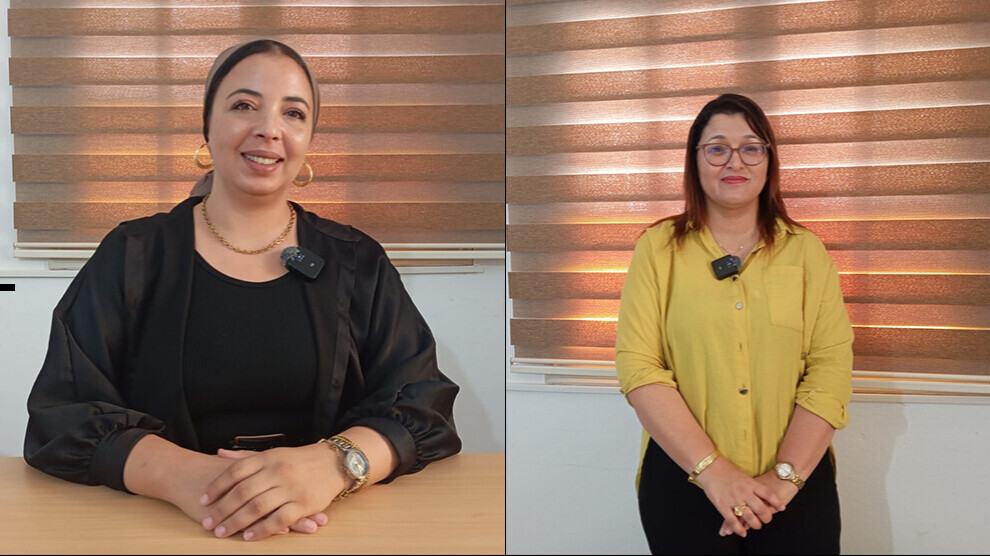
Feminist human rights activist Nesrine Ayouni, who is active in a feminist human rights association in Tunisia—specifically in the Sidi Bouzid governorate—and who concerns herself with all matters related to women in Tunisia and abroad, says: "Talking about the situation of women there should not be limited only to the war period but also to what comes after the war, and what the conditions and political scene in Syria have raised regarding their lives and rights. We find that women in Syria have been subjected to many violations that are essentially related to the political scene and the wars waged in Syria."
She details the forms of these violations, saying: "We begin with the violations inflicted on their freedom, their deportation from Syrian territory as a result of their opposition to what is happening in their country. Many women were also arrested, in addition to kidnapping operations and enforced disappearance of many of them, which represents a red line whether at the level of universal rights or at the level of the international covenants that the authority at the time should have respected."
Nesrine Ayouni does not overlook the intersecting dimension of the violations, saying: "We must also not forget that a segment of the women in Syria are Kurdish, and that the violence inflicted on them is multiple, as there was an intersection between their gender identity and their identity and political and even religious affiliations, which makes the amount of violence inflicted on them deeper, greater, and more severe."
She moves to the Afghan scene, which she describes as one of the most dangerous examples of violations of women's rights: "Regarding the situation of Afghan women, or women in Afghanistan, I consider it one of the most dangerous examples we can talk about, due to the enormous amount of violations of women's rights and preventing them from accessing their basic rights such as education and access to the labor market. After the Taliban's return to Afghanistan, further restrictions were imposed and these restrictions tightened—for example, on their right to education, where university education was banned and some restrictions were placed on certain specializations in medical studies."
She describes the situation of women in Yemen, saying: "The situation of Yemeni women today is very complex. Women pay the price of war on more than one level—on the social level and on the economic level." She notes that Yemeni women alone pay the price of the conflict, and this appears in indicators that are worsening, such as the poverty level, the deterioration of the situation, the deterioration of food security, and access to health services, among others.
She affirms that Yemeni women continue to bear very great burdens as the person entrusted with caring for the family or the narrow community in which they live, given the difficult economic conditions and the unstable political scene, which directly affects the basic and essential services for their daily lives.
She added: "We should not forget that women in Yemen represent more than half of the population there, so the deterioration of their situation will directly reflect on the general situation in Yemen. Therefore, defending the rights of Yemeni women or supporting them is an inevitable necessity to save an entire society."
Why Are Women More Vulnerable in Conflicts?
On this fundamental question, Nesrine Ayouni says: "Among the reasons that make women more vulnerable and more exposed to violations in conflict zones or war zones: institutions are always fragile—the state institutions there are fragile, and if they exist, their level may be very weak—in addition to the low standard of living, which affects and places women in a position of vulnerability. In addition to cases of sexual violence inflicted on women, in incidents of mass rape, which is either to humiliate the other party, subjugate it, or exert pressure on it."
She believes that "finding solutions to these problems has become extremely important to save the lives of women living in conflict zones," affirming that addressing these situations should not be limited to establishing refuge and shelter centers or providing humanitarian aid, as the issue is "much deeper and more complex than that."
She stresses the necessity of involving women present in conflict zones in the process of formulating solutions, as they are the stakeholders and most knowledgeable about their reality and the circumstances surrounding them, in addition to their awareness of the social and cultural contexts specific to each region. Consequently, their active participation is essential to reaching practical and realistic solutions that respond to their needs and take into account the specificity of each context.
She also affirms the importance of supporting local human rights and feminist organizations in conflict zones, given the pivotal role they play in communicating with and reaching women on the ground, as well as being an essential link between them and the bodies concerned with providing support and protection.
Authorities Fear the Activism of Women Human Rights Defenders
For her part, Hayat Qadri, president of a feminist human rights association, pauses at Sudanese women, saying: "Sudanese women have suffered in recent years from the widespread phenomenon of violence, especially after the recent conflict, where cases of exploitation of women have increased to settle scores—through rape, exploitation, preventing them from studying, preventing them from exercising their political rights, suppressing women human rights activists, and deepening the gap between women and men."
Hayat Qadri moves to the Iranian scene, linking repression to the authority's fear: "The targeting of women human rights activists in Iran is evidence that the authority fears women's power, their ability to organize and confront challenges, and their ability to manage revolutions and crises."
She explains that Iran fears women human rights defenders, so they have been punished by suppressing their human rights activism, as well as by assaulting them, whether by the authorities or by security, through suppressing the activities women carry out. "Since last March, the Iranian authorities have been waging a campaign of repression against women human rights activists, artists, and women who want to convey their voices to the world—a campaign of repression and harassment. Many women human rights defenders have also been imprisoned."
She notes that the aim of this excessive repression and repeated assaults is to silence women's voices and close the door of freedoms before women to convey their voices to the world, especially with the emergence of platforms on which women human rights defenders publish most of their work and the support of Iranian women outside Iran.
Hayat Qadri concludes her remarks by presenting a set of solutions: "The measures the international community should take: moving from condemnation procedures and written reports to actual measures applied on the ground, such as the urgent release of women political prisoners and women activists from prisons. Also, pressuring the international community to use international covenants and apply international covenants in Iran and the other mentioned countries."