
Syrian Curriculum Amendments Raise Questions About Women’s Representation and Cultural Diversity
Syria’s curriculum amendments after the interim government takeover sparked debate, affecting women’s images and historical content, amid fears strict religious discourse is replacing nationalism, entrenching gender stereotypes and obscuring diversity.
ROCHELLE JUNIOR
AS-SWEIDA– Amid amendments affecting images of women and a review of cultural and historical content, questions emerge about the criteria adopted in developing Syrian curricula, and the extent to which they are based on educational and scientific foundations that take into account societal diversity and the impact of educational content on children and students.
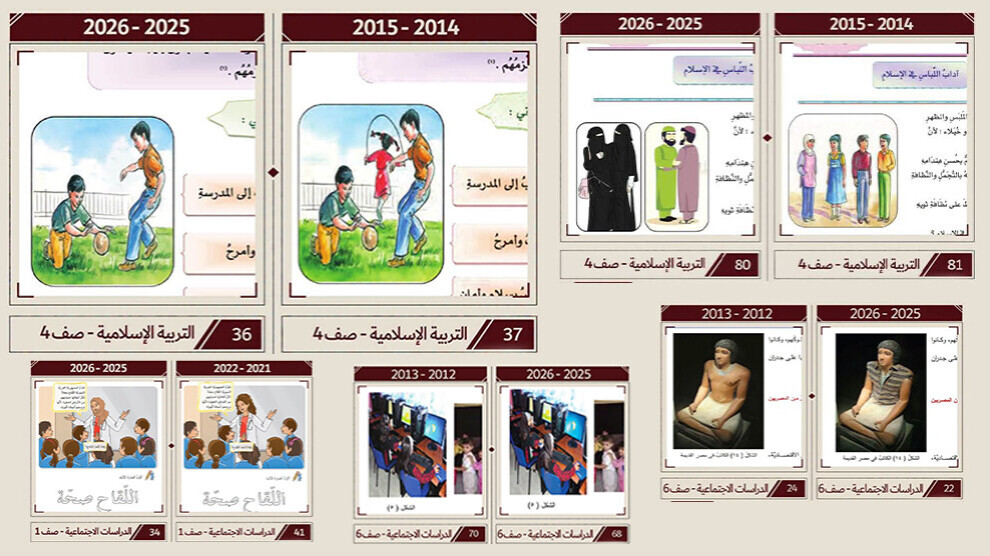
Syrian educational curricula, following the interim government's takeover, witnessed amendments that sparked discussion about the nature of the changes that affected educational content, especially artistic and cultural images representing women, alongside the deletion of historical content related to cultural diversity in Syria.
The Image of Women in Curricula and Its Impact on Children
Amal Al-Atwani, owner of a kindergarten and nursery and a graduate of Arabic literature, says that school textbooks and educational curricula play an important role in shaping children's perceptions of society, and in building their view of the roles and capabilities of women and men.
She explains that the impact of curricula is not limited to the information they present, but extends to the images and models they display before children. The image of women in books can affect girls' view of their roles and future potential, and also contributes to shaping boys' perceptions of women and their status in society.
She notes that limiting women's representation to a single model or specific role may restrict girls' ambitions and reinforce stereotypes among boys. She gives an example of presenting women's image in books within domestic roles only, such as cooking and working inside the home, without showing their scientific and cultural capabilities and their participation in public life.
On the other hand, she believes that presenting diverse models of women, including their presence in scientific, cultural, and societal fields, can enhance girls' self-confidence and broaden their perceptions of their future, and also helps boys realize the importance of participation and integration between women and men in society.
Criteria for Amendment Between Educational Foundations and Societal Orientations
The amendments that affected images and educational content raise questions about the criteria that should be adopted when reviewing and developing curricula. In this context, Amal Al-Atwani says that some changes are not based on sufficiently reliable educational and scientific criteria, but reflect religious and societal judgments and orientations.
She notes that modifying images of women and adding the hijab or niqab to them may lead to restricting women's image to a certain pattern, which may affect children's ability to accept diversity in appearance and clothing. She confirms that children are affected by the visual images they see in their early age stages, which makes the way women are represented in books an influential factor in shaping their perceptions of them.
Amal Al-Atwani stresses the necessity that amendments to curricula be based on clear scientific and educational criteria, supported by reliable studies and specialized and known references, instead of being a reflection of strict social or religious orientations.
She also stresses the importance of involving teachers, those with educational expertise, and specialists in curriculum review processes, allowing for an assessment of the impact of changes on the psychology of children and students, and an understanding of their repercussions on their cognitive and social growth.
Toward Curricula That Respect Diversity and Preserve Everyone's Dignity
Amal Al-Atwani believes that curricula should present balanced and diverse content that reflects the multiplicity of women's social and cultural roles, and allows children to learn about different models without confining them to preconceived perceptions or stereotypes.
She also calls for the curriculum development process to take into account the different segments of society, and to be carried out with the participation of specialists and experienced teachers, ensuring that decisions are based on studied educational foundations, and that educational materials contribute to entrenching respect for others and preserving human dignity.
For her part, teacher Janan Saeed says that the amendments passed through two stages. In the first stage, the interim government announced that its goal was to remove images and symbols associated with the previous regime. As for the current changes, they relate to the nature of the discourse adopted in the curricula, replacing the Baathist nationalist discourse with a discourse of a stricter religious character.
She notes that these changes were reflected in women's presence in school books and the way they are visually represented, noting that some images showing women were subjected to modifications that included adding the hijab, while images and artistic and cultural works were deleted, including the Mona Lisa painting and the Ornina figure.
She also notes the deletion of paragraphs addressing figures and events related to Syrian history, pointing to the example of deleting the paragraph on Sultan Pasha al-Atrash from the history book, considering that these changes raise questions about the extent of the presence of different components and their cultural and historical contributions in educational curricula.
Thus, the deletion of paragraphs documenting the role of Syrian women and the replacement of their images with drawings of young men in the new curricula contributes to obscuring their historical contribution in the political, military, and social fields from the memory of generations; something observers see as reinforcing gender stereotyping and directly diminishing women's role in the public and professional space in the future.