Kurdish Language Rights at Center of Syria's Education Battle
As debate intensiflies over future of education in Syria,Kurds hold firm to their right to education in their mother tongue, as a foundation for protecting their identity,culture,and history, and as aguarantee of linguistic diversity in the country.
NOURSHAN ABDI
Kobani_The Kursidh language in schools holds educational and cultural importance in building a rising generation conscious of its culture and history. By mastering their mother tongue, this generation will preserve its heritage and culture. Therefore, it is essential to adopt the Kurdish language in educational curricula for students in Kurdish areas of Syria.
Language for peoples and communities is a fundamental pillar for preserving identity and safeguarding history and culture. For the Kurdish people in Syria, the Kurdish language represents an essential part of their history, identity, and cultural existence. From this perspective, the revolution of July 19, 2012, marked an important milestone in the Kurdish people's struggle to protect their language, which for decades had been subjected to policies of marginalization, assimilation, and attempts to erase identity.
Over years of struggle and resistance, many achievements have been realized in Kurdish-language education, from the early educational stages to institutes and universities, contributing to the consolidation of the Kurdish language's presence in educational and cultural life.
From this standpoint, the importance of supporting and developing Kurdish-language education in Syrian schools emerges, with the school being the fundamental institution for building generations and forming their cultural and intellectual awareness. Providing education in the mother tongue not only contributes to protecting the language from extinction but also strengthens generations' connection to their culture, history, and identity, and helps build a generation proud of its language, preserving it, and defending its cultural and historical heritage, ensuring the continuity of Kurdish identity for future generations.
Recently, there have been many negotiations and dialogues between the Autonomous Administration in Rojava and the interim government regarding the adoption of the Kurdish language as a primary language. On July 29, a meeting was held between the Minister of Education and representatives of Kurdish parties in the Syrian People's Assembly. Social media circulated some points and statements from the meeting, including a proposal by one member not to include the Kurdish language in schools and universities at this stage and to limit its use to within homes only. These statements provoked angry reactions from the Kurdish people, demanding the adoption of their language in their schools and universities.
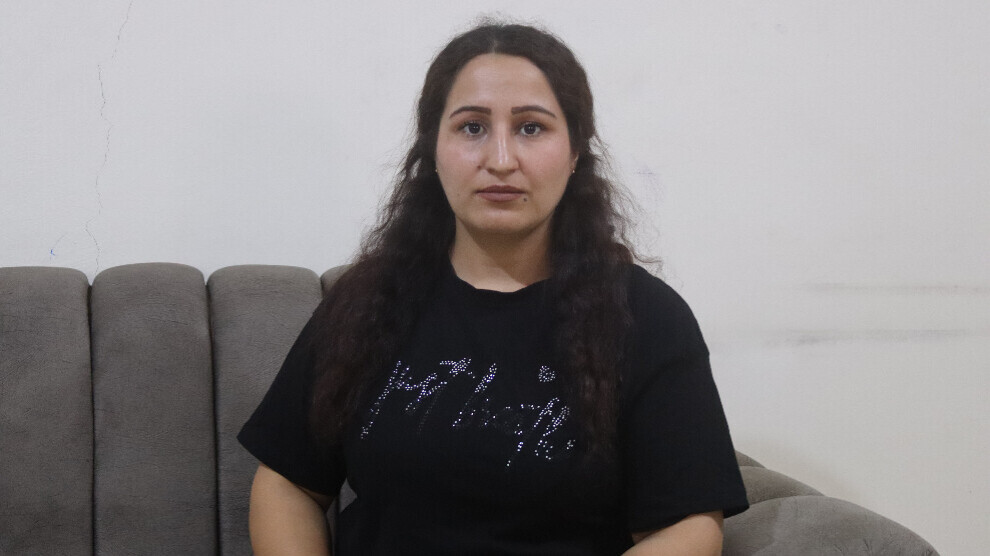
Teacher Fatima Sheikh Othman spoke about the level of education in the region, pointing to the development the education sector has witnessed, particularly the adoption of education in the mother tongue. She also commented on the recent statements following the meeting between the Education Minister and Kurdish representatives in the People's Assembly, emphasizing the importance of considering the region's specificity and students' right to education in their mother tongue, and preserving linguistic and cultural diversity.
Regarding the system and level of education in Rojava, particularly in Kobani, Fatima Sheikh Othman explained that the educational system in the city began to be established during 2012 and 2013, coinciding with the launch of the July 19 revolution, which witnessed significant political, social, and educational transformations in the region.
She noted that in the early stages of establishing the educational system, there were no unified and integrated curricula covering various educational levels. However, work to develop the educational process continued gradually, until schools in Kobani and its countryside began adopting curricula in the Kurdish language.
She affirmed that students in Kobani have been able to study in their mother tongue, i.e., the Kurdish language, from the first grade through university, alongside the teaching of other languages, primarily Arabic and English, to enhance communication and coexistence among different components.
She considered that this educational model reflects an attempt to broaden education to be more inclusive, by granting the components living in the region the right to learn in their mother tongues, contributing to the protection of local languages and cultures and enhancing cultural and linguistic diversity, alongside building a generation connected to its language and identity and capable of communicating with its surroundings.
Language Constitutes the Fundamental Pillar in Building Societies
Regarding the importance of mother-tongue education for the Kurdish people, Fatima Sheikh Othman explained that language constitutes a fundamental pillar in building societies and expresses the identity, history, and culture of its components. She noted that the Kurdish people in Syria have been deprived for long periods of their right to education in their mother tongue, despite maintaining it through use within homes.
She affirmed that using the Kurdish language in daily life alone is not enough to protect it from extinction; it must also be present in schools. She noted that teaching a child in their mother tongue helps them understand and express themselves better, and positively reflects on their development and educational level compared to receiving curricula in a second language.
"No One Has the Right to Assimilate and Erase Our Language and Identity"
Fatima Sheikh Othman stated that what was circulated on social media regarding the meeting raised concerns about the future of the Kurdish language in education, affirming that using the mother tongue within homes alone is not enough to protect it, but rather the right of Kurds to use it in public life, institutions, and schools must be guaranteed.
She added that educating future generations in their mother tongue is a necessity, recalling her personal experience studying in schools under the previous regime, where she faced difficulty expressing her opinions and needs in Arabic. She affirmed that expressing oneself in the mother tongue gives students greater ability to understand, participate, and develop.
She emphasized the necessity of recognizing the Kurdish language in Syrian laws and the constitution, considering that those who have not experienced deprivation from mother-tongue education cannot appreciate the scale of suffering Kurds have endured, and that should not be a reason to marginalize their language or deny their identity and existence.
She noted that "when we look back at the history of the Kurdish people in the world and the Middle East, we see that Kurds have been through many campaigns of genocide, massacres, and displacement, in addition to practices of assimilating and erasing their identity, language, and history. Today, no one has the right to deny our language and identity."
Teacher Fatima Sheikh Othman called on the interim government, parties, and Kurdish figures participating in dialogue tables to convey the demands and rights of the people, particularly the right to education in the mother tongue. She affirmed the necessity for negotiations to consider the rights of all components and peoples in Syria, while guaranteeing the Kurdish people's specificity in learning in the Kurdish language, as a fundamental right.