
Women’s Cooperatives in Rojava Knock on the Doors of the Global Cooperative Movement
From Rojava to Panama, women’s and community cooperatives reached the International Cooperative Alliance platform, aiming to introduce the women’s economy model and open global cooperation horizons.
SORKEL SHEIKOU
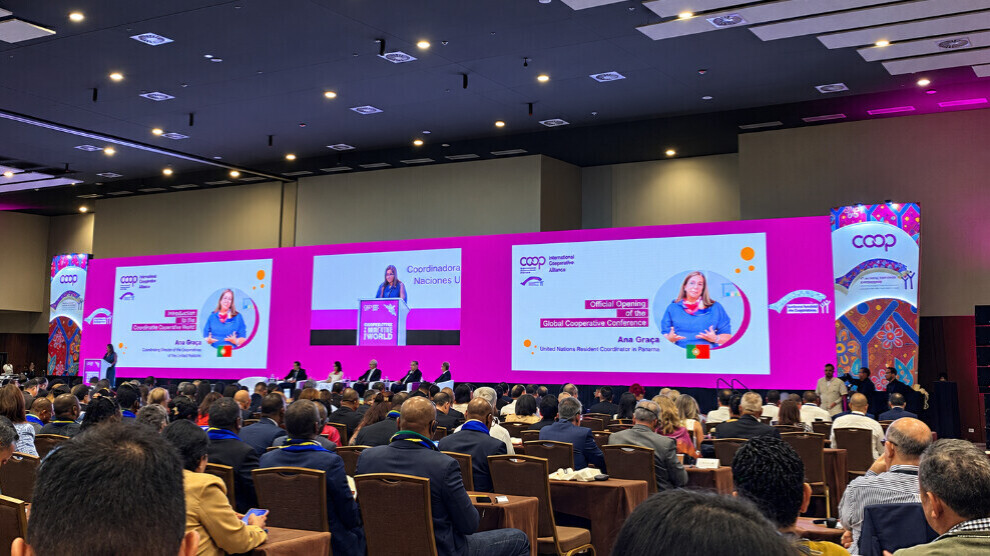
Qamishlo – Two representatives of the women's economy in Rojava, alongside representatives of the public economy, participated in the Second Conference of the International Cooperative Alliance (ICA), held in Panama under the slogan "Building Bridges: Cooperatives' Contributions for a Peaceful World," between 13 and 18 September.
The conference, held by the International Cooperative Alliance every two years, brings together leaders of the cooperative movement from around the world to exchange expertise, formulate strategies, and enhance the role of cooperatives in development and combating poverty.
The most prominent recommendations put forward were the inclusion of women's cooperatives in Rojava in the global cooperatives map, participation in founding "Mesopotamia Cooperatives" that include the four parts of Kurdistan, alongside working on establishing their mechanisms and legal frameworks. This participation opens the door to enhancing the presence of the women's economy experience in Rojava within the global cooperative movement, and expanding areas of cooperation and exchange of expertise at the international level.
For the First Time at the International Level
Shafin Ardal, the representative of the women's economy in Rojava, explained that their experience in establishing women's and public cooperatives in Rojava received great attention and resonance in European countries. She noted that they received an invitation from the United Nations to participate in the International Cooperative Alliance conference, following visits conducted by international delegations to Rojava in previous years.
She added: "During that period, the same delegation visited Rojava and was greatly affected by our resilience and our position in the face of genocide attacks. From here came our invitation to the International Cooperative Alliance conference. Conveying the voice of Rojava's women to the world, despite the risks and challenges our cooperatives are going through, is a source of pride and honor for us."
A Bridge for Establishing Relations and Exchanging Expertise
She noted that the goal was not limited to mere participation and exchanging experience, but went beyond it to building bridges of communication and relations with various peoples and societies. "The essence of cooperatives is based on entrenching peace and women's freedom, which achieves solidarity between peoples and components. All participants in the conference expressed great amazement at our presence from Rojava under these circumstances and the achievements we have made. They were amazed that our revolution arose and cooperatives were established amid wars, genocide attacks, and continued until today."
She explained that their goal was also "to manage a joint struggle through sharing our experiences based on a communal, communalist, and democratic economy, designed and built outside the shadow and system of states."
Attracting the Interest of More Than 3 Million Cooperatives Worldwide
Shafin Ardal mentioned that they held discussions with experts and philosophers in the field of cooperatives, in addition to representatives of cooperatives with a history extending for more than a century. Regarding these people's view of women's cooperatives in Rojava, she said: "Despite our cooperative concepts sometimes differing, participation opened new horizons in the world of cooperatives." She noted that "cooperatives that are a hundred years old were amazed by the position and resilience of the cooperatives in Rojava. They saw in the existence of 50 women's cooperatives in Rojava among more than 3 million cooperatives worldwide a unique and interesting experience."
She pointed out that communication and mutual work will continue after the conference. "We will hold online meetings to get to know each other more, and engage in expanded discussions about cooperatives and ways to develop them. Our goal is to strengthen cooperatives and increase women's participation in them to enable them to achieve their economic independence."
Community Cooperatives Differ from Authority and State Cooperatives
For her part, Khalat Sheikhmus, co-president of the Cooperatives Committee in the Public Economy in Rojava, noted that they presented the experience of cooperatives in Rojava during 7 minutes before the global conference. "Meetings were also held with the conference body and media outlets that lasted for about an hour and a half, during which the stages of establishing cooperatives were explained and clarified, up to the integration process that Rojava is going through today."
She explained that their cooperatives are distinguished from international cooperatives by being founded according to the actual needs of society, while some global cooperatives that are a hundred years old are subject to state authority. She added: "The Rojava experience was the most developed among the huge number of cooperatives because it was built on the basis of a communal, ecological economy, and women's freedom. We invited many figures and experts to visit Rojava, learn about the cooperatives, and exchange expertise on the ground."
She pointed to the "Cooperatives Map" project affiliated with the International Cooperative Alliance, a digital initiative aimed at drawing a geographical and thematic map of cooperative associations and organizations around the world. "During the conference, the map was displayed, comprising cooperatives from various parts of the world. We demanded the inclusion of women's cooperatives in Rojava in this global map. This decision cannot be settled immediately in such a huge conference, but we received positive promises to include us in it."
Khalat Sheikhmus mentioned the proposals put forward during the conference regarding the economy of the four parts of Kurdistan. "Among the views discussed in the private meetings and the conference was the idea of founding 'Kurdistan Cooperatives' to include the four parts of Kurdistan. Our initial goal was to include women's cooperatives in Rojava in the map, alongside participation in founding 'Mesopotamia Cooperatives' and establishing their legal mechanisms. Most importantly is our official accession to the International Cooperative Alliance (ICA)."