
From Motorcycle Rider to Delivery Office Owner in Upper Egypt
Heba Ashraf broke the constraints of tradition in Upper Egypt, proving that determination and hard work create success. She began as a motorcycle rider and later founded a delivery office, inspiring women with the power of will and self-realization.
Iman Samir Ali
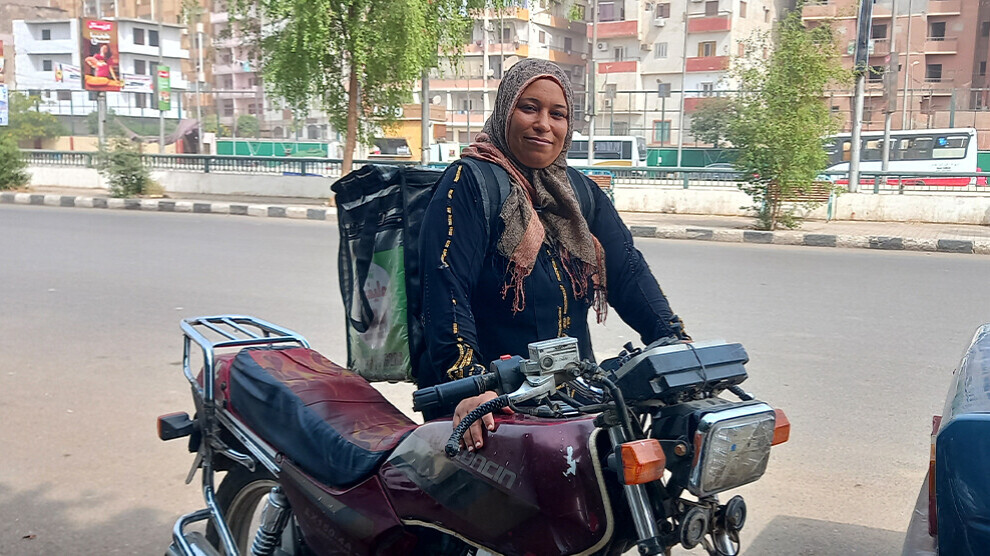
Egypt — In Upper Egypt, where customs and traditions are deeply rooted, the story of Heba Ashraf stands out. She refused to surrender to her circumstances and instead chose to confront challenges through hard work in a field long associated with men. She learned to ride a motorcycle and began her journey in delivery services, transforming an individual experience into a successful project.
Heba Ashraf, a daughter of Upper Egypt, is married but has no children. Her husband is ill and unable to work, leaving her with heavy financial burdens, debts, and the costs of his medical treatment. She also took on the responsibility of raising her husband’s nephew after the child’s mother passed away, becoming fully responsible for his care and expenses.
Heba decided to enter the workforce and asked her brother-in-law to let her work with him in delivery services. Despite widespread astonishment—since this job is physically demanding and traditionally considered a man’s work in Upper Egypt—she insisted until he agreed.
She bought a motorcycle and learned to ride it in just four days. Despite the difficulties she initially faced, she gradually mastered riding and became a skilled driver.
She began working with a company that assigned her delivery orders, then decided to work independently. She created her own contact number and started receiving orders directly from customers. Over time, she built a client base, most of whom were women who asked her to deliver various needs such as vegetables, medicines, and other items.
Regarding public reactions, she says: “At first, seeing a woman riding a motorcycle in Upper Egypt was shocking to everyone, as customs and traditions do not accept it. But over time, attitudes completely changed, and I was surprised by the encouragement and support I received from people.”
After a period of hard work, Heba Ashraf opened her first delivery office and created a Facebook page to promote it. She hired several workers and expanded the office to cover different cities and districts. It became well-known throughout the city of Assiut and its surrounding areas, with many customers relying on it heavily.
In the end, she hopes her project will grow into a large delivery company, increasing the number of employees. She sends a message to every girl and woman: “Go out and work—there is no shame in work. Be strong and do not fear people’s talk. Anyone who works hard and perseveres will succeed and achieve self-fulfillment, no matter the difficulties.”
Heba Ashraf’s story is not merely a personal experience; it reflects the social and economic transformations in Upper Egypt, where she broke traditional constraints that limit women to narrow roles, becoming a model of a resilient woman who confronts harsh circumstances with work and determination.