
The economic crisis… a deepening daily suffering and a heavier burden on women
Women in Turkey and North Kurdistan can no longer afford basic needs. Rising food, energy, and rent prices make shopping a harsh test of budget barely covering part of family's requirements.
Mimihan Halbin Zaidan
Van – The economic crisis in Turkey and North Kurdistan worsens day by day, widening the gap between income and expenses. According to April 2026 data from the Working Class Research Center of the United Metal Workers' Union (BİSAM), the hunger threshold for a family of four is 33,369 Turkish lira, while the poverty line reached 109,623 lira. In contrast, millions of workers struggle to live on the minimum wage of 28,075 lira.
Rising rents, energy costs, and basic commodity prices, especially in major cities, have led to a steady decline in people's purchasing power. Amid this crisis, women who bear the responsibility of supporting families carry the heaviest burden of its repercussions.
"The currency has lost its value"
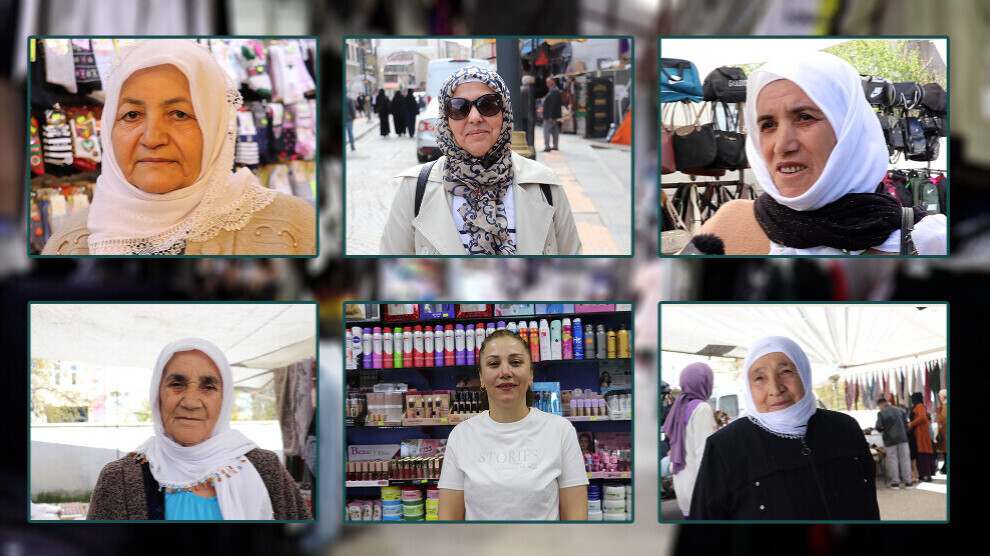
Hanım Cengiz, who tries to live on her retirement pension, said that product prices are very high, and she could not buy anything from the market. "We try to live on the retirement pension, but it's not enough. In the past, when we came to the market, the money we had was enough to buy our needs. Now everything has become very expensive. I came with a thousand lira, but I couldn't buy anything. Even bread has increased in price, and everyone knows who is responsible for this crisis."
"I couldn't even buy vegetables"
Ayşe Tunel stressed the need to quickly find a solution to the economic crisis. "I come to the market, but I can't shop enough to meet my needs. Money is no longer enough for anything. The state must see people's situation and take real steps."
She added: "I came with 1,500 lira, and I couldn't even buy enough vegetables. I will not be able to meet my children's needs. In the past, a thousand lira was enough to buy all our supplies."
"A solution must be found for this crisis"
Fatma Kaval said she couldn't even buy one kilogram of tomatoes, explaining how the economic crisis has affected families' daily meals. "I came to the market with 500 lira, and I couldn't buy anything. In the past, it wasn't like this. 500 lira was enough to buy everything we needed. Therefore, a solution must be found for this crisis."
Mediha Önal pointed out that she came to the public market to shop, but prices are no longer what they used to be. "Product prices in this market have become like those in shopping centers. It shouldn't be this way. Prices should be cheaper here."
She noted that she has been coming to this market for 15 years and affirms that "now everything has become very expensive." She added that "the state raises prices on everything – electricity, natural gas, rents – all are constantly rising."
She believes it is natural for traders to make a profit, but they try to achieve 100% profit margins. "There must be ethics in trade, so that both the trader and the people benefit. Today, everyone seeks to make double profits, and that is unethical."
She affirmed that this is an "ethical problem," and that "profit can be made by increasing sales volume, not prices. But people try to make more profit by any means. The crisis caused by the state also has this effect."
"Traders are also affected by the crisis"
Trader Hanife Gözel affirmed that they feel the economic crisis deeply. "We sell products for women, but when people don't have money, we can't make any sales. And let's not forget that rents, expenses, electricity, and gas bills are all very high. Sometimes we can't even pay the daily wages of the women working with us. There are days when we can't sell anything at all."
She believes that wars are the main cause of the economic crisis. "Those in power are stealing people's money, especially small traders like us. They are already in a collapsed state. Peace must be achieved, and policies specific to women must be put in place, especially supporting women workers in trade."
She also explained that men are forced to go to other cities to work as laborers due to the crisis, while women try to secure a livelihood through handicrafts