
From "The Trousers" to the "Constitution of Rights"... Tunisia's Never-Ending Battle for Women
Opinion piece by journalist ZOHOUR AL-MASHREQI
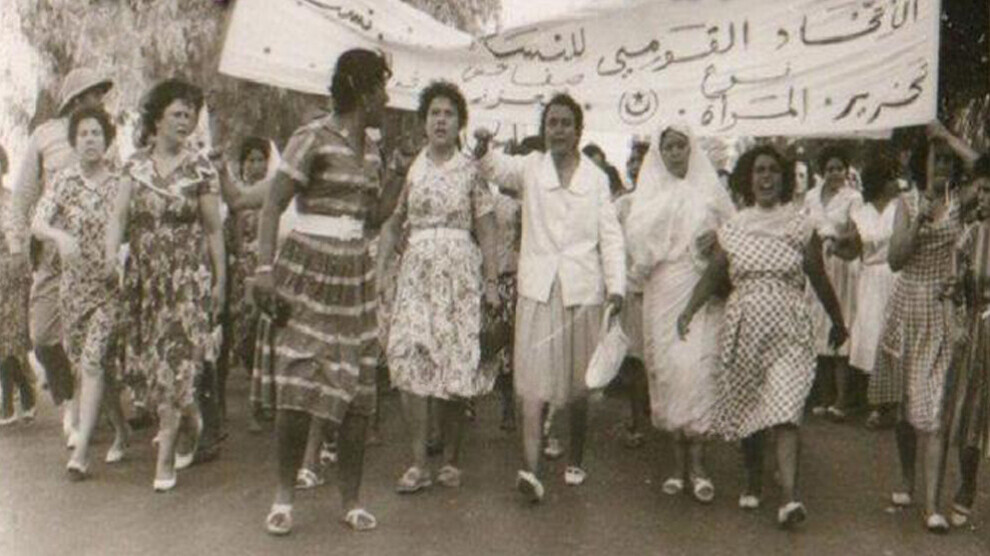
Tunisian writer Rafika Bahouri once told me about an incident that is far from separate from Tunisia's ongoing feminist struggle — an incident that took place before independence, before the Personal Status Code. A bus caught fire in the Tunisian governorate of Sousse on the coast, carrying men and a woman. Everyone managed to escape through the bus window — except that woman, who died, because she was wearing a dress. Women of that era rose up in a march whose slogan was, "How can a woman die simply because she cannot wear trousers?" — and resistance began, demanding women's right to wear trousers. This meant that no right ever arrived on a silver platter on its own; each was the product of organized struggle, whether clandestine at the time or open today.
The road from that pair of "trousers" Tunisian women fought for the right to wear, to the halls of parliament and the courts where laws are drafted today, was not paved with roses; it was a rugged path carved out by an unbreakable feminine will.
Anyone reflecting on Tunisia's reality today understands that what women have achieved is not a favor granted by anyone, but the culmination of a long, cumulative struggle — one that began with the refusal to let a woman's body be a "shackle" preventing her from surviving a burning bus, and ended with securing a legal standing that has made her an undeniable force in the national equation.
After the early battle was fought over the "right to movement," Tunisian women moved, with mature awareness, into the heart of the legislative battle, turning the individual cry heard in pre-independence streets into a pressuring force that established laws making Tunisia a unique legal laboratory — from Law No. 58 of 2017 combating violence, to the protection of the rights of women working in agriculture and domestic labor, who were moved from the margins into a space of legal protection, alongside dozens of laws before them. These gains, which remain a distant dream for many women across the Arab region enduring wars and rigid social restrictions, are, at their core, fortresses that Tunisian women built stone by stone.
But today the struggle has taken on another form: a struggle of "preservation and construction" amid a suffocating economic and social climate. Tunisian women have come to understand that their rights are not immune to time, and that they can regress if left unguarded — something that became clear over the past decade, when Tunisian women faced systematic attempts by political Islamist currents to seize back their gains, and attempts to impose a regressive discourse that reduces their role and targets their dignity under the cover of religion.
At that pivotal historical moment, Tunisian women were not mere spectators; they took to the streets and stood as an impenetrable wall against every attempt to drag the country backward, thereby protecting the "modernization project" that was — and remains — the primary target.
Tunisian women today are not only fighting against discrimination; they are fighting to safeguard what they have gained against crises that seek to undermine their economic stability and social standing. They understand that losing even the smallest gain threatens the entire structure of rights they have built. Their present struggle is therefore marked by vigilance — they are not merely defending rigid laws, but defending their "identity" as citizens with full rights, refusing to let their gains be violated under any circumstance.
Tunisia's feminist history, which began with the symbolism of "the trousers" and culminated in the securing of legislation, is a lesson that rights are not given but won, and that they are a trust Tunisian women cannot afford to squander. This history, written in the blood and sweat of women activists, remains today the compass guiding Tunisian women to always stand at the forefront — resisting, evolving, and refusing to break, no matter how fierce the crises become.