
The year 2025: A historic turning point in women's empowerment and decision-making
The Syrian Women's Council played a pivotal role as an organizational and rights-based framework seeking to reorganize the Syrian women's front, benefiting from a strong organizational foundation established since its founding conference in 2017.
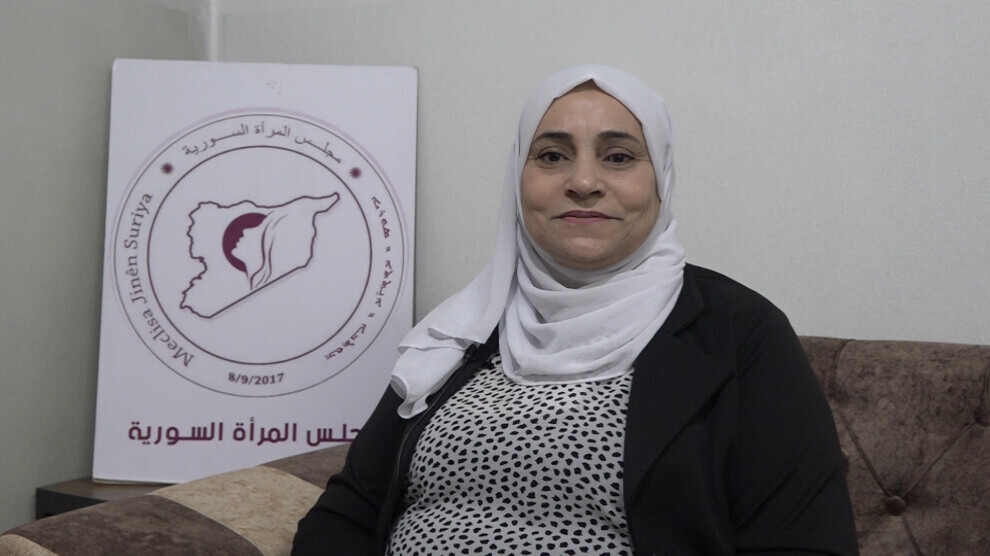
Asmaa Mohamed
Qamishlo – Expanding the scope of women's work in various Syrian cities, organizing hundreds of awareness-raising lectures and seminars, as well as enhancing local and international partnerships, and completing the drafting of the social contract to become a constitution for Syrian women, with a focus on empowering women in decision-making positions and effective participation in shaping Syria's future. These were among the works carried out by the Syrian Women's Council during 2025.
The year 2025 marked a pivotal station in the journey of the Syrian feminist struggle in the region of north and east Syria. The Syrian Women's Council managed to expand its national and international influence and unify the women's front in various cities after years of restrictions and persecution that hindered women's work in areas of the former regime.
However, with the fall of the regime on December 8, 2024, women's movements were keen to establish a foothold for themselves during this sensitive period in Syria's history, regardless of the orientation of the new government. Thus, awareness-raising initiatives, national forums, and lectures were launched by the Syrian Women's Council, leading to the drafting of the social contract and setting clear plans to empower women in decision-making positions, making the Council a living model of a unifying feminist vision capable of shaping Syria's future in a way that preserves women's dignity and ensures their effective participation.
A Unified Feminist Front
Mona Youssef, an administrator of the Syrian Women's Council, says that the year 2025 constituted a pivotal turning point in the course of the Syrian feminist struggle, amid deep political and social transformations following the fall of a dictatorial regime. This regime had long used false rhetoric about protecting women's rights while practically keeping women out of decision-making positions and confining their participation to formal roles that did not reflect the scale of their presence or sacrifices.
She explained that this stage revealed the urgent need to reconsider public policies related to women and strengthen their empowerment frameworks to ensure women's integration at all levels of political and social decision-making. "The interim government's assumption of the country's affairs represented a beginning of hope for Syrian women. However, the policies it later pursued showed clear trends towards returning women to narrow traditional frameworks, aiming to reduce their effective participation in public affairs through the selective use of religious discourse in shaping legislation, away from the principles of justice and equality. This was tangibly reflected in the weak representation of women in official institutions, where their percentage did not exceed 4%, weakening their ability to influence public policies or defend their rights and gains in society."
In this context, Mona Youssef confirmed that the Syrian Women's Council played a pivotal role as an organizational and rights-based framework seeking to reorganize the Syrian women's front, benefiting from a strong organizational foundation established since its first founding conference in 2017. "This foundation enabled the Council to move quickly and effectively immediately after the fall of the regime, working to unify women's efforts in all Syrian cities, aiming to build a unified feminist front capable of defending women's rights and gains and enhancing their participation in shaping public decisions."
She indicated that the Council organized dozens of national forums in the first months, with participation from women of various social and political components. These forums focused on introducing the Council's vision and goals, in addition to discussing essential constitutional issues, including women's role in drafting the new constitution and ensuring the integration of women's rights within the constitutional process. "These forums were not confined to the capital but included various cities and rural areas, helping to build a broad network of qualified women leaders to contribute to developing policies and laws that ensure justice and equality."
Council Activities
The Council's activities were not limited to internal work; efforts were made to open broad horizons regionally and internationally through the participation of its members in meetings abroad, particularly in Europe. "The Council met with parliamentarians, representatives of parties, and influential political and human rights figures. During these meetings, it presented a comprehensive overview of the reality of Syrian women and the challenges they face, emphasizing the necessity of international community support for Syrian women and empowering them to fully exercise their rights, and conveying their voices to international decision-making spaces."
She pointed out that the Council also worked on transferring the experience of women in the north and east Syria region, with its organizational, political, and social gains, to various Syrian cities, considering it a living model to benefit from in rebuilding the women's role and enhancing women's ability to participate effectively in public life and decision-making at the national level.
In the community field, Mona Youssef said that the Syrian Women's Council "launched an intensive program of awareness-raising lectures and seminars, exceeding hundreds of events, covering various cities, rural areas, and suburbs, focusing on pivotal issues, including confronting hate speech, understanding transitional justice, women's role in shaping laws and the constitution, reproductive health, combating all forms of violence against women, including digital violence, and promoting awareness of women's rights within society."
The Council's role was not limited to awareness and education; it also took clear political stances by issuing official statements regarding policies and measures affecting women's rights. "Among the most prominent of these stances was the Council's rejection of the new government's circular imposing guardianship over women, considering it a clear violation of fundamental rights and freedoms and a regressive step contradicting Syrian women's aspirations for real participation in public life and decision-making."
Throughout 2025, the Council enhanced its presence in the public sphere by writing articles, participating in joint forums with civil society organizations, and organizing sensitive events such as discussing forced veiling of women in occupied areas, while shedding light on systematic violations against women there, and promoting societal awareness of women's rights and protection from all forms of violation, including discrimination and social and political exclusion.
On the humanitarian front, Mona Youssef explained that the Council did not overlook the impact of war and massacres on women in several Syrian regions. Its members launched campaigns of material and moral support and solidarity with those affected. "Defending women's rights is closely linked to supporting them in times of crisis. Women's empowerment is only complete by securing their protection and ensuring their dignity and security in all circumstances."
Future Plans
She clarified that among the decisions taken by the Council during its first conference in Aleppo city in 2024 was to hold peace conferences in all Syrian cities, in addition to preparing for a national women's dialogue conference at the country level. "The goal of this conference is to gather women from various social and political components and produce practical recommendations that enable women to establish their presence and will in the Syrian reality and contribute to building a future that guarantees their rights and status. However, the current security and political situation has prevented the conference from being held so far. Nevertheless, the Council continues preparations for it in cooperation with active women's organizations such as the Women's Lobby and Syrian Women for Peace, and a number of other women's initiatives, hoping to organize it as soon as possible."
Regarding the Young Women's Committee, Mona Youssef explained that the Council sought to activate it in all its offices during this year. It was partially activated in some offices, while circumstances did not permit its activation in others. She emphasized the importance of this committee as the dynamic force linked to the Council's future, stressing the necessity of enhancing its work and expanding its activities in the coming period. "The Council also plans to expand its partnership base with women's organizations internally and externally, including opening representative offices in Germany, and continuing cooperation with representatives present in Canada and some other cities, aiming to expand the Council's influence at the Arab and global levels. The Council also continues work on the Syrian Women's Council's social contract, which gathers the opinions of Syrian women and forms a constitutional framework reflecting their demands and rights within the new constitution. Completing this contract is ongoing to ensure its full representation of the feminist reality and aspirations in Syria."
Expanding the Scope of Work
The Syrian Women's Council organized more than 300 lectures this year, benefiting thousands of women in various Syrian cities, including Damascus and its suburbs. Each of the Council's offices held more than 15 to 20 lectures monthly to ensure awareness and empowerment reached the largest possible number of women. "The Council's work in previous years was limited due to security restrictions and persecution, despite the presence of representatives in Damascus, Aleppo, and Homs. However, the fall of the regime allowed the Council to expand its scope of work and increase women's participation in events. Although the interim government provided relative comfort for women's work, some decisions relied on Islamic jurisprudence, which limited freedom of work somewhat, but it did not place direct obstacles in the way of women's activities."
Mona Youssef confirmed that the Council succeeded in building women leaders capable of demanding their rights and had a clear presence on the ground, bringing together women from various cities. "The recent expansion allowed access to previously closed areas like Afrin, Jarablus, and Idlib, holding lectures and dialogue seminars, which helped understand the nature of women in each governorate and discover that all women share the same basic demands. This enabled the Council to unify the women's front and enhance its influence compared to previous years."
She believes that the recent expansion in the Syrian Women's Council's work allowed for understanding the nature of women in various Syrian cities and comprehending their interests and ambitions. "Women in Daraa, for example, showed great strength and clear demands for their rights, and a desire for development, political empowerment, and increased awareness. This represents a clear difference between previous work and current work, as the Council's scope expanded to include all women in various Syrian regions and cities and from all social components, reflecting the comprehensiveness of the Council's influence and its ability to empower women on the ground."
In conclusion of her talk about the Council's work during 2025, Mona Youssef, administrator of the Syrian Women's Council, confirmed that the Council's future plans are ongoing and focus on finalizing work on the social contract to become a constitution for Syrian women, taking into account the opinions of all women from various components and women's organizations to unify the vision. "The goal is to empower women to be present in decision-making positions, including participation in founding committees and drafting the constitution, and ensuring that Syria's future reflects women's struggle and preserves their dignity. The Council is also working on organizing the National Conference for Women's Dialogue in partnership with women's organizations, to be a comprehensive and clear platform that helps women unify their vision and exert pressure on relevant parties to take their rightful place in Syria."