
The Maghreb... Five Homelands and One Crisis, and Women Pay the Price (1)
The Moroccan economy grows and new job opportunities are created, but the gap between women and men remains wide — from work and income to social protection and family. Women pay a greater cost of economic and social vulnerability
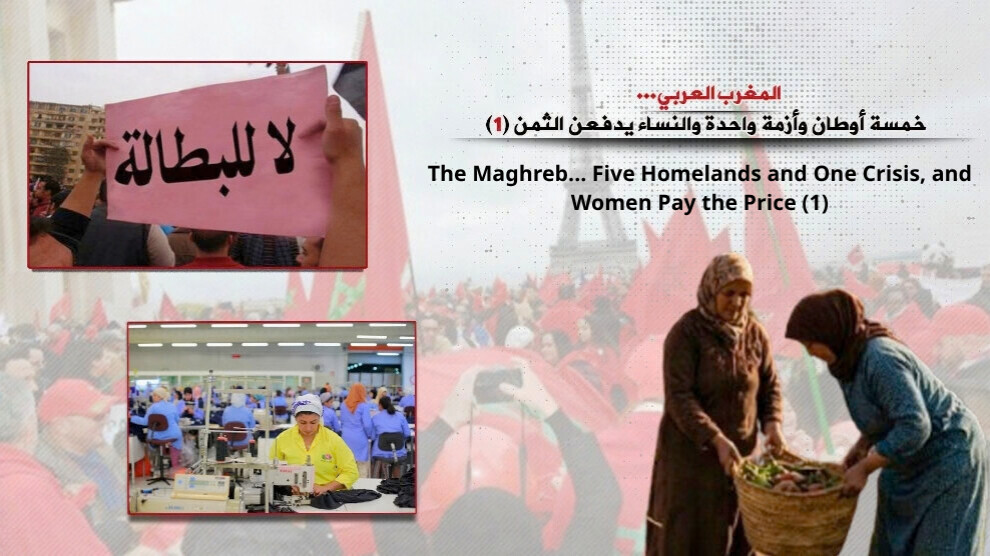
Morocco... An Economy That Continues to Grow and Women Who Pay the Cost of Vulnerability
HANAN HART
Morocco – In Morocco, the latest available annual data reveals the continuation of a wide gap between women and men in the labor market. In 2025, the activity rate of women reached 19%, compared to 68.5% for men, while their unemployment rose to 20.5%. These figures come at a time when the economy continued to create jobs, adding 193,000 opportunities during the same year, but the improvement in general indicators did not end the gap in women's participation.
The Maghreb countries, from Morocco to Tunisia, Algeria, Libya, and Mauritania, face a set of economic challenges whose severity varies from one country to another. Among the most prominent causes of these crises are the weak diversification of the economy and heavy reliance on specific sectors; the economies of Algeria and Libya depend to a large extent on oil and gas, while Mauritania is affected by fluctuations in iron and gold prices, and Morocco and Tunisia are affected by agriculture, tourism, and external demand. Unemployment, especially among youth, and weak job creation have also contributed to increasing social and economic pressures. Added to this are rising prices, energy and food costs, debt and financial deficit, weak investment and productivity, alongside the impact of drought and climate change.
In Libya, political turmoil and internal division led to the weakening of institutions and the disruption of a large part of economic activity. The weak economic and trade integration between the Maghreb countries also deprives the region of important opportunities for growth and investment.
The crisis does not have a single cause, but is the result of the intertwining of economic, political, social, and environmental factors, with the nature of the problem differing from one country to another.
Our file sheds light on the impact of the economic crisis and inflation in the Maghreb countries on women, by monitoring the repercussions of rising prices and declining purchasing power on their living conditions, job opportunities, unemployment, and wages. It also addresses the challenges facing women in the labor market, and their variation from one country to another, amid escalating economic and social crises.
Through testimonies and data from the countries of the region, our file will address a fundamental question: How do economic crises reshape women's position in the labor market, and what price do women pay amid rising unemployment and living costs?
Our beginning will be with Morocco, where behind the numbers there are stories of women facing loss of income, unstable work, and weak social protection, while care responsibilities within the family continue. Economic vulnerability does not begin only at the loss of a job; for many women, it begins before that, from the difficulty of entering the labor market, and extends to the quality of work, then to the social rights they can obtain later.
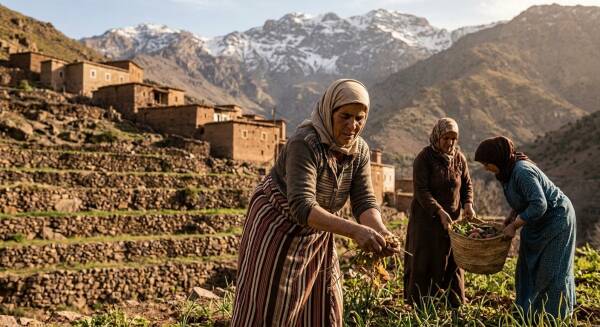
When Maintaining Income Becomes a Battle
For Amina Talbi, returning to work after illness was not a return to her previous professional life. After undergoing chemotherapy and radiotherapy, the 50-year-old woman returned to the textile factory, but she was no longer able to keep up with the pace of work she had been accustomed to before her illness.
She spent more than twenty years working in the textile sector and was registered with the National Social Security Fund, where a share of her social contributions was deducted from her wage, including her rights related to retirement. Her salary was her main source of income, and she also supported her mother, who in turn received a limited salary from her previous work.
The nature of her work required her to complete a specific number of sewing pieces per hour. After returning to the factory, she found it difficult to reach the required rate due to the effects of the illness and treatment.
Between her need for a source of income and her responsibility toward her mother, she found herself forced to continue working, even though her ability to bear its pace was no longer what it was. Later, she was afflicted with cancer a second time, before she passed away.
Amina Talbi's story does not summarize the experience of all Moroccan female workers, but it shows how the need for income and family responsibility can make continuing to work a necessity, even when the body becomes less able to bear it.
A Gap That Begins Before Unemployment
The economic gap between women and men does not begin at the loss of a job, but much earlier, at the door of the labor market itself.
In 2025, the activity rate of women stabilized at 19%, compared to 68.5% for men. The employment rate of women reached 15.1%, compared to 61.1% for men, while the unemployment rate among women reached 20.5%, compared to 10.8% for men, according to data from the High Commission for Planning.
At the same time, the Moroccan economy created 193,000 job opportunities between 2024 and 2025, including 203,000 in urban areas, versus the loss of 10,000 in rural areas. Job creation was concentrated in paid work, which increased by 249,000 positions, while unpaid work declined by 55,000.
However, the distribution of these jobs differed by sector: the services sector was granted 123,000 job opportunities, construction and public works 64,000, and industry 46,000, while agriculture, forests, and fishing lost 41,000 opportunities.
These figures alone do not allow saying that women "were the first to be dismissed" from specific sectors, because the aggregate data do not always separate the lost jobs by gender and sector. But they reveal a sectoral transformation of importance to women, especially those whose activity is partly linked to agriculture, seasonal work, industry, and services.
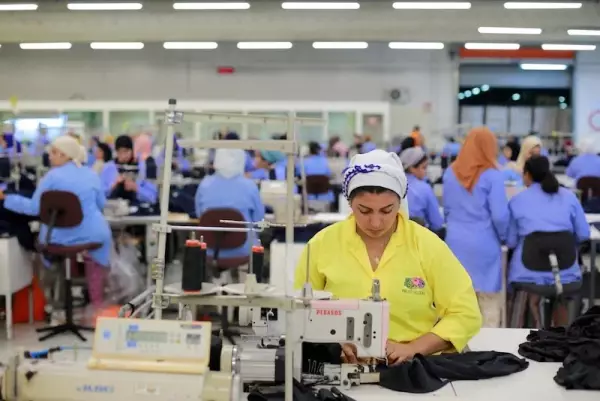
Textiles... When Production Speed Becomes a Test of Ability to Survive
The matter here is not related to the number of jobs created by the industrial sector, but to the quality of some of the work performed by women within it, and the conditions that may determine their ability to continue in it.
The textile sector stands out as a clear example of this, especially when the continuity of work is linked to specific production rates. In this type of work, physical ability becomes part of the conditions for continuation, which is what Amina Talbi's experience reveals.
For her, the challenge was not merely keeping a job after illness, but returning to a work system whose previous pace her health no longer allowed her to keep up with.
Her experience raises a question that goes beyond the number of jobs the economy creates: What happens to female workers when their ability to work changes, while income remains necessary to support the family?
Agriculture... When Income Disappears Without Unemployment Appearing
The loss of agricultural jobs is of particular importance to women in rural areas, where part of the economic activity is linked to seasonal, unpaid, or unstable work.
But a woman who loses agricultural or seasonal activity may not necessarily appear in unemployment statistics. She may return home, move to unstructured activity, or search for intermittent work.
The woman may thus effectively lose a source of income without appearing in the statistics as unemployed.
Informal Work... A Deferred Bill
Women's vulnerability does not stop at current income. The paths of informal work, weak participation in the labor market, and interruptions linked to family burdens can leave effects extending to retirement.
According to a study by the High Commission for Planning on the informal sector, gender, and aging, these paths can produce cumulative disparities in financial rights. The matter is not only related to work that is not declared and protected, but also to work that women perform outside the labor market without pay.
According to data relied upon by the Economic, Social, and Environmental Council, women devote on average five hours daily to housework and unpaid care, compared to 43 minutes for men.
The Council indicates that integrating the value of this work into economic accounts highlights in the national economy, as the value of unpaid domestic work equals about 19.4% of the gross domestic product, of which 16.4 points are due to women's contribution. Also, 24% of working women work part-time, compared to 2.9% of men.
The effects of these paths appear later at retirement, as only 6.7% of elderly women benefit from a retirement pension, compared to 33.6% of men.
For a woman, then, the matter is not only about current income, but about whether the work she performs today leaves her social rights and income at retirement.
Laila... From Losing a Job to Working via an App
About a year ago, Laila M., 36 years old, lost her job at a store selling electronic products. She used to earn about 3,000 dirhams per month, before finding herself without a stable income, while she was obligated to pay car installments.
Laila did not have much margin to wait. She searched for an alternative source of income, and ended up working via a transport app. She works daily, and her gross income on some days may reach about 300 dirhams, approximately 30 dollars, but this figure does not represent what actually remains for her, as fuel, maintenance, insurance, and other car-related expenses are deducted from it.
Laila moved from a fixed monthly salary to an income that changes from one day to another, according to the number of trips and her ability to operate the car. Her story does not mean that working via apps is necessarily a bad choice, but it shows how the loss of a paid job can push a woman to search for a more flexible alternative, but one that may be less stable than the previous job.
For her, the matter is no longer about unemployment only, but about how to secure a daily income sufficient to cover obligations and the expenses related to obtaining it.
Care as an Obstacle to Economic Independence
These difficulties are not separate from the care responsibilities that women bear within families. The Economic, Social, and Environmental Council links the weak economic participation of women, among other factors, to the weight of housework and unpaid care, the lack of childcare services, transport difficulties, the unsuitability of some working conditions, and the limited demand for employing women in a number of sectors.
This becomes more important with the changing structure of the Moroccan family. The proportion of families headed by women rose from 16.2% in 2014 to 19.2% in 2024, while women head 90.7% of single-parent families, according to data cited by the Council in its annual report for 2025.
These indicators mean that an increasing number of women bear direct economic and family responsibilities, at a time when their opportunities to obtain stable income, social protection, and retirement pension remain lower than men's.
Economic Independence... A Barrier Against Vulnerability
It cannot be said that rising prices automatically lead to rising domestic violence, nor can violence against women be reduced to the economic factor; but the absence of economic independence may increase the vulnerability of some women when they face violence.
A woman who does not possess independent income, alternative housing, or sufficient resources may have narrower options when she needs to leave a violent relationship or seek protection.
Here the economic crisis intersects with the rights crisis: the existence of a legal right does not always mean that actual access to protection is available with the same ease to all women.
The Law Exists and Protection Needs a System
Since 2018, Morocco has had Law 103.13 related to confronting violence against women, alongside mechanisms for care and accompaniment within public institutions, and a network of associations and listening centers that provide legal, psychological, and social services.
These centers acquire particular importance for women who do not possess sufficient resources to confront violence or rebuild their lives on their own.
In such cases, economic support is not separate from protection, as a woman may need a source of income or an activity that enables her to rely on herself so that she can make her decisions away from dependency.
Income Is Part of Exiting the Crisis
The story of Zineb Ismaili Alaoui, whose story our agency previously published, explains another aspect of the relationship between violence and economic dependency.
After her marriage and exposure to violence, Zineb found herself without an independent source of livelihood and entered a difficult psychological state. Later, she resorted to the Federation of the Women's Rights League, where she benefited from psychological and social accompaniment.
But the assistance did not stop at accompaniment; the association helped her launch an income-generating activity consisting of making bags from agate.
Her experience shows how economic independence can become part of rebuilding life after violence. Psychological, social, and legal accompaniment is important, but possessing a source of income can expand the margin of options available to a woman.
Ceuta... When Disappointment Turns into Another Crisis
This economic and social vulnerability is not separate from the waves of frustration that push some youth to think of migration as a way out of a reality that does not provide enough job opportunities or stability.
In late July 2026, the city of Ceuta witnessed an exceptional mass crossing wave. Estimates differed regarding the number of those who entered the city, while the Spanish authorities later spoke of the return of about 69,500 people to Morocco. The death toll, according to data circulated during that period, reached 72 deaths on the Spanish side and 11 on the Moroccan side.
The wave came in a context of economic and social frustration, simultaneously with the spread of videos and posts on social media that fed hopes among some youth of the possibility of reaching Ceuta and staying in Spain. But women and girls may face additional risks in such contexts.
The follow-up conducted during this wave reveals a particular vulnerability faced by some minor girls, amid the overcrowding of reception centers and some of them being forced to stay in the streets.
These data do not mean the establishment of specific judicial facts, but they highlight additional risks that women and girls may face in migration contexts, where economic vulnerability intersects with gender and young age.
The Woman Who Remains Behind the Migrant
The cost of migration is not always borne by the person who leaves alone. Within the family, the woman may remain facing the daily consequences of the migration decision or its failure: children needing care, expenses that do not stop, and income that may become irregular or cut off, in addition to anxiety related to the fate of a family member.
She may find herself required to compensate for the absence of income that was provided by the husband or a family member, while she continues to bear a large part of unpaid domestic care work.
If the migration attempt fails, the family may return to the starting point, but with additional burdens, while the woman bears part of the task of reorganizing daily life and maintaining family cohesion.
Therefore, talking about migration from the perspective of women is not limited to the number of women who cross borders, but also includes women who remain behind the migrants and bear the consequences of migration decisions and the economic crises that pushed toward them.
A Cost Not All of Which Appears in Unemployment Figures
These stories and figures reveal that women's economic vulnerability cannot be reduced to the unemployment rate. The Moroccan economy grew by 4.9% during 2025 and created 193,000 job opportunities, but the activity rate of women remained at only 19%, compared to 68.5% for men, while their unemployment reached 20.5%.
At the same time, women perform a large part of domestic work and care without pay, while interrupted professional paths or informal work may lead to lower social protection and retirement.
The cost does not stop at families. The Economic, Social, and Environmental Council evokes an estimate of about 25.3 billion dirhams annually for the cost of the weak economic integration of women. This figure does not represent expenses paid directly by the government, but an estimate of the cost of an economic opportunity linked to the weak participation of women in economic activity.
In return, the Council indicates that raising the female activity rate by nine points could raise the gross domestic product by about 3% by 2035. Morocco aims to reach a female activity rate of 45% by 2035, which means that the gap with the rate recorded in 2025 is still wide.
It also explained that expanding pre-school education services could create 51,903 job opportunities, of which 46,713 would benefit women.
These data place the care economy in a different place within the economic discussion. It is not only a family responsibility falling on women, but a field that can turn, if organized and invested in, into job opportunities, income, and social protection.
When Growth Is Not Enough
The Moroccan paradox in 2026 is not in the absence of growth or jobs entirely. Economic indicators improved, and the economy created new jobs, but that did not cancel the large gap between women and men in the labor market.
Therefore, measuring economic recovery from the perspective of women needs more than the gross domestic product and the number of new jobs.
The question is not only: How many jobs did the economy create? But: Who was able to access them? Who was able to keep them? Who possesses independent income? Who can continue working when they fall ill? Who obtains social protection? And who bears care work when family resources decline?
Growth that does not expand women's participation in the labor market, does not limit the vulnerability of work, and does not address the cost of care may improve major economic indicators without changing to the same extent the conditions of women's daily lives.
Perhaps the most indicative question is not: Is the economy growing? But: Can women live this growth as economic independence, social security, and the ability to face crises, not as an additional cost falling on them within the family?