
Panorama 2025: Zenobia Women’s Gathering Intensifies Its Work and Expands Its Popularity in Syria
Numerous challenges faced women’s activism in the Autonomous Administration of North and East Syria during 2025, yet these obstacles did not halt the momentum of struggle. Plans continue for another year filled with achievements.
Raqqa — Syria has entered a pivotal and historic phase following the fall of the regime and the formation of a transitional government. These political and social developments have had a clear impact on women. Across Syria, the majority of women continue to face violence, discrimination, displacement, and deprivation of their rights.
During 2025, despite the progress achieved by the women’s movement and its institutions in North and East Syria, the political and military conditions prevailing in the country placed women at the heart of ongoing conflicts. Women have borne the heaviest burdens of these circumstances, negatively affecting their security and rights.
In areas under the control of jihadist factions of Hay’at Tahrir al-Sham, many challenges have emerged, including weak representation in decision-making positions, the absence of recognition of women as partners in Syria’s future, and violations against women such as killing, kidnapping, and forced displacement. In North and East Syria, female politicians and activists have been subjected to significant pressure through incitement campaigns and rhetoric that confines women to stereotypical roles, launched by extremist groups targeting the Democratic Nation project. Serious violations have also been committed against women in the coastal region and Suwayda, deepening the sense of insecurity and lack of protection.
Tools Used Against Women
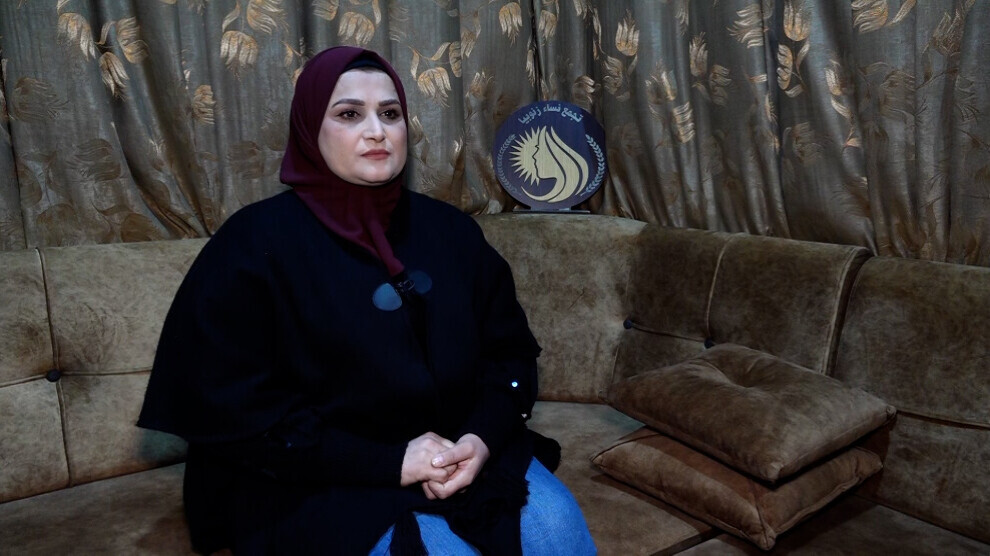
Commenting on the activities of the Zenobia Women’s Gathering in 2025 and the challenges it faced, Bushra Ismail Al-Mohammad, an administrator within the gathering, stated:
“In our regions, since the establishment of the Autonomous Administration, women have been partners in decision-making positions. Their active presence has been consolidated in political and social spheres, and wide spaces have been opened for their empowerment through a vision that affirms that women’s freedom stems from society’s freedom. This has made the model a target for attacks and attempts to reproduce a patriarchal mentality aimed at limiting women’s gains and breaking their will through escalating violence, abuse and killing of women, the spread of drugs, rising suicide cases, and the electronic blackmail we are facing these days.”
She described these practices as “tools used against women to pressure them and obstruct their progress and journey,” affirming that despite challenges aimed at forcing women in North and East Syria to retreat from demanding their legitimate rights, efforts have continued toward drafting a social contract. “We are working on the project of women’s freedom and their broad participation in life so that our experience becomes a model for all Syrian geography,” she added.
Intensified Campaigns Between Interaction and Solidarity
The Zenobia Women’s Gathering launched numerous campaigns in Tabqa, Raqqa, and Deir ez-Zor. Among them was a campaign in Raqqa Canton under the slogan “With Women’s Organization, Society Unites,” launched on September 10 and lasting for one month. The campaign included women from both rural and urban areas and involved 177 meetings with women.
The second campaign took place in Tabqa Canton and also lasted a full month, with 29 meetings held. Another campaign was launched in Tabqa under the slogan “Toward a Cohesive Society Through Women’s Organization,” comprising 373 meetings and joined by 4,660 women.
Bushra Ismail Al-Mohammad noted that this year “witnessed a remarkable acceptance of our work in these regions.” Women joined campaigns launched in solidarity with women in the Syrian coast and Suwayda, through messages, videos, statements, and various activities.
A conference was also held in coordination with Kongra Star to unify future women’s visions for women’s movements in North and East Syria and to emphasize women’s aspirations for Syria’s future.
She added that the Zenobia Women’s Gathering strongly engaged with the International Day for the Elimination of Violence against Women on November 25, launching a campaign titled “Together We Build a Democratic Communal Society to End Violence.” The campaign included 241 meetings, as well as special training courses for men addressing forms of violence against women and ways to reduce this social phenomenon. Three courses were held in Tabqa Canton, two men-only marches were organized, and brochures on forms of violence were distributed. The campaign concluded with an evaluation conducted by the Zenobia Women’s Gathering.
The gathering also interacted with numerous occasions and events, issuing statements and speeches and organizing seminars that extended beyond the local context, affirming that women’s issues are universal — from Jina Amini to the women of the Syrian coast and Suwayda.
The Gathering’s Committees: Integrated Work
The gathering operates in three cities — Tabqa, Raqqa, and Deir ez-Zor — and opened a new branch this year in the capital Damascus under the name “Zenobia for Development.” It also held small meetings with women in the Muadamiyah area, in addition to delegations visiting several European countries.
Alongside campaigns, the Economic Committee continued implementing its plans to economically empower women by launching projects and opening vocational training courses. This year, it focused on agricultural projects involving various crops, opening sewing workshops and a canning factory, as well as projects such as bakeries, for which the gathering ensures the provision of raw materials.
Meanwhile, the Women’s House Committee worked on family law, contributed to resolving many cases, and supported women, with plans for the coming year to implement this law. The Training Committees developed programs to open educational courses for women’s awareness and organization. The Diplomatic Relations Committee coordinated throughout 2025 with delegations that visited the gathering and the region to learn about women’s experiences in North and East Syria.
A new action plan was developed aiming to double organizational activity, expand future events and programs, and enhance the gathering’s operational capacity. The plan included adopting new mechanisms to strengthen women’s roles across various fields and restructuring councils and internal committees in a more effective and organized manner to broaden participation and activate collective efforts.
Future Plans
Several plans have been set for 2026, most notably intensifying women’s struggle and empowerment during this critical phase Syria is undergoing. Bushra Ismail Al-Mohammad stated:
“We must focus on political and administrative empowerment, strengthen leadership participation, ensure legal and social protection, and combat violence. The Family Law will be activated, awareness lectures will be organized, women’s communes will be revitalized, and field expansion will continue to reach the largest possible number of women. We also plan to establish a women’s academy in Raqqa, open new economic projects, expand existing ones, and launch vocational training courses to increase women’s opportunities in the labor market.”
She emphasized that there are plans to combat violence against women and protect them through campaigns, activities, follow-up on women’s cases, and addressing all social ills affecting women.
Targeting the Gathering
In concluding her remarks, Bushra Ismail Al-Mohammad noted that in 2025, four members of the Zenobia Women’s Gathering were targeted during their resistance at Tishreen Dam, while others were targeted by mercenaries of the Turkish occupation.
“This targeting is ongoing, and those who do not believe in women’s ideology have carried out acts of sabotage,” she said. “But we will continue our struggle to protect our achievements.”