
In the Middle East and North Africa… the time for change is now(1)
Amid escalating wars, Palestinian and Yemeni women keep struggling against violence, exploitation and marginalization through resistance, organization and solidarity, affirming their right to decision-making and peace leadership.
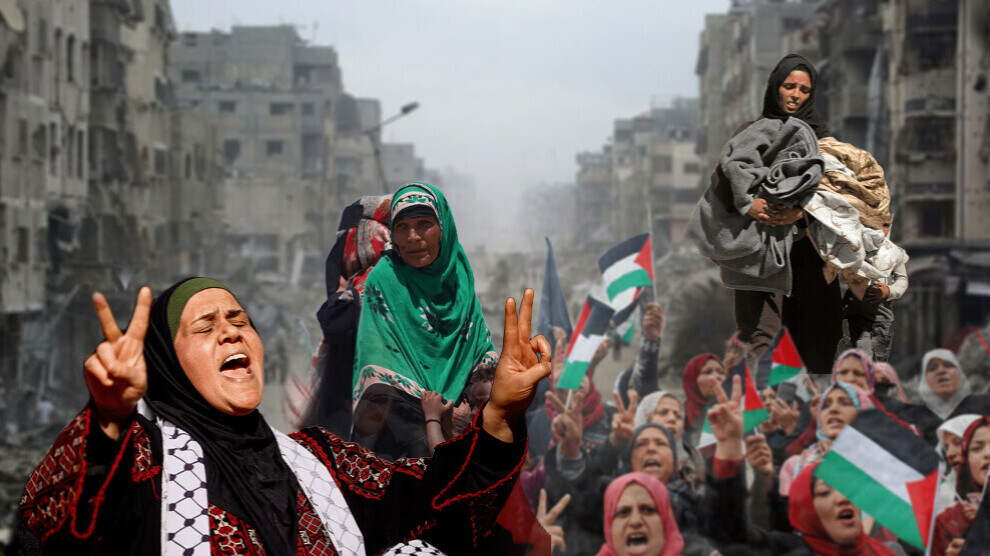
NEWS CENTER — The Middle East has turned in recent years into a war zone, due to direct and indirect interventions by multiple powers, until its features have come to resemble what is described as a third world war. With civil wars extending from villages to cities and streets, external interventions have contributed to deepening conflicts, which have today reached one of their most dangerous stages.
Violence, the culture of rape, the exploitation and selling of women and girls for a morsel of bread, alongside the destruction, looting, and difficult life left behind by wars, all form the current scene in the Middle East. The region's crisis is no longer circumstantial, but has become structural. Therefore, the issue of the Middle East can be viewed as a societal issue, and a women's issue.
Recent wars have turned the lives of women and societies into a real hell. These conflicts, which can be described as wars of exploitation, occupation, and erasure of identity, have produced spirals of violence, extremist systems, and radical religious and gender policies. As civil wars worsen, war policies, as in Palestine, push societies toward famine and humanitarian disasters.
Although these wars are not directly women's wars, women bear the largest burden of their consequences. The roots of the problem lie in confining the Middle East within the boundaries of Islamic political currents, reproducing patriarchal power relations, and systematically deepening the conflict between the sexes.
This tragedy can be addressed through the experiences of Yemen and Palestine, where the term violence against women is no longer sufficient to describe what women are subjected to under war. Since last year, violence against women in Yemen, Palestine, and various parts of the region has turned into a systematic tool of war, amid political and social transformations that prepare for the spread of a culture of rape.
In Palestine, women are besieged between two choices with no third: Israel or Hamas, while they pay the price of the continuation of the war. In Yemen, the situation is more complex, as women and societies have been left amid a multi-party war, between the Houthis, the internationally recognized Yemeni government, and Saudi regional calculations, alongside armed groups such as Al-Qaeda, ISIS, and Al-Nusra Front, in addition to external power interventions. Although the dimensions of the war are attributed to Iran, what is happening goes beyond that and is connected to efforts to reshape the Middle East and push the region toward the axis of the Abrahamic alliance.
During 2026, women developed various forms of struggle and collective organization, starting from confronting the effects of war and forced displacement, to confronting domestic and digital violence and exploitation in the workplace. These efforts aim to protect women and societies, wrest rights, and enhance presence in the public sphere and decision-making centers.
Despite the diversity of forms of women's resistance and the breadth of initiatives, one of the most prominent problems remains the absence of comprehensive and regular statistics that document the scale of these activities. In many areas, there are no shared databases that monitor the number of women's initiatives and their participants, their geographical scope, their continuity, and their results.
Palestine... The struggle for survival and resistance in the face of a genocide war
Our beginning will be from Palestine, where the war has exceeded the traditional concept of conflict and reached, according to descriptions contained in reports of international organizations and the United Nations, the level of genocide.
Violence against women has reached unprecedented levels, revealing the scale of violence that the national state system can practice against women. The convergence of state authority and masculine thought has proven that violence does not exclude women, children, nature, or the social fabric.
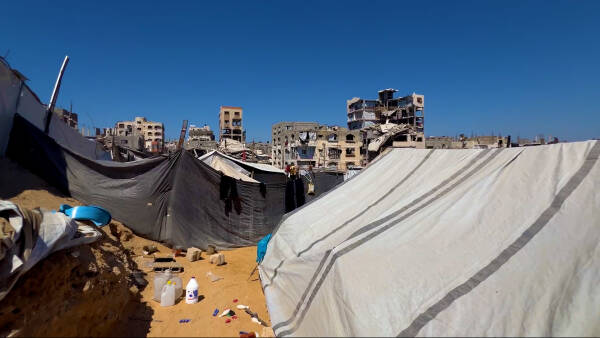
From this perspective, Palestine represents a model that reflects the scale of deterioration the Middle East has reached, and how society has moved from its matriarchal roots to a social system based on killing and destruction.
According to data referred to by human rights organizations and the United Nations since December 2025, the toll of the Israeli war on Gaza is constantly increasing, as the number of deaths has exceeded 73,000 people, including 38,000 women, according to the figures contained in the text, which are numbers for cases whose identities have been identified only.
Data from the Palestinian Central Bureau of Statistics also indicate the killing of more than 24,000 women. In general, about 60% of women and children have been affected by this war.
More than one million women and girls face forced displacement, amid deprivation of protection, food, and health services. Through the stories conveyed by our agency, we followed the struggle of women in Gaza for survival, and how motherhood responsibilities under harsh war conditions turned into a memory of resilience and resistance.
We have seen how women, who did not lose hope until the last moment, turned into fortresses of resilience for their children and families. If Gaza is still standing amid this massive destruction, the credit undoubtedly goes to its women. Our agency, which remained in the field since the beginning of the war, was a witness to this resilience.
It is necessary here to speak about two tracks of violence against women. The first is Israeli violence, which took Hamas as a pretext to occupy Gaza and launch attacks that reached the level of genocide, and is the primary factor that drew the features of this catastrophe and exacerbated its toll. As for the second track, it relates to the forms of violence produced by Hamas's practices and its position toward women and society, and the suffering it left for women.
During the war, Hamas seized food materials that women and mothers had collected for their children amid combat zones, used women and children as shields in aid routes, and placed aid under its control, ignoring women's efforts and lives in favor of its interests. Practices also appeared related to forcing girls and young women into marriage in exchange for food, under arrangements in which Hamas is said to be involved, which reveals the extent to which violence against women has exceeded all limits.
In one of the reports that our agency highlighted, there is the story of a 16-year-old girl who, due to economic conditions and the need for food, was forced to marry a man 15 years older than her. Psychologist Reham Labad also revealed girls being forced into marriage to obtain food aid.
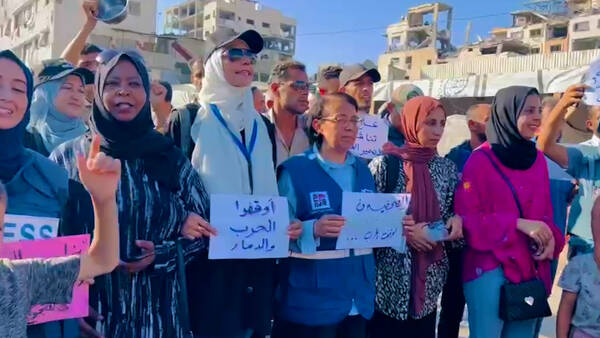
Alongside the tragic scene in Gaza and the increasing toll of the war, women continue to cling to the inexhaustible hope of life, and work amid the war to create spaces for resistance and rebuilding in the vital, social, educational, economic, and artistic fields.
Women: a model of resilience
Away from the limited aid arriving from outside, women present an important model of resilience with their will and determination. One can speak of a women's community that spends its days in work and life activities, seeking to provide educational opportunities and economic capabilities. Women turn feelings of national belonging, their responsibilities as women, the spirit of joint work, solidarity networks, and their strong will into arenas of resistance. It is necessary today to realize that women are the ones at the forefront of the process of rebuilding life amid all this destruction.
The experience of the "Sawa" association working in the Gaza Strip is one of the models that highlights the importance of local institutions in providing support channels for women and girls. According to a report published by the Humanitarian Aid Practices Network, the association has recorded about 390,715 calls through the helpline since 2023, and responded to 245,977 of them. It also made 41,457 referrals for the purpose of providing financial assistance during the period covered by the report. These numbers do not concern 2026 alone, but represent a cumulative toll since the beginning of the attacks.
In March 2026, ANERA launched a food production initiative led by two women's groups. The participating women prepare pastries and bread to distribute to displaced families, children, and patients in hospitals. The initiative provides women with an opportunity to obtain income, in parallel with meeting the food needs of the community. Participants receive wages for their work, while products are distributed free of charge to the target groups.
In the West Bank and Jerusalem, women face overlapping forms of violence and restrictions, including raids, assaults, restrictions on freedom of movement, and declining economic and social security, in addition to domestic and societal violence. Among the many initiatives implemented in the West Bank during 2026 is the project "Women for Dialogue: Restoring Civic Space and Building Community Resilience in Jerusalem and the West Bank." The project was implemented between January and September, and brought together 80 women aged 20 to 40 within four local groups. The project focused on overcoming psychological trauma, developing leadership capabilities, enhancing community solidarity and dialogue, and providing psychological first aid, in addition to preparing women-led initiatives to address local tensions and enhance trust and community cohesion.
Women's political struggle
Within the framework of highlighting the role of Palestinian women in the struggle for survival during the war, preserving the social fabric, and contributing to rebuilding it, a campaign was launched on the occasion of International Women's Day 2026, in partnership between UN institutions and the Palestinian Ministry of Women's Affairs, under the slogan "We Resist and We Lead." The campaign aimed to shed light on women's resistance and their leadership role, and to highlight the contributions of women's institutions and pioneering women in crisis response operations.
The importance of this campaign lies in keeping women's issues and demands present in public discussion, and confronting trends that confine women's role to bearing the burdens of crises and ignore their capabilities in leadership, organization, and participation in setting priorities and decision-making.
Alongside these initiatives, women's struggle also stands out to prevent their exclusion from decisions related to the future of Gaza, or their exclusion from negotiation tables. In this context, feminist activist Hanan Siyam affirmed to our agency that any recovery or reconstruction process cannot be comprehensive unless women's institutions and their leaders participate in the planning, implementation, and decision-making stages.
She said: "Women found themselves in a war they did not choose, and lived the genocide in all its cruelty. Therefore, they do not consider their exclusion from peace and solution processes and post-war reconstruction as merely an unjust position, but view it as an extension of the genocide they were subjected to."
The war is not only taking place in confrontation arenas where weapons are used, but also continues at negotiation tables, in politics and administrative mechanisms, and in the struggle for the democratization of the system. While women were dragged into all stages of the war, they insist on not being excluded from decision-making centers in the coming stages, and continue their struggle for that. Ensuring women's participation in negotiation and solution processes is a highly important matter that cannot be ignored.
These demands are also linked to confronting forms of violence that have worsened as a result of the war and the collapse of the legal system. Political analyst Tamara Haddad points out that forced displacement and the deterioration of living conditions expose women and girls to increasing risks of violence, exploitation, and harassment. She also pointed to the pressures that may push some families to marry off their daughters at an early age.
Therefore, one of the basic demands of the Palestinian women's struggle is to recognize their role in resistance and crisis response, and to guarantee their right to participate in decision-making centers.
Yemen... Women struggle against political exclusion
When we move from Gaza, besieged under bombardment, to Yemen, which has drifted into a forgotten conflict, we face the same tragic scene: women bearing alone the burden of survival.
The ongoing conflict places women before grave challenges, as they are the most affected group, and because they bear the consequences of structural exclusion.
The figures announced by international, UN, and local organizations in Yemen reveal the scale of the tragedy. Women and children make up more than 75% of about 4.5 million internally displaced persons. With more than 50% of health facilities out of service, maternal mortality rates have risen to dangerous levels, as a woman loses her life every two hours due to pregnancy and childbirth complications.
Regarding gender-based violence, estimates indicate that it has risen by more than 60% during the years of conflict. Child marriage rates have also risen, as some families resort to this option, according to what is presented, to confront poverty and the difficulties of securing a livelihood.
Despite this institutional and societal collapse, of which women bear the largest burden, Yemeni women have shown an exceptional ability to develop struggle forms that go beyond the traditional humanitarian aid model, reaching direct political and field leadership.
In a conservative society where women are still treated as second-class citizens, women have led initiatives for local mediation and conflict resolution. Through women's networks and arduous negotiations, they have worked to open closed roads between governorates, facilitate prisoner and detainee exchange operations, and establish safe corridors to deliver humanitarian aid to besieged areas.
Yemeni women's organizations and initiatives seek to build a path of resistance that takes into account cultural specificity and encourages all parties to adopt a consensus policy on a democratic basis.
In this context, women insist on enacting legislation that criminalizes all forms of violence, redrafting personal status laws, raising the minimum legal age for marriage, and building a democratic system and laws that guarantee women's participation in political life.
The roots of the destruction left by the civil war in Yemen go back to the deep divisions produced by the country's conservative and extremist structure, and Sharia laws that serve political Islam, alongside the system of discrimination and societal fragmentation.
Women aspire to build a system that allows coexistence between different beliefs and political orientations, and re-establishes rights and law in a way that guarantees the freedoms of society and women. For this, they do not hesitate to turn various institutions and bodies into arenas of struggle.
The most prominent organizational activities and movements
Among the most prominent organizational movements during 2026 was the announcement by the "Women's Solidarity Network" on March 31 of its five-year strategy for the period 2026-2030, within the "Peace Path" initiative. The strategy presents a framework aimed at strengthening the network as an inclusive platform for women, developing the capabilities of women's organization, protecting activists, and increasing women's presence and influence in decision-making centers and peace-building processes.
Within the framework of consultations ongoing since November 2025, more than 600 people, including women, youth, local actors, civil society representatives, and conflict survivors, participated in meetings held inside and outside Yemen. The importance of these initiatives lies in providing a space for women to express their visions of peace, and developing proposals that are not limited to stopping military operations, but address the roots of the conflict and its social and economic repercussions, including issues of security, justice, political participation, and economic rights.
But participation in consultations does not necessarily mean obtaining a seat at the negotiation table or possessing decision-making power. Nor does collecting proposals guarantee their transformation into binding political commitments.
Therefore, the main challenge before Yemeni activists is to transform consultative participation into real and sustainable representation in negotiations and bodies responsible for peace-building, and to ensure the inclusion of women's issues in the agreements and policies that will draw the features of the post-conflict phase.
Alongside political struggle, economic dependency, and limited job opportunities, women are working to launch initiatives that provide them with more independent spaces to practice productive and commercial activities.
Among the most prominent of these initiatives is the opening of the "Women's Market" in February 2026, in the Crater area of the Sira district in the city of Aden. This initiative provides a space for women to display their products and manage their economic activities.
Women also continue to work within local solidarity groups established by women in rural areas and displacement camps, with the aim of providing small loans and establishing limited-scale home projects. In addition to that, work is underway to establish mobile health clinics dedicated to women.
Despite all these efforts, the gap remains wide between the roles women play within local communities and the level of their representation in centers of power and negotiation. Security and societal restrictions, the decline of protection mechanisms, and the limited resources available to women's groups are all factors that prevent local initiatives from being translated into sustainable political and legal gains.
Women are present in the arenas of struggle and resistance
The experiences of women in Palestine and Yemen constitute an important shared model for understanding the scale of what wars have reached and the targeting of women in our current era.
There are attempts to add a third historical rupture to the two great historical ruptures that the women of the Middle East have experienced. This can be read through the ignition of wars starting from crises, attempts to break women's will in conflict arenas, and schemes aimed at reshaping the Middle East without the presence of women.
But women today turn every space in which they should be present into an arena of struggle and resistance, and through their struggle, they raise today the slogan "The Era of Women." The time has come for women to meet with their identities, their will, and their freedom.
News Center — The Middle East has turned in recent years into a war zone, due to direct and indirect interventions by multiple powers, until its features have come to resemble what is described as a third world war. With civil wars extending from villages to cities and streets, external interventions have contributed to deepening conflicts, which have today reached one of their most dangerous stages.
Violence, the culture of rape, the exploitation and selling of women and girls for a morsel of bread, alongside the destruction, looting, and difficult life left behind by wars, all form the current scene in the Middle East. The region's crisis is no longer circumstantial, but has become structural. Therefore, the issue of the Middle East can be viewed as a societal issue, and a women's issue.
Recent wars have turned the lives of women and societies into a real hell. These conflicts, which can be described as wars of exploitation, occupation, and erasure of identity, have produced spirals of violence, extremist systems, and radical religious and gender policies. As civil wars worsen, war policies, as in Palestine, push societies toward famine and humanitarian disasters.
Although these wars are not directly women's wars, women bear the largest burden of their consequences. The roots of the problem lie in confining the Middle East within the boundaries of Islamic political currents, reproducing patriarchal power relations, and systematically deepening the conflict between the sexes.
This tragedy can be addressed through the experiences of Yemen and Palestine, where the term violence against women is no longer sufficient to describe what women are subjected to under war. Since last year, violence against women in Yemen, Palestine, and various parts of the region has turned into a systematic tool of war, amid political and social transformations that prepare for the spread of a culture of rape.
In Palestine, women are besieged between two choices with no third: Israel or Hamas, while they pay the price of the continuation of the war. In Yemen, the situation is more complex, as women and societies have been left amid a multi-party war, between the Houthis, the internationally recognized Yemeni government, and Saudi regional calculations, alongside armed groups such as Al-Qaeda, ISIS, and Al-Nusra Front, in addition to external power interventions. Although the dimensions of the war are attributed to Iran, what is happening goes beyond that and is connected to efforts to reshape the Middle East and push the region toward the axis of the Abrahamic alliance.
During 2026, women developed various forms of struggle and collective organization, starting from confronting the effects of war and forced displacement, to confronting domestic and digital violence and exploitation in the workplace. These efforts aim to protect women and societies, wrest rights, and enhance presence in the public sphere and decision-making centers.
Despite the diversity of forms of women's resistance and the breadth of initiatives, one of the most prominent problems remains the absence of comprehensive and regular statistics that document the scale of these activities. In many areas, there are no shared databases that monitor the number of women's initiatives and their participants, their geographical scope, their continuity, and their results.
Palestine... The struggle for survival and resistance in the face of a genocide war
Our beginning will be from Palestine, where the war has exceeded the traditional concept of conflict and reached, according to descriptions contained in reports of international organizations and the United Nations, the level of genocide.
Violence against women has reached unprecedented levels, revealing the scale of violence that the national state system can practice against women. The convergence of state authority and masculine thought has proven that violence does not exclude women, children, nature, or the social fabric.
From this perspective, Palestine represents a model that reflects the scale of deterioration the Middle East has reached, and how society has moved from its matriarchal roots to a social system based on killing and destruction.
According to data referred to by human rights organizations and the United Nations since December 2025, the toll of the Israeli war on Gaza is constantly increasing, as the number of deaths has exceeded 73,000 people, including 38,000 women, according to the figures contained in the text, which are numbers for cases whose identities have been identified only.
Data from the Palestinian Central Bureau of Statistics also indicate the killing of more than 24,000 women. In general, about 60% of women and children have been affected by this war.
More than one million women and girls face forced displacement, amid deprivation of protection, food, and health services. Through the stories conveyed by our agency, we followed the struggle of women in Gaza for survival, and how motherhood responsibilities under harsh war conditions turned into a memory of resilience and resistance.
We have seen how women, who did not lose hope until the last moment, turned into fortresses of resilience for their children and families. If Gaza is still standing amid this massive destruction, the credit undoubtedly goes to its women. Our agency, which remained in the field since the beginning of the war, was a witness to this resilience.
It is necessary here to speak about two tracks of violence against women. The first is Israeli violence, which took Hamas as a pretext to occupy Gaza and launch attacks that reached the level of genocide, and is the primary factor that drew the features of this catastrophe and exacerbated its toll. As for the second track, it relates to the forms of violence produced by Hamas's practices and its position toward women and society, and the suffering it left for women.
During the war, Hamas seized food materials that women and mothers had collected for their children amid combat zones, used women and children as shields in aid routes, and placed aid under its control, ignoring women's efforts and lives in favor of its interests. Practices also appeared related to forcing girls and young women into marriage in exchange for food, under arrangements in which Hamas is said to be involved, which reveals the extent to which violence against women has exceeded all limits.
In one of the reports that our agency highlighted, there is the story of a 16-year-old girl who, due to economic conditions and the need for food, was forced to marry a man 15 years older than her. Psychologist Reham Labad also revealed girls being forced into marriage to obtain food aid.
Alongside the tragic scene in Gaza and the increasing toll of the war, women continue to cling to the inexhaustible hope of life, and work amid the war to create spaces for resistance and rebuilding in the vital, social, educational, economic, and artistic fields.
Women: a model of resilience
Away from the limited aid arriving from outside, women present an important model of resilience with their will and determination. One can speak of a women's community that spends its days in work and life activities, seeking to provide educational opportunities and economic capabilities. Women turn feelings of national belonging, their responsibilities as women, the spirit of joint work, solidarity networks, and their strong will into arenas of resistance. It is necessary today to realize that women are the ones at the forefront of the process of rebuilding life amid all this destruction.
The experience of the "Sawa" association working in the Gaza Strip is one of the models that highlights the importance of local institutions in providing support channels for women and girls. According to a report published by the Humanitarian Aid Practices Network, the association has recorded about 390,715 calls through the helpline since 2023, and responded to 245,977 of them. It also made 41,457 referrals for the purpose of providing financial assistance during the period covered by the report. These numbers do not concern 2026 alone, but represent a cumulative toll since the beginning of the attacks.
In March 2026, ANERA launched a food production initiative led by two women's groups. The participating women prepare pastries and bread to distribute to displaced families, children, and patients in hospitals. The initiative provides women with an opportunity to obtain income, in parallel with meeting the food needs of the community. Participants receive wages for their work, while products are distributed free of charge to the target groups.
In the West Bank and Jerusalem, women face overlapping forms of violence and restrictions, including raids, assaults, restrictions on freedom of movement, and declining economic and social security, in addition to domestic and societal violence. Among the many initiatives implemented in the West Bank during 2026 is the project "Women for Dialogue: Restoring Civic Space and Building Community Resilience in Jerusalem and the West Bank." The project was implemented between January and September, and brought together 80 women aged 20 to 40 within four local groups. The project focused on overcoming psychological trauma, developing leadership capabilities, enhancing community solidarity and dialogue, and providing psychological first aid, in addition to preparing women-led initiatives to address local tensions and enhance trust and community cohesion.
Women's political struggle
Within the framework of highlighting the role of Palestinian women in the struggle for survival during the war, preserving the social fabric, and contributing to rebuilding it, a campaign was launched on the occasion of International Women's Day 2026, in partnership between UN institutions and the Palestinian Ministry of Women's Affairs, under the slogan "We Resist and We Lead." The campaign aimed to shed light on women's resistance and their leadership role, and to highlight the contributions of women's institutions and pioneering women in crisis response operations.
The importance of this campaign lies in keeping women's issues and demands present in public discussion, and confronting trends that confine women's role to bearing the burdens of crises and ignore their capabilities in leadership, organization, and participation in setting priorities and decision-making.
Alongside these initiatives, women's struggle also stands out to prevent their exclusion from decisions related to the future of Gaza, or their exclusion from negotiation tables. In this context, feminist activist Hanan Siyam affirmed to our agency that any recovery or reconstruction process cannot be comprehensive unless women's institutions and their leaders participate in the planning, implementation, and decision-making stages.
She said: "Women found themselves in a war they did not choose, and lived the genocide in all its cruelty. Therefore, they do not consider their exclusion from peace and solution processes and post-war reconstruction as merely an unjust position, but view it as an extension of the genocide they were subjected to."
The war is not only taking place in confrontation arenas where weapons are used, but also continues at negotiation tables, in politics and administrative mechanisms, and in the struggle for the democratization of the system. While women were dragged into all stages of the war, they insist on not being excluded from decision-making centers in the coming stages, and continue their struggle for that. Ensuring women's participation in negotiation and solution processes is a highly important matter that cannot be ignored.
These demands are also linked to confronting forms of violence that have worsened as a result of the war and the collapse of the legal system. Political analyst Tamara Haddad points out that forced displacement and the deterioration of living conditions expose women and girls to increasing risks of violence, exploitation, and harassment. She also pointed to the pressures that may push some families to marry off their daughters at an early age.
Therefore, one of the basic demands of the Palestinian women's struggle is to recognize their role in resistance and crisis response, and to guarantee their right to participate in decision-making centers.
Yemen... Women struggle against political exclusion
When we move from Gaza, besieged under bombardment, to Yemen, which has drifted into a forgotten conflict, we face the same tragic scene: women bearing alone the burden of survival.
The ongoing conflict places women before grave challenges, as they are the most affected group, and because they bear the consequences of structural exclusion.
The figures announced by international, UN, and local organizations in Yemen reveal the scale of the tragedy. Women and children make up more than 75% of about 4.5 million internally displaced persons. With more than 50% of health facilities out of service, maternal mortality rates have risen to dangerous levels, as a woman loses her life every two hours due to pregnancy and childbirth complications.
Regarding gender-based violence, estimates indicate that it has risen by more than 60% during the years of conflict. Child marriage rates have also risen, as some families resort to this option, according to what is presented, to confront poverty and the difficulties of securing a livelihood.
Despite this institutional and societal collapse, of which women bear the largest burden, Yemeni women have shown an exceptional ability to develop struggle forms that go beyond the traditional humanitarian aid model, reaching direct political and field leadership.
In a conservative society where women are still treated as second-class citizens, women have led initiatives for local mediation and conflict resolution. Through women's networks and arduous negotiations, they have worked to open closed roads between governorates, facilitate prisoner and detainee exchange operations, and establish safe corridors to deliver humanitarian aid to besieged areas.
Yemeni women's organizations and initiatives seek to build a path of resistance that takes into account cultural specificity and encourages all parties to adopt a consensus policy on a democratic basis.
In this context, women insist on enacting legislation that criminalizes all forms of violence, redrafting personal status laws, raising the minimum legal age for marriage, and building a democratic system and laws that guarantee women's participation in political life.
The roots of the destruction left by the civil war in Yemen go back to the deep divisions produced by the country's conservative and extremist structure, and Sharia laws that serve political Islam, alongside the system of discrimination and societal fragmentation.
Women aspire to build a system that allows coexistence between different beliefs and political orientations, and re-establishes rights and law in a way that guarantees the freedoms of society and women. For this, they do not hesitate to turn various institutions and bodies into arenas of struggle.
The most prominent organizational activities and movements
Among the most prominent organizational movements during 2026 was the announcement by the "Women's Solidarity Network" on March 31 of its five-year strategy for the period 2026-2030, within the "Peace Path" initiative. The strategy presents a framework aimed at strengthening the network as an inclusive platform for women, developing the capabilities of women's organization, protecting activists, and increasing women's presence and influence in decision-making centers and peace-building processes.
Within the framework of consultations ongoing since November 2025, more than 600 people, including women, youth, local actors, civil society representatives, and conflict survivors, participated in meetings held inside and outside Yemen. The importance of these initiatives lies in providing a space for women to express their visions of peace, and developing proposals that are not limited to stopping military operations, but address the roots of the conflict and its social and economic repercussions, including issues of security, justice, political participation, and economic rights.
But participation in consultations does not necessarily mean obtaining a seat at the negotiation table or possessing decision-making power. Nor does collecting proposals guarantee their transformation into binding political commitments.
Therefore, the main challenge before Yemeni activists is to transform consultative participation into real and sustainable representation in negotiations and bodies responsible for peace-building, and to ensure the inclusion of women's issues in the agreements and policies that will draw the features of the post-conflict phase.
Alongside political struggle, economic dependency, and limited job opportunities, women are working to launch initiatives that provide them with more independent spaces to practice productive and commercial activities.
Among the most prominent of these initiatives is the opening of the "Women's Market" in February 2026, in the Crater area of the Sira district in the city of Aden. This initiative provides a space for women to display their products and manage their economic activities.
Women also continue to work within local solidarity groups established by women in rural areas and displacement camps, with the aim of providing small loans and establishing limited-scale home projects. In addition to that, work is underway to establish mobile health clinics dedicated to women.
Despite all these efforts, the gap remains wide between the roles women play within local communities and the level of their representation in centers of power and negotiation. Security and societal restrictions, the decline of protection mechanisms, and the limited resources available to women's groups are all factors that prevent local initiatives from being translated into sustainable political and legal gains.
Women are present in the arenas of struggle and resistance
The experiences of women in Palestine and Yemen constitute an important shared model for understanding the scale of what wars have reached and the targeting of women in our current era.
There are attempts to add a third historical rupture to the two great historical ruptures that the women of the Middle East have experienced. This can be read through the ignition of wars starting from crises, attempts to break women's will in conflict arenas, and schemes aimed at reshaping the Middle East without the presence of women.
But women today turn every space in which they should be present into an arena of struggle and resistance, and through their struggle, they raise today the slogan "The Era of Women." The time has come for women to meet with their identities, their will, and their freedom.