
In the Middle East and North Africa... The Time for Change Has Come (3)
From Iran to Afghanistan, despite violence, repression, and widespread restrictions, women continue their struggle for life, freedom, and choice, so that their resistance and voice become an integral part of the transformations of the Middle East today.
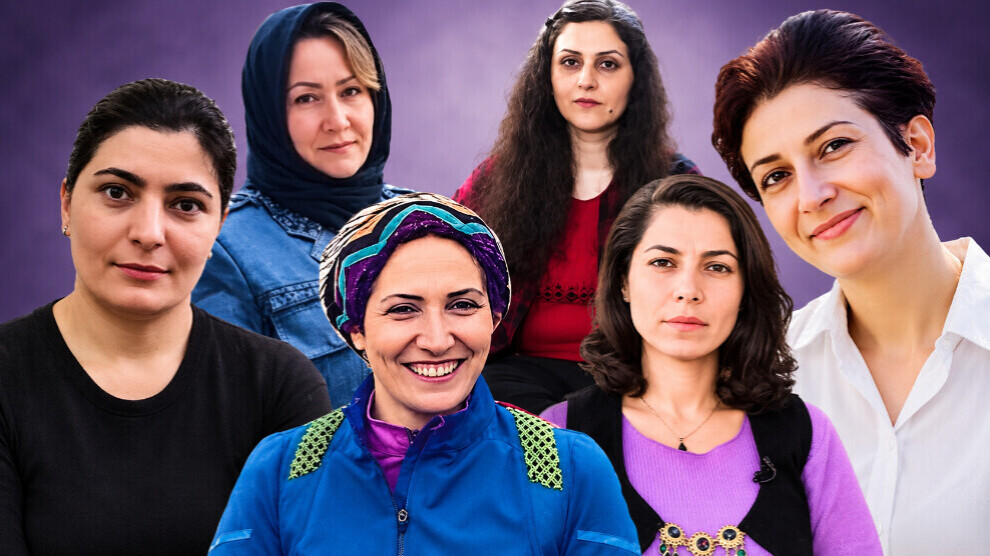
NEWS CENTER— In a region where political and economic crises, wars, and conflicts intersect, women's suffering is no longer merely individual tales of violence and discrimination, but has become part of a broader scene in which repressive policies intertwine with social and economic restrictions, and their effects are reflected in the details of the daily lives of women and girls.
From the streets of Iran and its detention centers and prisons, to Afghanistan under Taliban rule, women face multiple forms of violence, exclusion, and deprivation; from arrest, rape, and threats of execution, to restrictions on education, work, movement, and presence in the public sphere. As the circles of restriction widen, women's attempts to defend their rights, build solidarity networks, preserve their independence, and innovate new spaces for resistance continue.
Arrest, execution, and violence: multiple faces of women's repression
Some stories begin from a moment of violence whose traces cannot be erased, but they do not end at the limits of personal experience. "Mahnaz" says that "on January 9, 2026, after three sleepless nights, I went out into the street accompanied by my husband Masoud. On Vakil Abad Street in the city of Mashhad, security forces attacked the crowds. During our escape, a bullet hit Masoud's leg. They threw us into a small van; while Masoud was bleeding, the elements threatened me that they would shoot him in the head if I did not open one of their pants. After that, three men took turns raping and humiliating me in front of my husband, who was semi-conscious. Four days later, during the investigation, instead of looking into my complaint, the interrogator held me responsible and said I should have prevented it from happening. My only question revolved around Masoud's condition; I did not know whether he was alive or dead, where he was, and whether he hated me. Nor did I know yet whether the world would know what I had gone through or not..."
Mahnaz's story goes beyond individual experience, reflecting the reality of violence practiced against women in Iran, in its various forms in the streets, detention centers, prisons, and judicial institutions.
Since the beginning of 2026, arrests of activists, lawyers, and doctors have continued, amid reports that some of them were subjected to humiliation and threats, and that their families were deprived of information about their places of detention and the reasons for their arrest.
According to rights reports, the identities of more than 300 women arrested since the beginning of the year have been documented, while the Human Rights Organization in Iran announced the execution of at least 23 women until November 11, 2026.
From suppressing protests to the formation of solidarity networks
The violence was not limited to protests in major cities, but extended to areas witnessing protests related to economic and environmental rights, including areas of Baluchistan. During the attack launched by military forces on Baluch protesters on June 16 and 17, at least seven women were injured, while other women were arrested and transferred to an unknown location. This incident constituted the second violent confrontation with female protesters over mining activities in less than 24 hours.
Despite these pressures, women in different areas continue their efforts to build solidarity networks and strengthen the interconnection between their demands. On April 30, 2026, five women's organizations in eastern Kurdistan announced, through a joint statement, the establishment of the "Women of Eastern Kurdistan - Jina" platform, with the aim of enhancing solidarity and organizational cohesion and linking gender demands with national struggles.
Security legislation and the expansion of restrictions
On the legal and legislative levels, members of the Iranian Islamic Consultative Assembly approved, on October 23, 2026, Articles 30 and 31 and the additional paragraph of Article 3 of the draft law "On Combating the Infiltration of Intelligence Agencies and Foreign Governments or Institutions," which raised rights concerns about its potential repercussions on public freedoms.
In this context, rights activist and researcher Nireh Ansari, a specialist in public international law and European law, warned in her interview with our agency about the ambiguity of concepts such as "social diffusion," and the possibility of employing them to criminalize scientific, cultural, and media activities, considering that the draft falls within the context of the conflict between religion and science, and may open the door to expanding the scope of restrictions and repression.
No to execution... the continuation of resistance behind prison walls
Despite restrictions and harsh sentences, Iranian prisons have turned for many women into arenas for continuing resistance, as reflected in the experiences of Zainab Jalalian, who spent nearly two decades in prison without leave, Warishe Moradi, Pakhshan Azizi who is sentenced to death, Kullar Khairayi, and Sharifeh Mohammadi, alongside dozens of female prisoners who held fast to their rights positions despite torture and pressures.
In parallel, the "Tuesday Against Executions" campaign has continued its activity since its launch in Iranian prisons on January 21, 2024, with the support of groups including "Mothers of Peace in Eastern Kurdistan," to expand the rejection of the death penalty from inside prisons to society.
On the political level, the Iran Human Rights Organization hosted the sixth Oslo Conference on September 27 and 28, 2026, where 15 party and political bodies signed the document "Minimum Rights Principles for the Transitional Phase," affirming the abolition of the death penalty and equality before the law.
Farzaneh Azimi, representative of the Iranian Left Party, explained that the document comes amid escalating economic and political crises, military tensions, currency depreciation, rising unemployment, and a legitimacy crisis of the authority.
This consensus reflects an endeavor to establish rights foundations that prevent the repetition of past violations, especially the 1988 executions and subsequent repression campaigns. The most prominent demands are the abolition of the death penalty, the release of political prisoners, and the dismantling of structures that allow the continuation of repression, to ensure the non-repetition of the cycle of imprisonment, execution, and violation of freedoms.
Livelihood pressures and restriction of digital space
Women's suffering in Iran is worsening due to the economic crisis, rising living costs, declining purchasing power, and delays in disbursing entitlements, alongside restrictions on the internet and communications that increase the burdens of workers, teachers, and retirees.
Discontent is manifested in weekly retirees' protests, ongoing since April 19, 2026, in several cities, demanding their entitlements and improved living conditions. The 40% increase in telecommunications companies' tariffs and the decline in internet quality have also increased the suffering of workers in digital fields.
Controlling women's social presence
The restriction on women's presence in the public sphere is not limited to imposing dress restrictions, but extends to erasing and distorting their images, from vandalizing images engraved on gravestones to obliterating their faces from billboards.
These restrictions take different forms in Afghanistan; under Taliban rule, the restriction on women's images has reached the point of banning the display of their faces in many public places, and removing their pictures from tailoring shops and beauty salons. In Iran, the closure of shops, cafes, and commercial centers under the pretext of "improper hijab" is used as a means of pressuring women and restricting their presence, as happened in South Khorasan, Tehran, and other cities.
From domestic femicide to digital blackmail
Violence against women in Iran takes multiple forms, from killing within the family to electronic blackmail and the publication of private images, threatening their lives, safety, and privacy.
According to rights reports, at least 100 women and 20 children were killed between the beginning of 2026 and the end of November, in crimes involving husbands, romantic partners, or family members, including the killing of Maryam Yar Mohammadi in Lorestan province by her brother. Electronic blackmail and the publication of private images, especially in Kermanshah and Lorestan, were also linked to the suicide of more than 20 women and girls.
In the face of these crimes, the "Stop Honor Killings" campaign was launched in October 2020, following crimes that attracted wide attention, most notably the killing of Romina Ashrafi.
Child marriage represents another form of violence and deprivation of the right to choice and education. Despite the absence of recent official statistics for 2026, estimates indicate the possibility of recording about 85,000 cases of marriage for girls under 18 during the first nine and a half months of the year.
A rights investigation also raised concerns about the "Adam and Eve" application promoting child marriage, after monitoring at least 100 accounts of girls between 13 and 17 years old. As a result, 24 civil and rights organizations demanded the deletion of the application, and Google responded by removing it from its store on October 9, while Meta deleted violating advertisements from Instagram and Threads.
Children and women facing war and restrictions
The attack that occurred on February 28 on the "Shajareh Tayyebeh" school in Minab, and on the school and the adjacent sports complex in Lamerd, resulted in the killing and injury of more than 200 civilians, including children.
At the same time, reports spread about attempts to distribute identification cards similar to military cards to students in some schools, which raised objections from parents. However, the Ministry of Education denied issuing general instructions to prepare these cards.
Our agency's correspondent also reported the establishment of symbolic barricades and the display of war equipment inside schools in Kermanshah, alongside attempts to distribute identification cards to students.
Motorcycle driving license: a postponed right
Women's right to obtain a motorcycle driving license is still not fully activated, despite the Council of Ministers approving a decision in this regard. During the years of deprivation of training and official licensing, women faced grave risks and financial losses; 18 female motorcyclists died in Isfahan between March 21 and July 22, 2026. The absence of a license also increases the difficulty of obtaining insurance compensation when accidents occur, which exacerbates the financial burdens on women and their families.
In February 2026, the Council of Ministers approved a decision obligating the police to practically train women, conduct the necessary tests, and issue driving licenses to them, in a step toward recognizing this right, but implementation is still faltering.
"In my absence, take care of my story"
Shirin, a 21-year-old Afghan migrant girl, was unable to obtain her secondary certificate due to poverty. Her father left for Afghanistan and married there, leaving her with her mother and sister in a small room. "I used to dream of an intact wall and a beautiful mirror in front of which I would take pictures, as girls do on Instagram, but my mirror was broken. I have nothing to gain and nothing to lose."
She said: "One day, my patience ran out, so I went out into the street to participate in the January protests, but we were arrested by security elements, who crammed us into a blue Nissan car as dogs are crammed. I was beaten and insulted on the way and in the detention center. I was humiliated repeatedly, threatened with death and deportation to Afghanistan, and subjected to harassment and physical assault on the first night of my arrest."
She continued: "The interrogator took my mother's phone number. Months passed while I was in prison, without my fate being decided, on charges of participating in protests, and I often cry. I did not even have enough money today to buy shampoo from the prison store, for fear for my beautiful curly hair from damage. If this life were a play, it would be a breathtaking play... In my absence, take care of my story..."
The suffering of migration to the horizons of return
Shirin's story does not reduce the suffering of a migrant girl who was subjected to violence in Iranian detention centers, but reflects the reality of thousands of Afghan women and girls stuck between two countries, in the absence of security, rights, and social protection. Forced return to Afghanistan does not necessarily mean the end of the suffering of women who sought refuge in Iran fleeing unrest and restrictions, as they face the risk of returning to a country where the Taliban movement imposes strict restrictions on education, work, and participation in public life.
According to the UN High Commissioner for Refugees, about 1 million 290 thousand people returned from Iran and Pakistan to Afghanistan during the first nine months of 2026, while women breadwinners for families constitute 45% of returning families.
For its part, UN Women stated that one in five returning women lacks skills, while many, despite 40% of them possessing technical, digital, and professional skills, face difficulties in obtaining job opportunities or financing to launch their own projects.
Imprisonment, flogging, and restricting women's awareness and independence
The Taliban's Ministry of Interior announced in January 2026 that the number of female prisoners rose by 435%, reaching 1,825 women. The United Nations and the World Organization Against Torture also documented sexual violations and systematic violence inside prisons, including the rape of 15 women and six girls within one year.
The fate of Alia Azizi, the former head of the women's prison in Herat, remains unknown since her disappearance in October 2021. According to rights reports, 422 women were publicly flogged between 2022 and 2026, while during the first years of Taliban rule, 159 women were killed, 50 others committed suicide, and more than 1,115 women were imprisoned.
Regression of rights gains and escalation of legal restrictions
The gains of Afghan women achieved over the past two decades, from the 2009 law against violence against women to the equality guarantees in the constitution, have regressed after the Taliban's return to power. With the abolition of the Ministry of Women's Affairs and its replacement by the Ministry for the Promotion of Virtue and Prevention of Vice, decisions restricting women's rights escalated, reaching the approval of the "Separation of Spouses Regulation" in 2026, and the concerns it raised about women's rights and the possibility of facilitating child marriage.
A health and psychological crisis exacerbated by restrictions
UN reports indicate that about 3.7 million children in Afghanistan suffer from acute malnutrition, of whom girls constitute 57 to 61%. UN Women statistics also indicate that 90% of Afghan women suffer from psychological problems, in light of the restrictions imposed on education, work, and social participation, and the decline in their opportunities to obtain support and specialized care.
Resistance in the face of exclusion
The resistance of Afghan women is not new; women like Bibi Sanghi and Maryam faced tyranny, while Mina Keshwar Kamal, founder of the Revolutionary Association of the Women of Afghanistan (RAWA), devoted her life to raising and organizing women before her assassination. Today, new generations continue the march of struggle for freedom and independence despite Taliban restrictions.
Despite the closure of the Women's Chamber of Commerce after the fall of the previous government, women reactivated it in the summer of 2022. Statistics indicate that about 10,000 women work with official licenses, compared to 100,000 who practice electronic commerce and small projects without licenses.
Resistance is not limited to economic activity, but extends to popular protests and secret classes that allow thousands of girls to continue their education. Rights activist Yalda Ahmad also called for enhancing women's awareness and solidarity among them in the face of injustice and repression.
From Mahnaz in Mashhad to Shirin in Iran, reaching the women of Afghanistan, the stories multiply, but they are united by one demand: the right to safety, freedom, independence, and self-determination, despite the different political and social conditions in the two countries.