
In the Middle East and North Africa... The Time for Change Has Come (2)
Women everywhere have struggled against violence, impunity, poverty, and discrimination, and have defended their right to life, affirming their determination to participate in decision-making during the "Peace and Democratic Society Process."
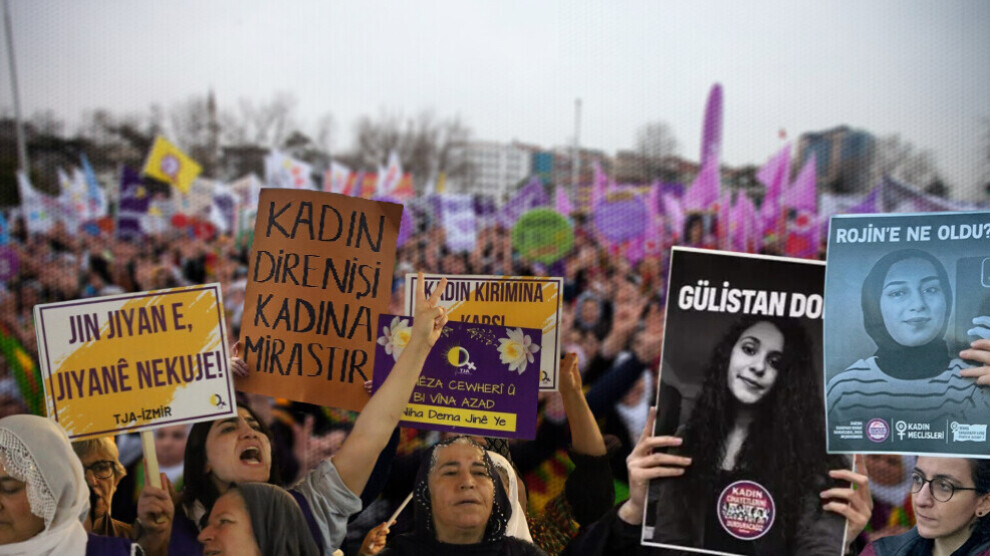
Women Have Not Been Silent... Resistance to Violence, Poverty, and War
SARBIL SAVOMLU
NEWS CENTER— Violence against women continues throughout the world, and its severity is exacerbated by wars and conflicts. In conflict areas, the suffering of women and children is not limited to bombardment, displacement, and destruction, but extends to sexual violence, abduction, human trafficking, hunger, and systematic human rights violations.
Wars leave deep effects on women's lives, bodies, and memory, while millions of displaced women face harsh conditions characterized by insecurity, deprivation of basic needs, and exposure to violence. In Gaza, women and children suffer from bombardment, hunger, and the collapse of health services, while in Sudan, crimes of rape and forced displacement are worsening. From Syria and Yemen to Ukraine and other conflict areas, grave violations of women's rights to life, security, and physical safety continue.
Women's suffering does not end with the end of wars, as forms of discrimination and control over their bodies and lives continue, whether as a weapon in conflicts or as a means of entrenching men's dominance within the family and society. Despite bearing the largest burden of wars, they are often excluded from peace negotiations and decision-making.
Violence is not limited to battlefields
Violence against women is not limited to battlefields alone. Women are subjected to violence by men in their homes, streets, workplaces, and public places. Crimes of murder, domestic violence, rape, harassment, forced marriage, economic exploitation, and discrimination remain among the common problems facing women, even if the regions differ.
Despite attempts to portray violence against women, within the existing system in each country, as individual and isolated incidents, women around the world are forced to confront a crisis resulting from systematic marginalization and the ignoring of their rights. As for the laws and international conventions aimed at protecting women, they often remain mere written texts. Shortcomings in their application, the steps taken to preserve "dominant patriarchal" systems, and impunity are among the biggest obstacles preventing violence against women.
Turkey and the policies of the "sacred family"
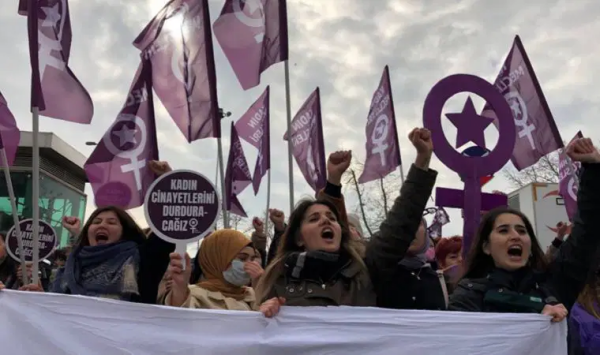
Violence against women and femicide in Turkey and Kurdistan remain prominent issues, especially with the declaration of the "Year of the Family" and the placement of protecting and strengthening the family at the forefront of state policies, which raises questions about the extent to which these policies take into account women's rights, freedoms, and their right to life.
At a time when the sanctity of the family is linked to the roles imposed on women, many are killed at the hands of the men closest to them, even inside their homes. According to data drawn from media-published news, 259 women were killed in Turkey between December 2025 and October 2026, while 205 other women were recorded as suspicious deaths.
Perpetrators from within the family
At a time when the lives of thousands of women in the country are threatened every year, the fact that a large proportion of the violence women are subjected to occurs within the framework of family relationships raises questions about the needs that family protection policies respond to.
Women's desire to make decisions related to their own lives turns into a reason used to practice violence against them. Facts and data show that femicide cannot be explained by individual anger, disputes, or jealousy, but has taken on a systematic character.
Priority to protecting the family
Shortcomings in the application of laws protecting women, their killing despite protection orders being issued, weak investigations, and lenient sentences against perpetrators lead to the exacerbation of the impunity problem. Ignoring women's complaints, the inability to detect threats in advance, and the circumstances of suspicious deaths also raise questions about the state's responsibility to protect their right to life.
In the face of this, women's organizations affirm that protecting the family does not necessarily mean protecting women, and demand the effective application of Law No. 6284, compliance with the obligations stipulated in the Istanbul Convention, and comprehensive investigation into femicide crimes.
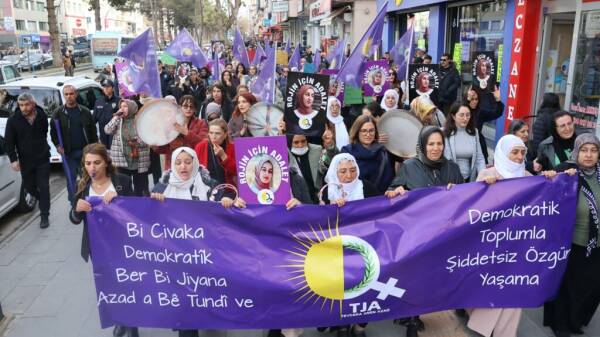
Between November 25, 2025, and November 1, 2026, women organized at least 78 movements, statements, and press gatherings in various Turkish cities, protesting family policies, men's violence, femicide, and impunity.
Women go out into the streets to demand their rights
In this context, women from various Turkish cities gathered in Ankara, in response to a call by 34 institutions and organizations, where they gathered in front of the Atatürk Cultural Center and set off on a march toward Tan Doğan Square, demanding an end to femicide, the effective application of Law No. 6284, rejection of discussions related to alimony and the civil status law, and attempts to confine women within the family framework. This gathering constituted one of the most prominent joint women's movements in terms of the scale of participation at the beginning of 2026.
In a related context, the Women's Platform for Equality (EŞİK) hosted an international online meeting titled "For a New Social System: Feminist and Ecological Policies and a System Based on the State's Role in Providing Public Services," with the participation of more than 140 people, to discuss women's struggle for equality and freedom, public policies, and prospects for building a new social system. In a statement on the occasion of the centenary of the Civil Status Law, it also stressed the need to protect equal citizenship rights.
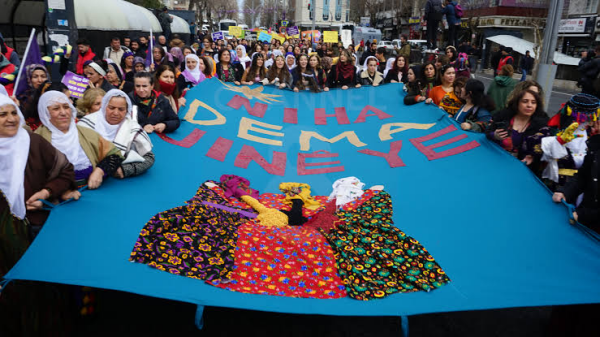
On March 8, women in several areas went out under the slogan "Not the Year of the Family, but the Year of Struggle," renewing their rejection of family policies that diminish their rights, and their demands to protect their right to life, combat violence, and achieve equality in various fields of life.
The files of Gulistan Doku and Rojin Kabaiş
On another front, the file of Gulistan Doku was one of the files most highlighted by the women's movement during 2026, within its struggle against men's violence and impunity, holding government officials accountable, and defending women's right to life. Following the developments of the investigation in April, women's organizations demanded that her fate be revealed, that the reasons for the investigation's stalling for six years be clarified, and that potential officials be held accountable.
The case turned into a focal point for protesting the contradiction between the family protection discourse and the absence of guarantees protecting women's lives. In this context, the Women of Dersim Platform continued to demand that Gulistan Doku's fate be revealed, in conjunction with organizing protests in Istanbul, Izmir, Diyarbakir, Riha, Elazig, and Van.
For its part, the "I Need Peace" initiative rejected the exploitation of the case in political conflicts, and stressed the need for a comprehensive investigation into the crimes committed against women and girls, and linking the case to the broader struggle for freedom, peace, and truth.
The case of Rojin Kabaiş, who was killed, also topped women's movements demanding that the circumstances of her death be revealed and that those responsible be held accountable. Several cities witnessed protests and statements affirming the state's responsibility to protect women, and rejecting men's violence, state violence, and impunity policies.
Resistance in the face of poverty and economic inequality
Women also faced worsening poverty and economic inequality, which became one of the most prominent axes of their struggle, amid low wages, fragile working conditions, bearing the burdens of care work, and their limited economic opportunities.
During the first ten months of 2026, at least 120 women lost their lives in fatal work accidents. Data from the Turkish Statistical Institute (TÜİK) and the research center of the Confederation of Progressive Trade Unions (DİSK-AR) also revealed the widening gap between women and men in the labor market.
According to the DİSK-AR report issued in September 2026, the broad unemployment rate among women reached 40.4%, and the number of unemployed women according to this criterion reached 6 million 382 thousand women, compared to 25.6% among men. The rise in broad unemployment among women, compared to narrow unemployment which reached 11.3%, reveals the scale of the economic crisis women are suffering from, especially when accounting for those discouraged from seeking work and workers below full employment level.
Demands for equal pay for equal work
The data revealed the difficulties women face, not only in obtaining job opportunities, but also in accessing stable, secure, and full-time jobs, which limits their economic independence.
During 2026, women intensified their movements in the streets, workplaces, and union squares to confront poverty and economic inequality. Ahead of March 8, women affiliated with the Confederation of Progressive Trade Unions (DİSK) and the Confederation of Public Sector Workers' Unions (KESK) organized marches and press statements, demanding secure job opportunities, equal wages, free daycare, and free public care services. On May 1, women workers, during their movements in various cities, raised their demands to confront low wages, fragile work, and the exploitation of women workers.
Women's struggle for peace
Women's participation in the "Peace and Democratic Society Process" and work to consolidate peace societally constituted one of the most prominent axes of 2026. Women's organizations and unions affirmed, through marches, statements, and conferences, that peace is not limited to a ceasefire, but requires women's participation in negotiation and decision-making, and the formation of independent committees to monitor the process and ensure its progress with tangible democratic steps.
The Free Women's Movement (TJA) stood out in these movements, organizing at least 10 events in 8 different locations. Women also issued statements under the slogan "We Insist on Peace," and the "I Need Peace" initiative organized simultaneous movements in seven centers, including Istanbul, Mersin, and Riha (Urfa), demanding the abolition of the anti-terror law, the release of political prisoners, ensuring education in the mother tongue, and conducting negotiations with Leader Abdullah Öcalan on an equal basis. The initiative also objected to the exclusion of five urgent demands it had previously raised to the parliamentary committee from its report.
In Ankara, women gathered in front of the Dikmen gate of parliament under the slogans "No to War, Peace Now" and "Jin, jiyan, azadî," demanding tangible steps be taken, the necessary legal arrangements be approved, and an independent monitoring committee formed by the women's movement be recognized as a party to the peace process.
The third conference of women of the Confederation of Public Sector Employees' Unions (KESK) also affirmed the slogan "No Peace Without Women," stressing the need for them to be partners in managing the process. Activist in the Free Women's Movement (TJA), Çağlar Demirel, announced women's readiness to form committees to monitor peace and receive women residing in exile in Europe and wishing to return to the country.
In another move, 80 women from various political, women's, academic, artistic, and rights circles issued a joint statement under the slogan "We Are Together Side by Side, and We Talk About the Future," calling for building peace and a democratic future jointly, followed by a conference in which more than 500 women participated.
Women's demands during these movements focused on ensuring their direct representation in negotiation and decision-making, forming independent women's monitoring committees, releasing political prisoners and ending the appointment of guardians, ensuring education in the mother tongue and public services, and strengthening mechanisms to combat violence against women. They also stressed the need to reveal the violations of the conflict period, prepare the conditions for the return of exiled women, and build peace based on gender equality, democracy, and freedom.
Movements of the Mothers of Peace
The Mothers of Peace were also an important part of the struggle for the physical freedom of Leader Abdullah Öcalan. They issued simultaneous statements in different cities, demanding the application of the "right to hope" and the opening of meeting channels with Leader Öcalan. On May 8, 2026, the mothers submitted a request to the Ministry of Justice, renewing their demands for a meeting with him. On November 1, the Mothers of Peace set out from 24 cities toward Ankara.
The mothers organized a sit-in for peace in Ankara, during which they expressed their demands for achieving the physical freedom of Leader Öcalan, releasing political prisoners, and taking tangible steps within the framework of the process.
Women did not abandon the struggle
Women's struggle throughout 2026 revealed that the forms of discrimination and inequality they face in various fields are interconnected and cannot be separated from one another. Women who suffer from the repercussions of wars, killings inside homes, suspicious deaths whose circumstances have not been revealed, poverty, and job insecurity continued their struggle in the streets, workplaces, and solidarity squares, demanding their right to life, freedom, equality, and peace.
Women affirmed that family protection slogans do not guarantee their right to life, and stressed the need to prevent violence, hold perpetrators accountable, and effectively apply protective laws. They also continued to demand economic independence, equal pay for equal work, and secure work, affirming within the framework of the "Peace and Democratic Society Process" that they are not merely observers of the peace process, but partners in building it and decision-makers in it.
In this context, women's organizations, foremost among them the Free Women's Movement (TJA), continued to demand the formation of independent monitoring mechanisms and ensuring the direct and effective participation of women in the peace process.
Equality, freedom, and peace cannot be achieved without women
On the occasion of the International Day for the Elimination of Violence against Women, corresponding to November 25, and in these days when various dimensions of violence are being addressed, the struggle waged by women during this year demonstrated the continuation of their demands for equality and freedom in all fields, starting from family policies and working life, passing through combating violence, and reaching peace-building.
By expressing their voices and will in the face of decisions taken on their behalf, women affirmed once again that equality, freedom, and lasting peace cannot be achieved without women.