
Popular Resistance in the Face of Coal Mine Expansion and Threats to Water Resources
Turkey’s Council of State Sixth Chamber rejected lawsuits against urgent expropriation of 679 plots around akbelen forest, reopening the door to coal mine expansion feeding Yeniköy and Kemerköy thermal palnts.
ALEV AKGÖL
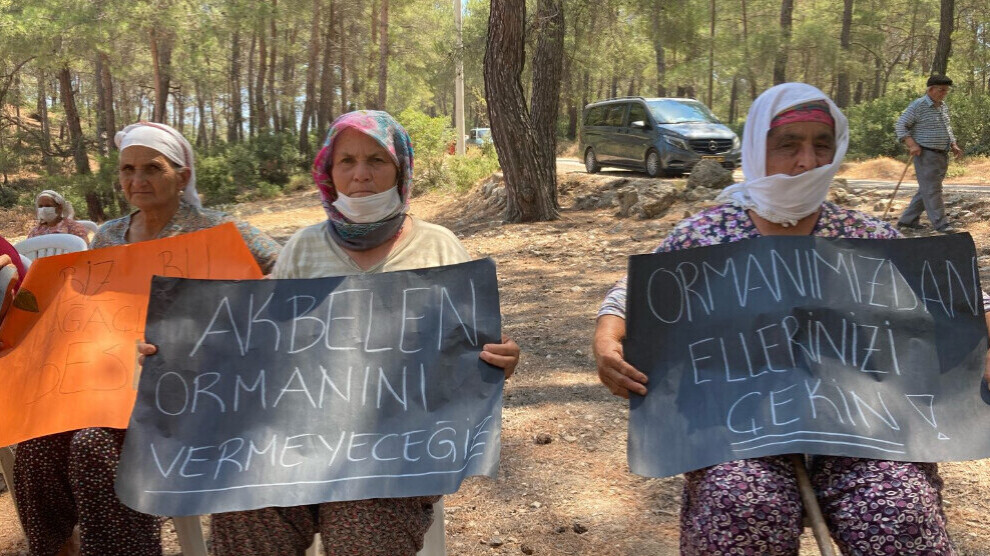
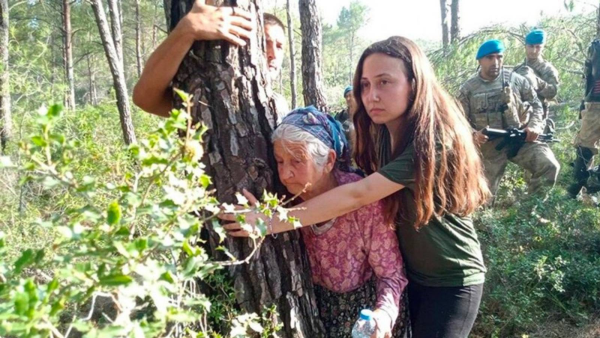
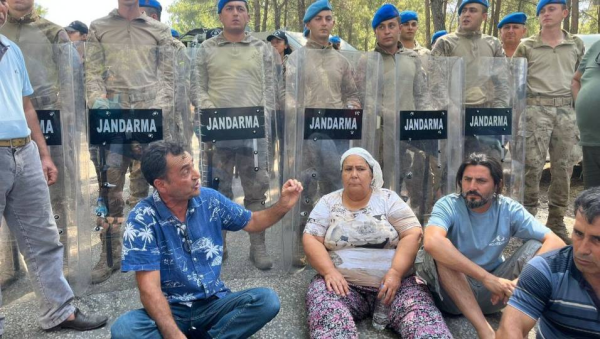
ISTANBUL- The “Akbelen” forest, located in the village of "İkizköy" in the Milas district of Muğla province, has turned into an arena of continuous confrontation for years, against the backdrop of plans to expand a coal mine aimed at securing the needs of the "Yeniköy" and "Kemerköy" thermal power plants. Since 2019, the village's residents have been waging a battle to defend their forests, olive groves, water sources, and the lands that form the basis of their lives and livelihoods.
This resistance is not limited to rejecting the environmental damage caused by mining activities, but extends to protecting the rights and livelihoods of residents in the face of the mine expansion project planned by "YK Enerji," a partnership between "Limak" and "IC Holding." The decision of the Sixth Chamber of the Council of State rejecting the lawsuits filed against the urgent expropriation procedures for about 679 plots of land around the Akbelen forest has brought the issue back to the forefront and raised new concerns about the future of the region and its residents.
The same chamber had issued a unanimous decision last May to suspend the implementation of the expropriation procedures, before reversing its position in its latest decision, considering that resorting to the urgent expropriation procedure is justified, based on the decline in current coal reserves, the necessity of ensuring the security of energy supplies, and reducing the deficit in the energy sector.

Lawyer Ipek Sarıca warned the residents of the İkizköy area of the dangerous repercussions of this decision on the residents and water resources in the region, confirming that the continuation of the project will lead to widespread destruction. "If these measures continue, comprehensive and cruel destruction awaits us all."
Previous Official Warnings of Mining Risks
She stressed that the importance of the ruling is not only related to the area of land targeted for expropriation, but also to the geographical location of these lands, especially since government institutions have previously warned of the risks threatening the region for years.
She explained that the Sixth Chamber of the Council of State did not cancel the urgent expropriation decision related to the Akbelen lands, but rejected the lawsuits filed against it, in what she described as unexpected. She added that there are about 100 judicial files covering nearly a third of the lands included in the expropriation, and the vast majority of this area is located north of the mining site.
In this context, she recalled a report prepared by the General Directorate of State Hydraulic Works in 2005, when the region was under the management of the "Turkish Coal Enterprise" (TKİ), before its management was transferred to the "Yeniköy Kemerköy" electricity generation company.
She noted that the report, prepared for the Turkish Coal Enterprise, identified a water-rich area and warned against exploiting it for mining activities, given its importance in supplying the region with water. It also recommended directing drilling and mining expansion works toward the southern side, instead of approaching the water area. She noted that the defense team presented this data in detail during the hearing, to prove that the mine expansion conflicts with previous official warnings related to the protection of water resources.
A Paid Report Takes Precedence Over Engineers’ Assessment
She explained that defense team submitted a report issued by the Chamber of Electrical Engineers(EMO), which concluded that Turkey does not need the electricity produced by the three thermal power plants in dispute, and that the electricity production and distribution system is capable of continuing even if these plants stop operating. She noted that the report confirmed th existence of many other operating facilities that ensure the continuation of electricity supplies in the Aydın, Denizili, and Izmir regions, which negates the necessity of relying exclusively on the mentioned thermal power plants.
In contrast, the court relied on another report commissioned by the company concerned in September, despite its results conflicting with the assessment of the Chamber of Electrical Engineers. Ipek Sarıca criticized the nature of this report, explaining that it was not issued by a public administrative institution, but was prepared for a fee as a paid service, yet the court gave it decisive importance in its decision. In contrast, the court relied on another report commissioned by the company concerned in September, despite its results conflicting with the assessment of the Chamber of Electrical Engineers. Ipek Sarıca criticized the nature of this report, explaining that it was not issued by a public administrative institution, but was prepared for a fee as a paid service, yet the court gave it decisive importance in its decision.
Ipek Sarıca drew attention to the existence of a dissenting opinion within the judicial body, and to the position of the Public Prosecutor at the Council of State, as well as the assessment of the reporting judge. She noted that none of these opinions were taken into consideration, which would lead to the exacerbation of the displacement crisis that the region has been suffering from for years. "There is a dissenting opinion that agrees with us, and sees the necessity of accepting the lawsuit based on the report of the Chamber of Electrical Engineers (EMO), and on the reasons on which the decision to suspend implementation was based. The Public Prosecutor at the Council of State also sees that the state of urgency has not been proven, and therefore the lawsuit should be accepted, or at least a technical examination and field inspection should be conducted. Similarly, the reporting judge concluded that the lawsuit should be accepted, noting that the 'state of urgency' was not justified. However, the other judges, who adopted a different viewpoint, issued a decision that practically lacks any reasoning."
She confirmed that the consequences will be dire; as grave damage will be inflicted, first and foremost, on the lives of the residents. The region has been witnessing continuous waves of displacement since the 1980s, when residents were forced to leave their homes.
Speaking about the water crisis in Bodrum, Ipek Sarıca noted that the state's policy in managing water resources involves a fundamental contradiction. "To address water scarcity in Bodrum, there are plans to build the 'Bodrum Dam' in Milas. A decision on the environmental impact assessment has been issued, and the case is currently before the Council of State. However, instead of protecting existing groundwater and utilizing it effectively, a company is working to open a coal mine that would destroy these very water resources. In other words, while Bodrum suffers from a water shortage, there are plans to build a dam said to be for the wealthy, at a time when the available water resources are being destroyed. Moreover, the state itself, represented by the General Directorate of Hydraulic Works (DSİ), has acknowledged these facts, but what is happening now is moving in the exact opposite direction."