
Women’s Work: The Axis of Life in the Village
The fields, orchards, livestock rearing, bread-baking in the taboon (clay oven), and household chores_all fall upon the shoukders of women, who bear the full burden of life in the village.
MIMIHAN HALBIN ZEYDAN
Gülmerg In rural life, women bear the greatest burden to ensure the continuation of life. Women always perform invisible work_not only in villages but in all areas of life. They till the land, bake bread, milk livestock, and produce cheese, yogurt, and butter from milk.
Although some tasks, such as ploughing the land, are carried out by men, it is women who prepare food for the workers in the fields, serve them tea,and support them in their work. Alongside all these responsibilities, household chores and childcare largely fall on women’s shoulders.
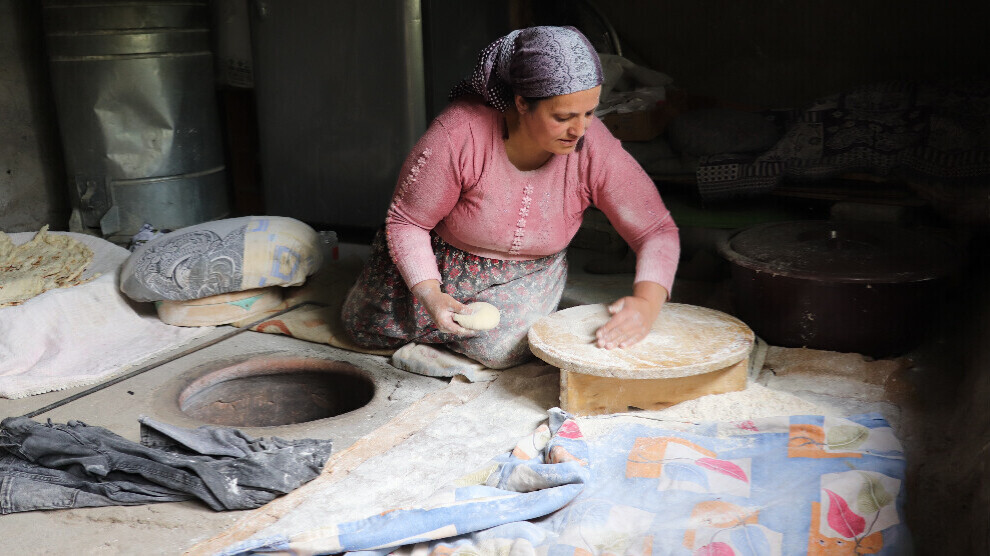
Şükran Çetinkaya, a 44-year-old mother of five living in the town of Hirvata (Büyük Çiftlik) in the Gever (Yüksekova) district, is one of the women who carry this burden in the village. While working at the tandoor oven, she spoke about the unseen side of work in village life.
She said that for more than twenty years, she has been balancing household duties with village work: "I do all my work myself. I plant the garden, bake bread, tend to grazing, and make cheese. In addition, I take care of the housework."
She adds: "I have five children, all of them students. We spend part of the day in the pasture milking sheep. When the fieldwork begins, I am also responsible for preparing food and tea for the workers."
Women also provide support in the work carried out by men: "We do everything ourselves. Even when men have work, they need us. We prepare their food and meet their needs."
Şükran Çetinkaya describes the bread-making process as long and tiring, saying: "I wake up at six in the morning and prepare the dough. After it rises, we light the tandoor, then we roll out the dough and bake it. We do not make only bread, but also pastries. When we finish, we move on to housework, then we milk the sheep and afterward the cows."
Women's role is not limited to housework; they participate in all stages of farming and livestock rearing: "When cheese-making season comes, we go to collect herbs. Sometimes we gather beets, sometimes garlic, and sometimes we tend to the gardens. We have no day off. In addition, there are visits, celebrations, and weddings. We have no choice because our livelihood depends on this work. We prepare our tables from what we produce ourselves, and we consume what we grow rather than buying it from the market."
Şükran Çetinkaya states that solidarity among women in the village still exists, explaining that those who do not have a tandoor use their neighbours', and that women cooperate in baking: "Each one helps the other according to her need. In the past, when a tandoor was lit in a house, women from the whole neighbourhood would gather. Some would help with bread-making, others would prepare tea. Solidarity still exists, but it is not as it used to be."
When asked how she removes loaves from the tandoor with her bare hands without getting burned, she replies with a smile: “My hands no longer burn, thanks to years of work.” She adds:” The livestock season in the fields will start soon, so I have prepared my bread in advance. For us, tending livestock has become a kind of pleasure. We take our bread and tea andgo with the other women. We work cooperate, and we eat together. We milk the cows, and we make cheese and butter together. Yes, we get tired_the work is hard_but we are obliged to do it, and we also love it.”