
In the highlands of northern Kurdistan, Berîvanî is a memory preserved by women
Although the practice of Berîvanî is no longer performed in the mountain pastures as it once was, the women of the town of Kherwate, in northern Kurdistan, still preserve this ancient tradition.
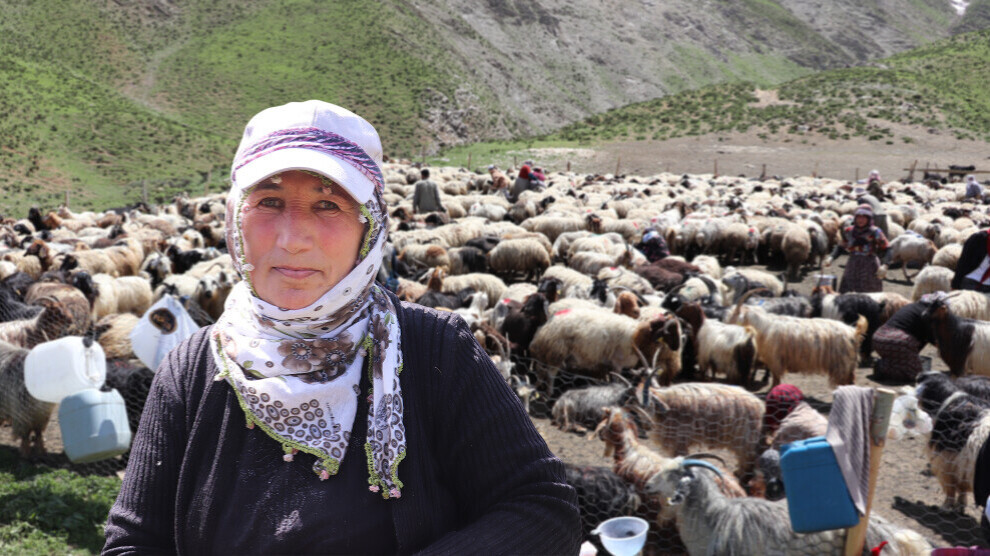
MIMIHAN HALBIN ZAIDAN
Gölmerg -Women who continue the tradition of "Bêrîvanlık" in many cities of North Kurdistan have begun their intensive work season. This tradition is an important source of livelihood for rural residents, contributes to preserving cultural heritage and passeing it on to future generations, and also plays a role in enhancing the spirit of collective work and community solidarity.
Bêrîvanlık (Bêrîvanî) is an ancient Kurdish rural profession or tradition primarily associated with women whon tend sheep and goats,milk them, and produce dairy products during the spring and summer seasons. The word” Bêrîvanî” in Kurdish means the woman who tends sheep,milks them, and manages dairy affairs; it also refers to the practice of this profession or activity.
In the past, Bêrîvanlık was practiced by moving to pastures and mountain highlands during the summer. However, the ban on access to those areas under the pretext of “security reasons” has led to significant changes in this tradition. Furthermore, the journeys that were once made on horseback or donkeys are now made using vehicles. Although this change might seem to make the work easier, women consider traveling on rough roads to be dangerous for them.
For many years, the Meden Balek plateau in the town of Kharwata (Büyük Çiftlik) in the Yüksekova district has hosted hundreds of women working in Bêrîvanlık. With the arrival of summer, women go to the plateau, set up their tents there, and live there for long periods.
But the restrictions imposed on pastures in North Kurdistan for "security reasons" have also affected this tradition and led to changes in how it is practiced. After being practiced for many years in mountain pastures, Bêrîvanlık is now practiced in areas away from the town and surrounding villages.
A source of livelihood and pleasure
Gömriye Tatlı (55 years old) says that she has practiced Bêrîvanlık since her childhood and is now a mother of nine children. "Since my childhood, I have come to milk sheep. I accompanied my mother when I was little. Life in the village is based on Bêrîvanlık, livestock breeding, or agriculture. Through these works, we try to secure our livelihood."
She affirms that going to work sites with other women gives her a feeling of pleasure and happiness. "In the past, we used to go to the pastures on horseback. When we gather, we dance folk dances and exchange conversations. Those days are the most beautiful. We have always felt happy when we are together. A woman who owns one sheep is no different from one who owns 400 sheep. We never felt any differences."
As in the past, whoever finishes her work first helps those who are still working. "We help each other, then we all sit at the table at the same time and return to our homes together. We overcome these stages through cooperation and solidarity. This is not limited to milking sheep but also includes making cheese and various dairy products."
She added that women do not view this activity as merely work; they consider it an opportunity to spend enjoyable time. "When we gather, we feel that we breathe freely. If we stayed at home all the time, we would suffocate. We have become accustomed to this lifestyle and work, and perhaps that is why we are healthier."
Gömriye Tatlı believes that women's relationship with nature is different from men's. She has been practicing this work with great love for more than thirty years. "Being in nature gives me happiness."
To be able to identify her sheep, Gömriye Tatlı puts colored marks on them. Each woman uses a different color for her sheep, and she can also recognize her sheep by the shape of their udders.
During work, she enjoys singing songs to pass the time. However, the songs that sometimes start as a means of entertainment and spending enjoyable moments turn, at other times, into melodies expressing her longing and nostalgia for her son who is in prison.