
Forgotten Women Workers Between Climate Change and Government Neglect
Tunisia's forgotten women workers suffer in silence; their tragedies spark brief solidarity before fading into acceptance as "fate."
ZOHOUR AL-MASHRIQI
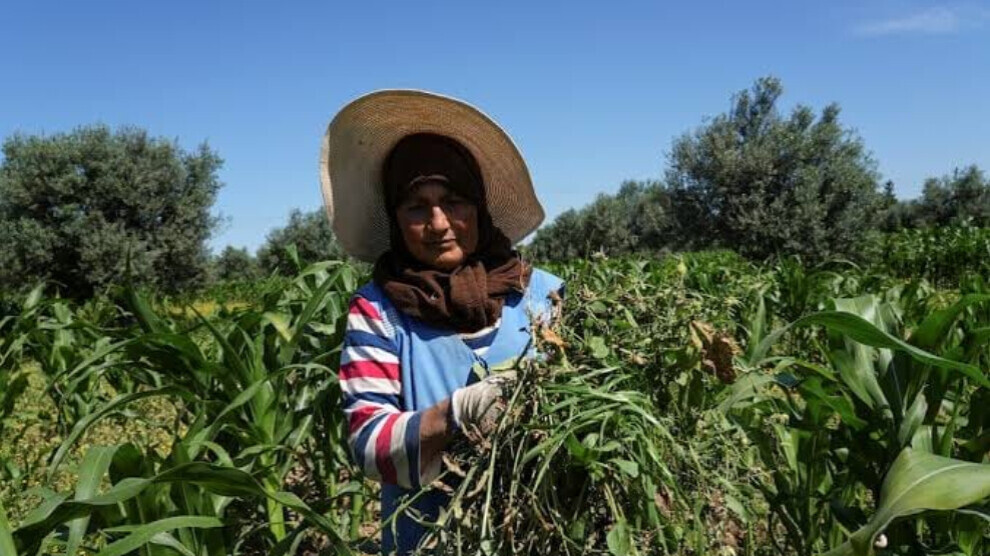
Tunis — Tunisia's landscape is marked by stark contradictions: while urban centers experience intermittent political and rights-based debates, rural and mountainous regions, as well as urban waste dumpsites, witness daily chapters of survival struggle waged by women who have been described as "the forgotten women." These include agricultural workers, who constitute approximately 70 percent of the workforce in this vital sector; collectors of medicinal herbs such as thyme, rosemary, and oregano in rugged mountains; and thousands of women working in the shadows as domestic workers.
Field reports and human rights bodies reveal a horrifying reality: a very small proportion—not exceeding 12 percent—of women working in the agricultural sector benefit from social coverage, while the majority receive meager wages that do not cover the most basic living requirements. Added to this is the nightmare of rural transport via what are known as open "death trucks," which have claimed dozens of lives and caused hundreds of serious injuries over the years, yet this daily tragedy continues unabated.
In mountainous regions and informal dumpsites, herb collectors lack the most basic health protection measures, in professions not officially recognized by the government—as if they did not exist—leaving these women directly exposed to modern diseases and nature's harshness without any legal or material protection.
This suffering multiplies terrifyingly and painfully for women engaged in mountain herb gathering. They endure in profound silence imposed by harsh marginalization and weak infrastructure, falling victim to heavy social stigma in conservative communities that consider these professions a mark of shame or a disgrace to be concealed.
This deeply ingrained fear of societal judgment and people's tongues drives these women to suppress their pains and swallow their health and psychological burdens in secret. They dare not disclose their tragedies, exploitation, and chronic skin and respiratory diseases, turning silence into a mute prison that compounds the cruelty of poverty and isolation, rendering them entirely outside the circle of rights-based concern—because they prefer a slow death to confronting society's harsh judgment.
The tragedy is not limited to harsh living conditions and alarming statistics; it extends to gratuitous death lurking under the scorching sun. Public opinion was recently shaken by painful tragedies, including the death of a woman who succumbed to severe heatstroke while working in agricultural fields without any means of care.
As happens each time, this tragedy is immediately transformed into rich media material and a wave of condemnation and denunciation across social media platforms, where names and faces are invoked briefly before the echo fades and the spiral of official and societal neglect resumes as if nothing had happened. The suffering of these women continues in obscurity until another tragedy briefly opens eyes, then slumber returns.
Ongoing Feminine Suffering
Civil society activist Najia Al-Ajmi affirmed that women workers in various fragile sectors—particularly in agriculture and mountain and forest herb collection—endure extremely arduous and exhausting working conditions. She noted that these women are forced to travel long distances, ranging from tens to even fifty kilometers daily, to reach their workplaces in agriculture or to collect materials such as rosemary and thyme for sale.
On another front, she addressed the suffering of domestic workers who face harsh conditions and persistent oppression, working long hours with no fixed schedule, receiving meager wages in obscurity, with a complete absence of any social security or legal protection to safeguard their rights and shield them from exploitation.
She pointed out that this category is known as the "forgotten women workers," who have suffered marginalization across successive governments from the era of Bourguiba to the present day. She affirmed that none of the governments have ever sought to alleviate their burdens or provide protection for them, with official promises confined to rhetoric without any radical solutions to lift the specter of suffering from them.
A Modest Sum That Cannot Buy a Box of Medicine
Najia Al-Ajmi affirmed that a rural woman's wage for a full working day amounts to almost nothing compared to the scale of her work and effort, as she receives meager sums. Furthermore, women workers suffer from the absence of social security; in the event of illness, accidents, or hospitalization, they possess no insurance, nor even documents or funds for treatment.
She explained that the rural woman in general, and the family in the agricultural sector in particular, is considered a victim of both government and society, in the absence of anyone to defend their rights, women's rights, and democracy. Affirming, as a daughter of the countryside who knows the meaning of suffering, that infrastructure and services are non-existent, as women are forced to cover modest transportation costs from their limited daily wages.
She questioned whether these women's health conditions are adequate or whether they are compelled to endure cruelty, noting that no government has ever attended to them or cared about their concerns, considering what is happening a "true catastrophe."
Najia Al-Ajmi emphasized that this suffering is more concentrated in marginalized regions, particularly the northwest and the center (such as Kasserine, Kairouan, Siliana, El Kef, and Jendouba), where women there continue to live in marginalization and have seen no government that has done justice to them.