
Home Medical Services Provided in Gaza to Alleviate the Burden on Patients
Amid the collapse of the health system in Gaza, medical teams continue to provide care at distributed points and in patients' homes, offering treatment to the elderly, the wounded, and those with chronic illnesses despite difficult conditions.
RAFIF ESLIM
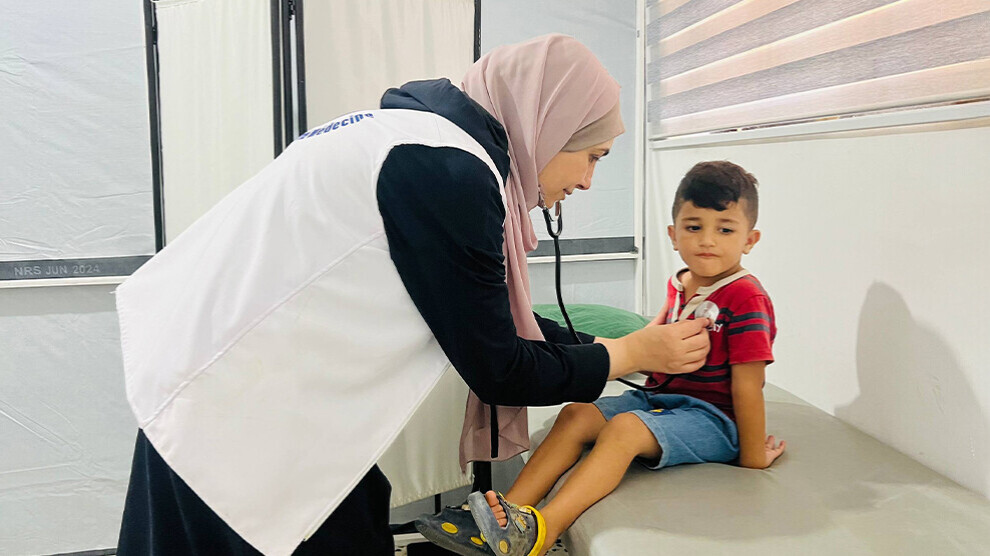
Gaza — Due to the difficulty of accessing hospitals and medical points in the Gaza Strip, and the urgent need of patients to reach treatment services—which increase daily—the "Heosm" foundation decided to launch a project of medical clinics in various locations in the southern and central parts of the Strip, focusing on providing home treatment services at the residences of patients unable to leave their places.
Dr. Fahmiya Al-Ja'abari stated that the initiative began with the outbreak of war in October 2023, when residents were displaced from Gaza City and crowded into the central and southern areas. She and a group of medical staff thought of opening a medical point to assist the displaced. Indeed, the first medical point was established in May 2025 in Rafah, but it lasted only two weeks due to the Israeli incursion into the city and the displacement of residents.
She explains that the medical team's work consists of working at the medical point to receive patients and the wounded, or going on missions to provide home treatment services to the elderly, the wounded, and patients unable to move or leave their tents. She notes that when visiting patients, communication is made with the medical point—either through direct visits or phone calls—to explain the condition, so that a team of nurses and a doctor can arrive at the location and provide the necessary care.
Diverse Services
She indicated that they were compelled to equip the team with a number of doctors and nurses to match the cases the medical team is sent to, as well as to accommodate patients' privacy. She explained that the services provided range from physical therapy and wound care—especially after complex surgeries—to conducting full examinations, particularly when the case does not have an accurate diagnosis.
Currently, there are four medical points managed by the medical team, according to Dr. Fahmiya Al-Ja'abari: one in Deir al-Balah, another in Nuseirat, a third in Khan Yunis, and a fourth in Gaza City. Each medical point consists of eight individuals—doctors, nurses, data entry staff, and a cleaner—all working in a way that ensures services are integrated and comprehensive.
She notes that 400 patients are received daily across the Gaza Strip, and over 10,000 patients are served monthly through the medical points distributed across the governorates. Most services relate to public health, with significant focus on women and reproductive health through a specialized female gynecologist. She notes that the number of patients receiving home treatment cannot be precisely quantified, but estimates suggest at least three to four patients weekly.
She explained that the majority of cases receiving home treatment are elderly people suffering from chronic illnesses, requiring the medical team to visit and follow up with them—especially when a viral outbreak of a specific disease is spreading. She noted that chronic illnesses can become extremely dangerous if not monitored; diabetes can lead to amputation, and high blood pressure and heart conditions require careful attention.
Dr. Fahmiya Al-Ja'abari explained that among the difficulties faced are shortages of medicines and medical supplies, a situation that worsens when there is a shortage of water and hygiene materials—as happened last summer—exacerbating skin diseases. Added to this is the deteriorating security situation, which forces them to relocate medical points or suspend services in some areas. She affirmed that they will continue to strive to develop services, expand areas of operation, and improve the quality of medical equipment.