
For a Century... Women of Koya Keep Alive the Tradition of Preparing Winter Provisions at "Mam Khidr" Mill
In Koya, the city's women hold fast to the custom of preparing winter provisions by traditional methods, finding in the "Mam Khidr" mill—which has continued operating for about a century—part of their food heritage and collective memory.
SHILER KOYI
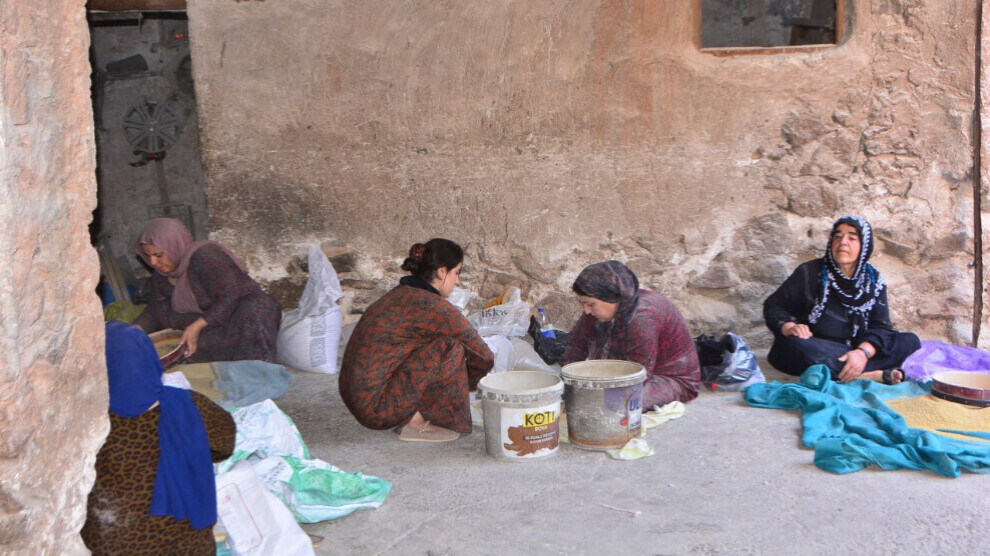
Koya — With the arrival of autumn and falling temperatures, women of the city of Koya in the Kurdistan Region head to the "Mam Khidr" mill to grind grains and prepare winter provisions. Although the mill is over a century old, it still enjoys the trust of residents—particularly women who are keen to prepare their provisions themselves, according to inherited traditional methods.
With their hands and simple tools, women busy themselves boiling, drying, grinding, and preparing the grains before carrying them home to be a provision for them during the winter months—a scene reflecting the people of Koya's attachment to their food and heritage customs, despite the passage of decades and changing lifestyles.
The "Mam Khidr" mill is one of the most prominent heritage landmarks in the city of Koya, given its age and historical importance, as it has continued operating for about a century. The mill is located opposite Koya Castle, built on an area of 801 square meters, and dates back more than 99 years.
Despite the passage of long decades since its founding, the mill has not stopped working, and its doors still welcome residents, especially in the morning hours. It is the first mill operating on thermal power in the Kurdistan Region, and it remains in operation to this day, with its machinery still running.
"Commercial Grains Have No Taste"
Awaz Tayr, a resident of Koya, 65, has for many years been going to the "Mam Khidr" mill to grind her provisions. She says: "Before the Anfal events, we moved from the Koya plain to the city. When I was twenty‑five, I used to come with my father to the mill to grind our grains, and I am still continuing that to this day."
She adds: "Since I became aware of these matters, I have not eaten the bulgur sold in markets. Once I bought some from the market, but my husband would not eat it, because commercial grains have no taste. When you put them in your mouth, they feel like dough, and they do not have the same benefit that homemade products provide. As for home‑prepared cracked wheat, it is very delicious in all its forms."
During her talk, Awaz Tayr recalls memories of life in the past, and believes life then was better than today, especially thanks to healthy food. She says: "Although we used to tire greatly back then, people did not get sick the way they do today. We all lived a simple life, but we were happier."
Qadriya Jabbar, from the village of "Haji Qala," went with her family to the mill to prepare winter provisions. About the importance of homemade foods prepared by traditional methods, she says: "This cracked wheat is from our own harvest. We boil and grind it ourselves, because we prefer it to be made by our own hands. As for what is sold in markets, there is no problem in using it too. People turn to it because not everyone has the time or ability to boil wheat and bring it to the mill."
For her part, Bayan Omar, another young woman who went to the "Mam Khidr" mill to grind her provisions, says: "Alongside my work as an employee, I am keen to prepare healthy food for my family at home. Every year, I boil cracked wheat and prepare it by the traditional method, because it is necessary to rely on local products, especially at present, with the abundance, quality, and cleanliness of wheat. We prepare and boil it ourselves."