
Eid al Adha in Sudan... customs and traditions that do not fade away
Despite Sudan’s ongoing conflict since 2023, changing circumstances have not majorly impacted the customs and traditions of a society that remains attached to them despite challenges.
Aya Ibrahim
Sudan – Eid al‑Adha is a great opportunity for Sudanese families to practice their customs and traditions, in addition to being one of the most important religious and social occasions that differ somewhat from one region to another, but there are many common factors, especially the sacrifice of the animal, exchanging visits, Eid greetings, and spreading a spirit of solidarity.
Nutrition specialist Maha Ahmed says that Eid al‑Adha in Sudan is a major social occasion through which families gather and return to their original areas.
She points out that many Sudanese families follow specific food customs during Eid al‑Adha, offering various types of meat in different ways, such as "oven‑roasted meat and raw offal," warning against eating raw offal because it may contain disease‑causing agents, stressing that it must be cooked before eating.
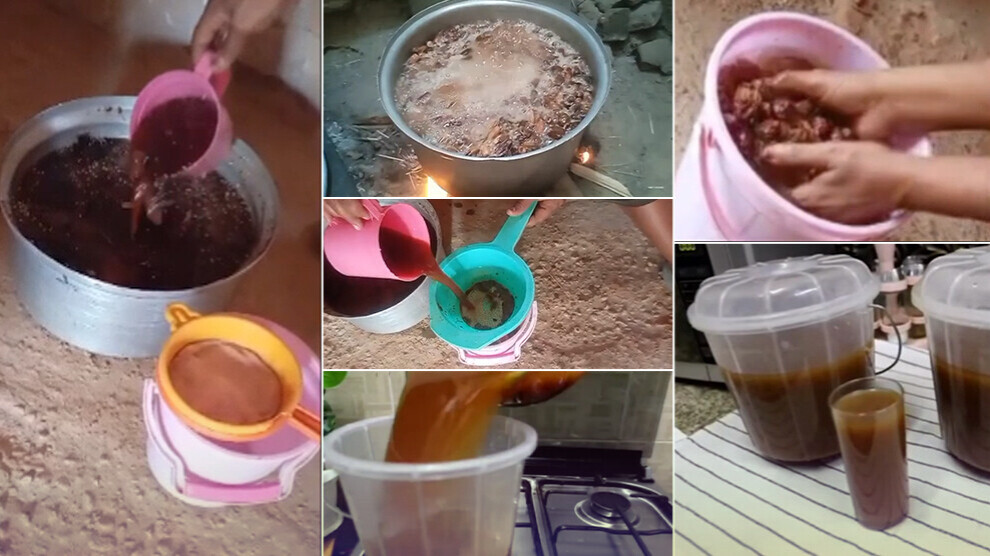
Maha Ahmed also mentioned the traditional Eid drink known as "Sharbout," made from dates, and advised not to leave it to ferment so that it does not turn into a beverage containing alcohol, and to drink it fresh.
"Sharbout" is one of the most famous traditional drinks in Sudan, gaining special prominence during Eid al‑Adha, especially in the north of the country, where it forms part of the social customs associated with hospitality and Eid gatherings. Due to the fermentation process that may occur when left for a long time, a percentage of natural alcohol may form, which makes religious and health opinions about it vary depending on the preparation method and fermentation time. Therefore, it is recommended to drink it fresh before the fermentation process begins.
Amena Al‑Sayyed Fadl, a housewife, speaks about the drink "Sharbout" as one of the most prominent customs that Sudanese people maintain during Eid al‑Adha, explaining that it is prepared from a set of ingredients, most importantly dates, which are the main crop in the Northern State where she lives, making Sharbout an integral part of the region's traditions and Eid rituals.
She explains that preparing "Sharbout" involves placing dates with a set of spices on the fire and leaving them to boil for a long time, then straining and cooling it in the refrigerator to be served cold, noting that this drink has special importance, as it is believed to help improve digestion.
Amena Al‑Sayyed Fadl points out that this custom is deeply rooted and many Sudanese families still maintain it, although some younger generations now prefer ready‑made drinks over traditional Sharbout.
For her part, researcher Rawa Barbarawi affirms that Eid al‑Adha in Sudan has a distinctive character that differs from other countries; it is an occasion that families eagerly await for its gathering of relatives and family reunions in a festival‑like atmosphere.
She points out that the holiday is not limited to food and drink but is linked to social and cultural details that only occur during it, giving it its own flavor.
She believes that one of the most beautiful features of Eid al‑Adha for Sudanese families is their keenness on meetings and social communication. Some families travel long distances to visit their relatives, spend the holiday with them, and gather around one table.
Rawa Barbarawi noted that there are foods that are part of Eid customs, such as "oven‑roasted meat, raw offal, and hot sauce with dakwa," which are basic dishes in many homes, along with the traditional drink "Sharbout." She noted that younger generations now tend to prefer other drinks that, from their perspective, help improve digestion more effectively.
Eid al‑Adha in Sudan reflects a social and cultural richness that extends beyond the rituals of sacrifice and feasts, becoming an occasion in which family ties are renewed and inherited customs are revived generation after generation. The holiday remains a space where families retain their privacy and warmth, despite changing tastes and lifestyles.