
A Young Moroccan Woman Balances Football and Narrative Writing
Fatiha Fateh has shattered the traditional image of female football players, launching a new challenge that proves women can combine professional football with creative writing as another form of self-expression.
Raja Khairat
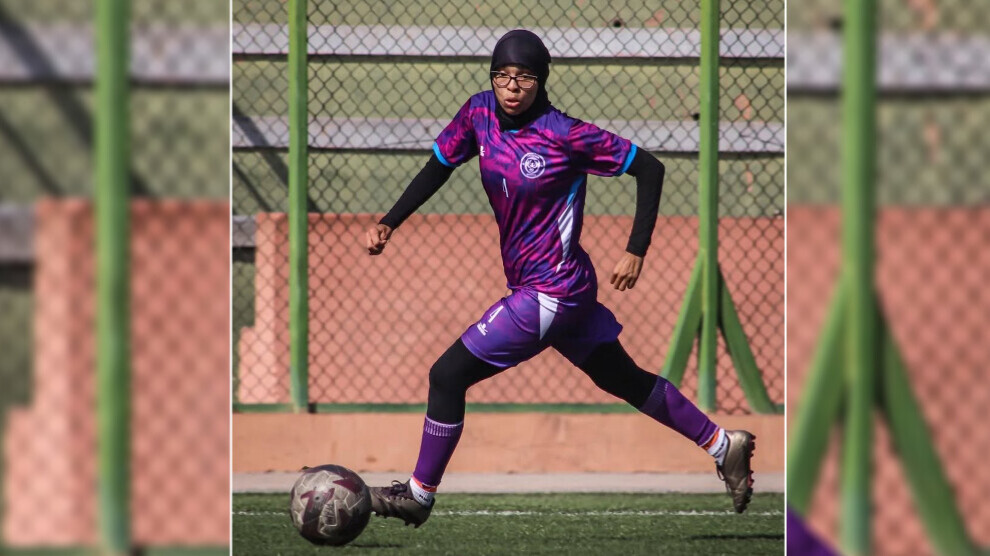
Morocco — In the streets of the Al-Bernoussi neighborhood in Casablanca, Fatiha Fateh learned how to play football. In the paths of life, she chose writing as another means of self-expression, transcending the stereotypes associated with female football players.
At an early age, Fateh took her first steps toward professional women’s football among the boys of her working-class neighborhood in Casablanca. She later joined one of the city’s clubs before becoming a professional player with Phoenix Club in Marrakech.
Another Space for Self-Expression
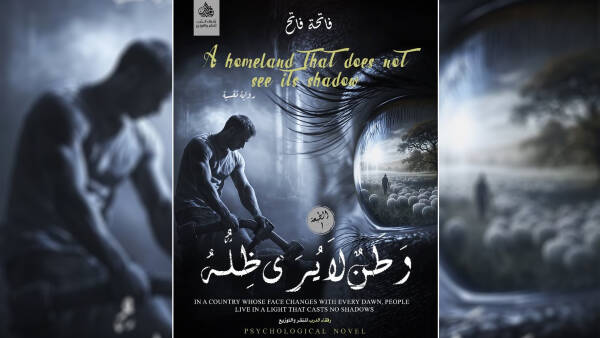
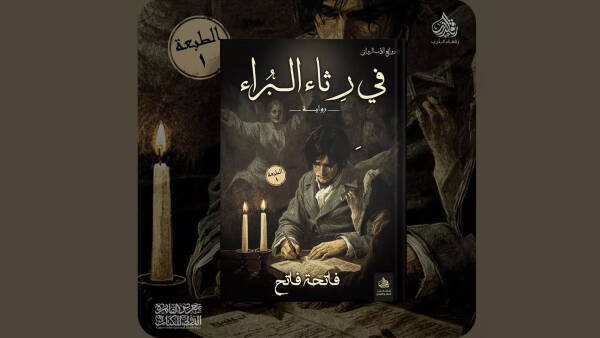
Despite her professional football career, Fateh never abandoned reading and writing, which became another passion alongside her love for the game. This passion resulted in the publication of two literary works titled In Mourning for Al-Baraa and A Homeland with No Shadow.
Speaking about writing, she said: “Away from the stadiums, I wanted to create another space for myself to express my emotions, thoughts, and perceptions of several humanitarian issues that have occupied—and continue to occupy—my mind. Everything I wrote in these two books is the product of observations, impressions, and experiences I have lived through.”
She explained that, much like football, reading and writing were outlets that opened new horizons of expression for her. “I found in writing a way to confess my feelings, and I was keen to practice it regularly. Reading, meanwhile, became an inexhaustible source that nourishes a writer’s imagination and provides the linguistic tools that need constant refinement. Without reading, a writer cannot continue their creative journey or sustain it.”

Initially, Fateh had no intention of publishing her writings. She wrote primarily for herself and occasionally shared her texts on social media. It was only after encouragement from friends—who believed her texts deserved publication—that she decided to compile them into books.
Her writing focuses on marginalized people, the homeless, and those living on the fringes of Casablanca—often referred to by Moroccans as “the monster city.” It is the city where she grew up and where she encountered diverse segments of Moroccan society, as Casablanca attracts people from across the country in search of better opportunities.
“I wrote texts about street children, the homeless, and the poor,” she said. “In Casablanca, I developed a special sensitivity toward them. I listened to their pulse and wanted to be their audible voice. I could not let those daily scenes pass before my eyes without documenting them in texts. I never thought of publishing them in a book had it not been for the insistence of friends.”
Combining Football and the World of Narrative Writing
Fateh rejects the notion that there is a vast gap between female football players and the world of literature. She believes society still does not fully recognize women’s right to occupy certain spaces, such as football fields. Although women’s football is increasingly asserting itself, combining football with literature continues to seem paradoxical to many.
She notes that the distance between sports and literature remains wide, describing this as unfortunate. In a male-dominated society, it is difficult to accept a woman playing football—a sport long monopolized by men—let alone a woman who combines football with narrative writing. Nevertheless, she does not see this duality as impossible. While striving to develop her football skills, she also aspires to carve out a prominent name for herself in the world of storytelling.
Fateh explained that she did not deliberately choose to enter the literary world; rather, she found herself writing almost daily, expressing the emotions and thoughts stirring within her. Writing, for her, was a way to make her voice heard and to speak for those who have no voice. It was never in conflict with her professional football career, as some believe, but rather another form of expression serving the same purpose: self-realization and emotional communication.
Writing and Alienation
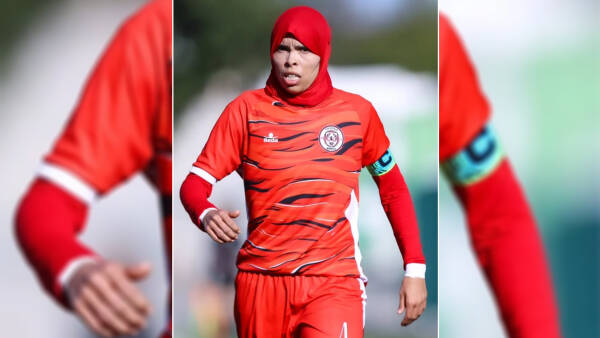
Throughout the daily moments that inspired her vibrant texts, Fateh continued to feel a sense of alienation within the world of football—a world she loved and to which she devoted all her time and energy. On one hand, she cannot live without football; on the other, she cannot walk through life without reading and writing.
Though she finds herself moving between two different worlds that run parallel to each other, she admits to feeling deeply alienated as a writer within the football field. “Perhaps this feeling is what pushed me toward writing as a way of searching for the self that football alone could not fulfill,” she said. “I kept searching for my other half, which I ultimately found in the world of narrative and writing.”
Like many female football players, Fatiha Fateh is fighting to assert herself in women’s football, striving to break the stereotypes that follow female athletes. At the same time, she is seeking her place in the literary world, taking on another challenge related to women’s presence in fields from which they have long been forcibly excluded.