
Rising Femicide Crimes Raise Concern Among Civil Society in Tunisi.
In just two months, Tunisia has witnessed the killing of five women, sparking widespread concern among civil society and reviving questions about the effectiveness of legal protection mechanisms for women.
Zahour Al-Masharqi
Tunis — Despite awareness efforts by civil society organizations, resources remain limited and do not allow reaching all battered women. Some victims grow up in environments where violence is normalized and considered familiar. Many women also hesitate to report for fear of social stigma or the shame that may befall someone who "dares" to sue her husband, father, or brother.
Violence Turns to Murder
Just two months into the year, five women have been killed in Tunisia, most by intimate partners, in crimes that activists classify as femicide. Despite the gravity of these crimes, Tunisian law has not yet recognized this type of killing as a distinct crime committed against women in a context of subjugation and gender-based targeting.
The women's association "Aswat Nisa" (Voices of Women) condemned these crimes, considering them a result of what it described as the failure of the government and public policies to provide adequate protection for women. The association believes these incidents cannot be reduced to "family disputes"; rather, they are murders that reveal the extent of violence against women, even within the space that is supposed to be the safest for them—the home.
This comes as Tunisia is still reeling from a recent crime in Ariana governorate, in the greater suburbs of the capital, where a woman was killed on March 7 by her husband.
Meanwhile, the National Observatory for Combating Violence Against Women in Tunisia recently confirmed that violence against women is rising, especially during certain periods such as festive seasons, the school year start, and holidays. However, feminist associations emphasize that violence is not tied to specific occasions but is a daily reality experienced by many women in society.
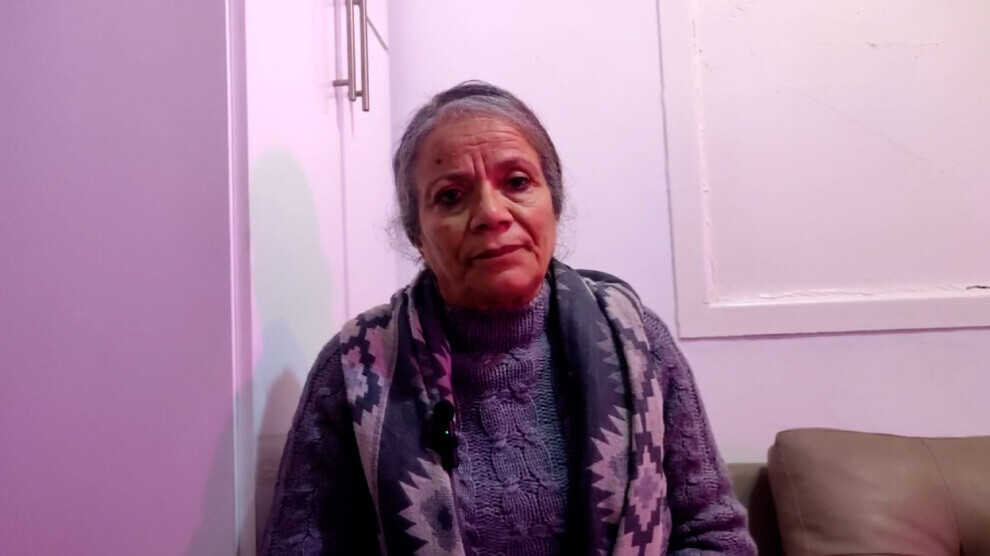
In this context, feminist activist Wasila Al-Milki said that violence against women in Tunisia often begins within the private sphere and the family. She explained that a girl may grow up in a family environment where symbolic violence is practiced, and she is treated with discrimination that reinforces the idea that such behavior is normal.
She added that socialization contributes to reproducing these patterns; girls are raised according to traditional social roles, and at school they also encounter an environment that reproduces the same perceptions linked to male dominance, whether in play patterns or behavioral expectations. She believes this path creates a kind of unconscious tolerance for violence and leads to an invisible normalization of the phenomenon.
She pointed out that such upbringing internalizes violence, so when a young woman marries, she chooses the wrong partner—"she chooses a partner who resembles her father and brother, and when she is abused, she considers it normal because she was abused and sees nothing wrong with it."
She also stressed that even Tunisian drama portrays the scourge of violence against women, murder, and rejection as if they were ordinary love and jealousy stories worthy of applause and celebration, especially since it presented these crimes without condemnation or noting their seriousness, instead rationalizing and justifying them.
She said this violence quickly turns into murder, noting the danger of these crimes continuing without real deterrence despite Law 58 issued in 2017 to combat all forms of violence against women. She explained that the killing is not momentary; it is the outcome of abuse that begins in childhood, becomes internalized, is socially accepted, and becomes ingrained.
She spoke about the rise in cases of violence and murder against Tunisian women in recent years, with 30 women killed last year, most by an intimate partner—a husband or family member. This is alarming in a country that was a pioneer in enacting a law that the United Nations praised and described as distinguished for combating violence.
Feminist activist Wasila Al-Milki called on mothers to teach their daughters to reject violence practiced against them from childhood, not to accept it or have it practiced against them within the family, so they do not internalize this behavior and consider it normal or natural in dealing with women. She affirmed that raising awareness remains an essential step to break with these violations and confront violence that in some cases may escalate to murder.