
Algerian Henna... A Symbol of Cultural Identity Preserved in Women's Memory
Henna in Algeria has evolved from a social ritual into a prominent symbol of cultural identity. Amid its regional pattern diversity, women preserve this heritage, passing it to new generations blending past authenticity with present modernity.
RABIA KHRAISS
Algiers — Algerian henna carries, within its details, a heritage that goes beyond mere decoration and beautification, embodying existential symbols woven by Algerian women across the centuries — transforming it from a simple aesthetic ritual into an authentic pillar of their cultural identity, and a means of preserving their heritage against the changes of time.
Henna is not merely a blessed plant that grows in Algeria's plains, deserts, and oases; it is an ancient tree whose leaves are picked, dried, and ground into a powder that carries the scent of the earth, before being mixed with water to form a paste imbued with special symbolism — used to adorn the hands of women and children during celebrations, to document collective memory, and to preserve the authenticity of traditions in an age of accelerating digital modernity.
To get closer to this popular heritage, the scent of henna led us to the city of Annaba, the bride of eastern Algeria, historically known as "Bouna," whose roots run deep into the country's national history. In one of the city's best-known henna spots, downtown, our agency met a young Algerian woman whose presence radiates vitality and a modern spirit, yet who carries within her a civilizational legacy passed down through thousands of years.
Sondos Berdaï and her sister Ryan, known locally as "Rinet," are not simply practitioners of the art of henna design — they are professional artists who have turned their fingertips into a bridge connecting the authenticity of the past with the modernity of the present. What's striking is that their journey did not begin in the world of folk arts, but in university lecture halls: Sondos holds a master's degree in financial science and spent years immersed in numbers and budgets, while her sister Ryan recently graduated from dental surgery school — before the two came together around a shared passion that revived this traditional art with a contemporary spirit.

From Childhood Passion to Professional Henna Artistry
Recounting the journey that led her from academic study to the world of henna, Sondos Berdaï says her passion for this art preceded her university years by a long time: "I began my journey in henna design about ten years ago, as I had been fascinated by drawing since childhood."
She recalls her early beginnings with a touch of nostalgia, explaining that her sisters, relatives, and friends were the first to embrace her talent: "The palm of the hand was my first canvas — I would draw harqous and henna patterns on it during holidays and family occasions, when the scent of henna would blend with the atmosphere of joy and warm family gatherings." As time passed and her talent developed, she decided to take this passion beyond the narrow family circle and into a wider space through social media platforms, allowing her work to reach a broader audience.
From Grandmothers' Legacy to an Art That Keeps Pace with the Times
Sondos Berdaï affirms that henna in Algeria is not merely a means of adornment, but a cultural legacy passed down through generations, closely tied to Algerian women and to collective memory: "Henna was always present in the hands of our grandmothers — they were the ones who preserved this heritage and passed it on to later generations, which is why it has remained a symbol of authenticity and belonging."
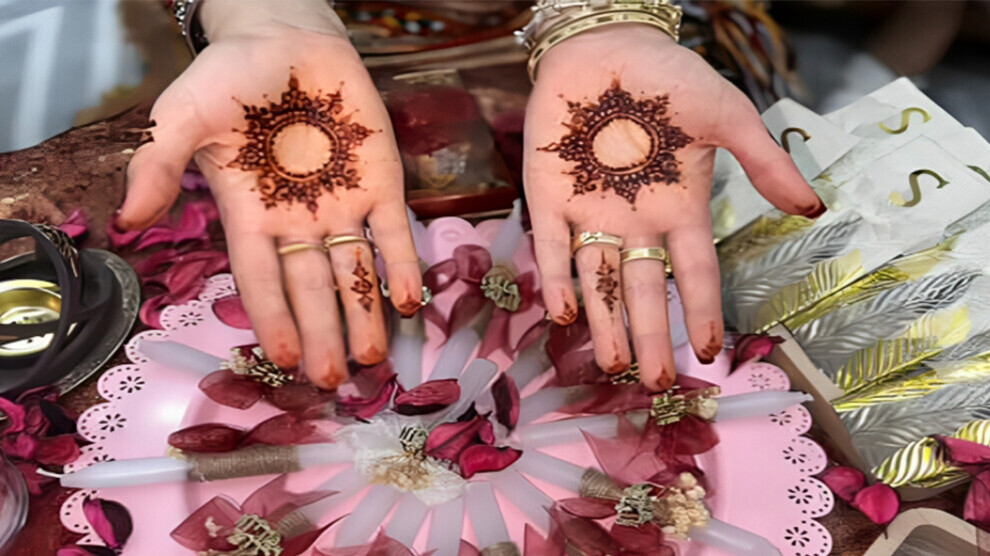
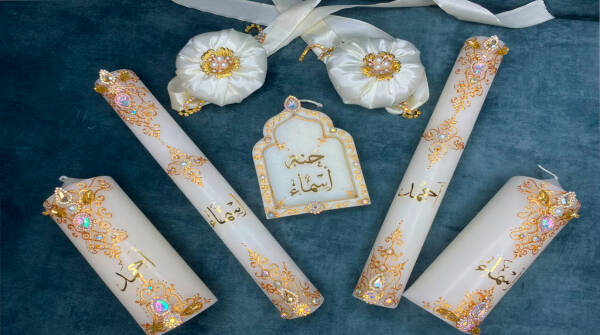
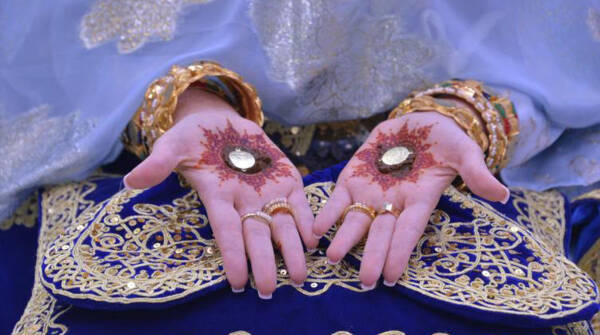
She believes that in the popular imagination, henna represents more than just patterns on the hands — it is a symbol of joy and optimism, accompanying life's most important milestones. In the city of Annaba, which still preserves many of its customs and traditions, "Henna Night" holds a special place in wedding ceremonies, as families gather amid a festive atmosphere filled with perfume and folk songs, while the bride adorns herself in the traditional Annaba dress known as "al-Chamsa," embroidered with golden thread, and has her palms decorated with henna, with a "hbet el-wiz" (a bead symbolizing prosperity, blessing, and good fortune) placed in one of them.
She explained that henna comes in multiple types, each with its own uses and occasions. Traditional henna is prepared with great care, often kneaded with orange-blossom water and left to rest for hours before use, giving it a rich, lasting color. Its presence is not limited to the bride's wedding night, but extends to other religious and social occasions, as children's palms are decorated with it during holidays, Ashura, and Laylat al-Qadr — a popular tradition passed down through Algerian families, expressing optimism for goodness and blessing, and reinforcing new generations' connection to their customs and traditions.
Alongside traditional henna, other types have spread widely in recent years, most notably "quick henna" and "harqous" designs — a traditional black cosmetic preparation known for its pungent, aromatic scent reminiscent of a blend of amber, musk, and incense, used to create intricate patterns in a short amount of time, which has made it especially popular among young women.
From the Zellige of the West to the Patterns of the East
Although henna design schools vary from one region of Algeria to another, they all share a common expression of a deeply rooted cultural identity, reflecting the diversity of local heritage alongside the unity of national belonging. Sondos Berdaï affirms that henna patterns "are not merely aesthetic decorations, but a visual language carrying inherited symbols and meanings that vary according to local environments and cultures."
She explains that Amazigh patterns in the Aurès and Djurdjura regions are distinguished by their clear geometric shapes and precise lines, while the cities of western Algeria, chief among them Tlemcen and Oran, are known for symmetrical designs inspired by Zianid architecture and zellige art, where triangles, diamonds, and geometric shapes intertwine in balanced compositions that give the hand an appearance combining simplicity and precision.
In eastern Algeria, the patterns take on a different character, tending to draw inspiration from nature, with designs inspired by leaves, branches, and flowers, rendered in flowing lines that give the drawings a softer, more delicate character — a style that distinguishes the city of Annaba and several neighboring cities.
In Constantine, henna design is closely tied to local heritage, as women take care to decorate their fingers with fine, parallel lines inspired by the details of Constantine's "majboud" embroidery, one of the city's most famous traditional embroidery styles, turning the hand into an extension of the beauty that characterizes traditional Constantine attire.
From the cities of the north to the depths of the Sahara, Tuareg henna stands out with its own distinct style, tending toward a darker color as a result of being mixed with local natural ingredients, while its patterns rely on geometric shapes and symbols inspired by Tuareg culture and the desert environment, expressing the uniqueness of this ancient heritage.
In Oued Souf and Ouargla, the patterns are dense and intricate, with designs covering the hands and feet entirely in minutely detailed work, in a style that reflects the region's distinctiveness and the richness of its artistic heritage. Sondos Berdaï says this type of design "embodies the skill of Algerian craftswomen and reflects the diversity of local schools that have preserved their authenticity over time, keeping henna a living part of Algerian women's cultural identity."