
Felaknaz Uca: Out of the Womb of Genocide, Shingal's Free Will Was Born
Twelve years after the ISIS genocide against the Yazidis in Shingal, the city continues facing political, security, and humanitarian challenges, amid the absence of a final resolution to its administrative status and displaced people's suffering.
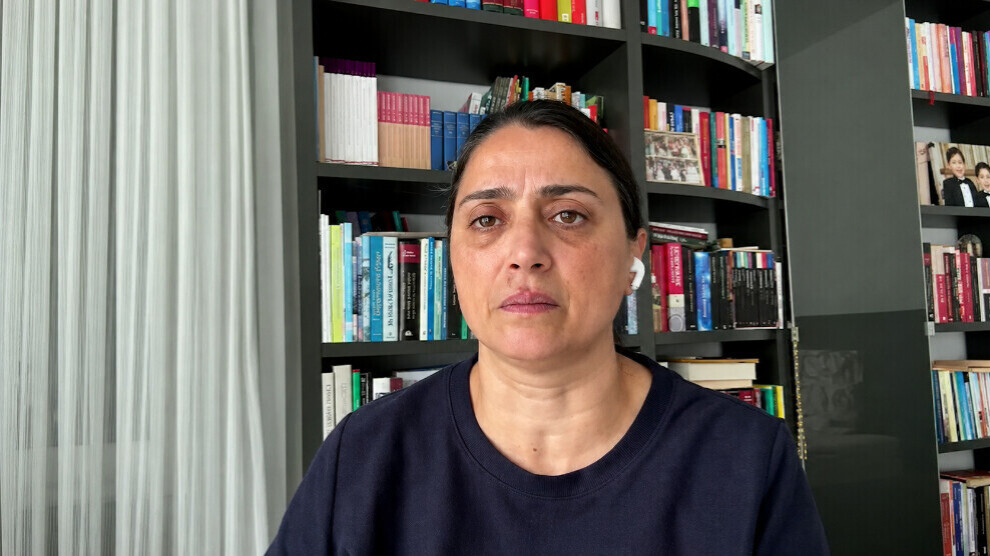
News Center— Every August 3, Shingal's wound reopens in the conscience of humanity; it is not merely the memory of a tragedy, but pages of a savage genocide that targeted defenseless women and children. In the face of this systematic annihilation, the children of Shingal, with their eyes full of questions, and its women, with their unbreakable resilience, continue rebuilding the dignity of life against the pages of history.
The twelfth anniversary of the 74th genocide committed against the Yazidis on August 3, 2014, has passed. That genocide was not the first, but it was the bloodiest, and its wounds remain open to this day.
"Every Stone in Shingal Carries a Painful Story"
On the twelfth anniversary of the genocide, politician Felaknaz Uca said the Yazidi people have endured 73 Fermans throughout their history, and that the genocide of August 3 was the 74th Ferman, its goal being to "empty Ezidkhan of its inhabitants, and to uproot the Yazidis from their religion, beliefs, and identity."
She added: "When we speak of 74 Fermans, we mean only what has been documented, while hundreds of other massacres remain undocumented. The genocide of August 3 took place before the eyes of the world and of humanity — it is a wound that will not heal, and we still live its pain today. Thousands were killed before the world's eyes and buried in mass graves, hundreds of thousands were displaced from their homes, and to this day more than 80 or 90 mass graves have been found in Shingal, most of them still unopened, while the fate of around 2,700 Yazidi women and children remains unknown, as thousands of others continue living in displacement camps in the Kurdistan Region."
She noted that "every flower that grows in the land of Ezidkhan was watered with the blood of martyrs, and every stone there carries a painful story. We still hear the cries of women who chose to throw themselves from the mountains rather than fall into ISIS's hands, while children, women, the elderly, and even infants lost their lives to heat, thirst, and hunger. And as August approaches each year, this tragedy returns to live in our memory once again."
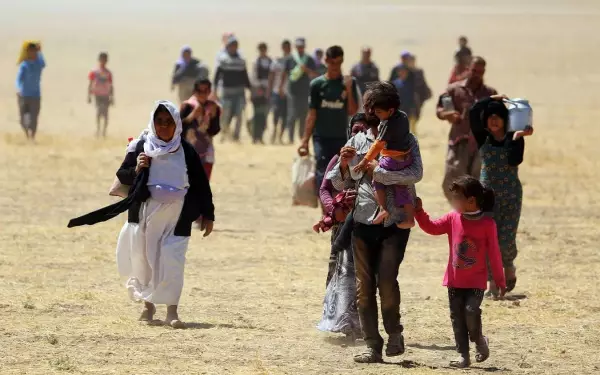
"They Reached as Far as Austria and Were Scattered Across the World"
Felaknaz Uca noted that the humanitarian corridor opened between Shingal and Rojava saved the lives of thousands of Yazidis, after dozens of male and female fighters sacrificed their lives, noting that thousands of Yazidis crossed via the Semalka crossing to Zakho and Duhok, while others headed to northern Kurdistan: "Because of ISIS's brutal attacks, Yazidis were forced to migrate as far as Austria, scattering across the world. They chose a long and grueling journey to escape the catastrophe, while the future of those who stayed in Shingal remains uncertain."
"The Children Say: The Further We Get, the Safer We Feel"
She also spoke about the Yazidi women who were sold in the markets of Mosul: "Yazidi women were sold ten times a day in the markets of Mosul. No history, no war, has witnessed women sold this openly as happened after August 3. In Badoush prison in Mosul, the screams of hundreds of women rose as they were beaten and tortured, and they no longer saw salvation except in death."
Despite twelve years passing, she affirms: "Those scenes are still present in our memory. When the women were freed from ISIS's grip, they were transported from Kobani to Amed in northern Kurdistan and then handed over to their families. As for the children, they were afraid of everything — even when they saw car headlights, they would panic and say: the further we get, the safer we feel."
"Hayat" Chose Death Over Captivity
Felaknaz Uca stressed that the pain the Yazidi people endured cannot heal quickly: "Children in the camps speak of watching their fathers killed and beheaded before their eyes... how can a person forget that? We are speaking, above all, about psychological torture."
She recounted the story of a young Yazidi woman named Hayat, who lived through the horror of the ISIS attack: "I was speaking with her on the phone, trying to convince her not to end her life, but she kept saying: 'So I don't fall into their hands, I'll kill myself.' I tried hard to dissuade her and told her the guerrilla fighters had come to rescue them, but she wasn't convinced, and kept repeating: 'I won't leave my honor to them.' In the end, she asked to speak to her brother, and during the call, she ended her life."
She says the story of Hayat, and the stories of women who threw themselves from cliffs and mountains, are not mere tales, but stories of women who defended their dignity until death: "If only the mountains of Shingal could speak, to tell the stories of these women and their cries, and to recount the pain, the genocide, the resistance, and the will that confronted ISIS. However much we speak of it, we will never do the truth justice."
Leader Abdullah Öcalan's Warnings, and Their Disregard
Felaknaz Uca noted that what happened in Shingal was not the first of its kind, recalling the 2007 bombings in Tal Ezer and Siba Sheikh Khidr that claimed hundreds of lives: "The goal then was to eliminate the Yazidis, and what they failed to achieve in 2007, they tried to carry out in 2014."
She pointed out that leader Abdullah Öcalan had repeatedly warned, from inside İmralı prison, of the dangers threatening Shingal and the Yazidis, and had called since 2004 for the Yazidi community to organize and defend itself: "But we didn't take those warnings seriously, because we didn't believe a new Ferman would befall us. We relied on the Peshmerga and Iraqi forces, believing they would protect us, but they withdrew once the genocide began."
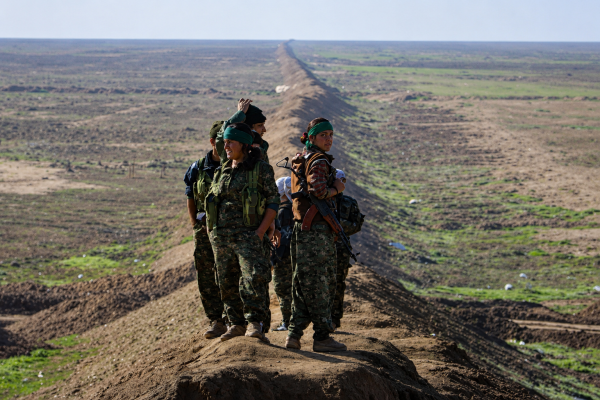
"We Sacrificed Our Lives, But We Never Gave Up Our Dignity"
She also spoke at length about Shingal's geographic location and its significance, saying this importance made it a constant target for attacks: "The plots weren't limited to ISIS's 2014 attack. After 2017, the Turkish state targeted, via drones, social and service figures in Shingal, such as Mam Zeki, Zerdesht, Pir Ceko, Cuwar, Azad, and others, and also targeted civilian institutions."
She noted that the danger of ISIS's return remains present: "We have only one answer: we sacrificed our lives, but we never gave up our dignity," affirming that the greatest response to the genocide was Yazidi women taking up arms and defending themselves and their land.
"No One Will Ever Again Be Able to Commit a New Ferman Against the Yazidis"
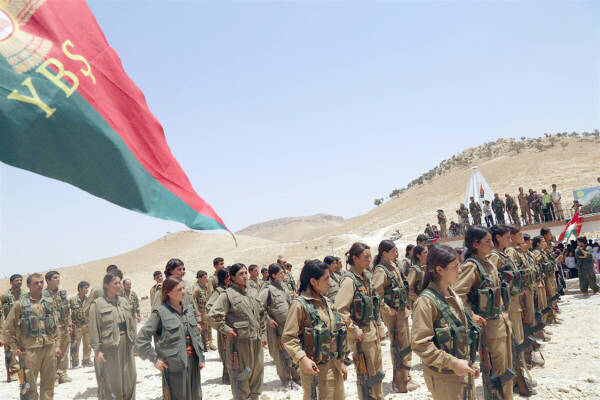
Shingal, she affirms, witnessed the birth of a new life after the genocide: "Fighters of the Kurdistan Freedom Movement came down from the mountains to Shingal, and the Women's Protection Units (YPJ) and People's Protection Units (YPG) arrived from Rojava, all contributing to establishing the concept of freedom and self-defense grounded in the philosophy of leader Abdullah Öcalan."
She added that the Yazidi community built its own self-defense forces from its young men and women, affirming: "No party can ever again impose a new Ferman on the Yazidis, because this community today is no longer what it was before 2014. It has built its own institutions, councils, and self-defense forces, and achieved important accomplishments."
Criticizing the World's Silence
Felaknaz Uca sharply criticized the international community: "The genocide took place before the eyes of the world, and yet no international power intervened. Had it not been for the resistance of the guerrilla fighters, YPJ, and YPG, the situation of Shingal and the Yazidis would not be what it is today. This resistance sent a clear message to the world: that the international community remained silent despite witnessing the genocide, and that public opinion only moved after this resistance."
She noted that the European Union, the Council of Europe, the European Parliament, the United Nations, and a number of European countries have recognized what happened in Shingal as genocide, but that this international recognition has not translated into practical steps to rebuild Shingal or determine its legal status: "No special representative has been appointed for Shingal, residents have received no real support, and even after the trial of some ISIS mercenaries, the Yazidis have not obtained their rights — talk of human rights has given this people nothing."
Felaknaz Uca directed sharp criticism at European policies, considering that Europe owes a debt to Shingal and its resistance: "The question that must be put to these countries is: what have you done for Yazidi women? Was everything you did simply transferring survivors to Europe?"
The "For Justice and Freedom" Campaign
She affirmed that the Yazidi community continues its life today through the self-administration system it has established: "Shingal today is among the safest areas in Iraq, because it governs itself — which is why thousands of displaced people are returning to it from the camps of Duhok and Zakho, as it has become a model for a free, equal life without violence."
She explained that this was achieved thanks to the resistance of Shingal's young men and women, many of whom lost their fathers and mothers at ISIS's hands, before choosing the path of self-defense and building a new community, praising the campaign launched by the Free Yazidi Women's Movement (TAJÊ) on July 17 under the slogan "For Justice and Freedom — Be a Voice for the Captives of the Genocide Too."
She said the campaign, launched in cooperation with the Council of Yazidi Women in Europe, is drawing widespread attention, particularly regarding the fate of Yazidi women still counted among the missing, affirming that supporting this campaign means holding the international community accountable for its responsibility toward the abducted women still being exploited as slaves in some parts of the Middle East.
"The Iraqi Government Must Apologize to the People of Shingal"
She criticized the Iraqi government's decision to pardon some ISIS members, asking: "How can people who took part in genocide and massacres be released?"
In closing, politician Felaknaz Uca stressed that Shingal is part of Iraqi territory, and that a referendum should have been held there under Article 140 of the Iraqi constitution, as in Kirkuk, Khanaqin, and Makhmour — but that never happened: "The Iraqi government was supposed to protect Shingal, but it left it alone, and for that reason it must apologize to the people of Shingal, grant the city its legal status, recognize its local forces, and hold those responsible for the genocide accountable."