
Violence Against Women in the Kurdistan Region: Between Escalating Violations and Challenges of Confrontation.
Violence against women in the Kurdistan Region escalates amid weak law enforcement and rising digital abuse, prompting calls for awareness and stricter legal action.
Diren Rahim
Sulaymaniyah_Despite legal and societal efforts to curb violence against women, this phenomenon continues to pose a major challenge in the Kurdistan Region, taking multiple forms that go beyond physical violence in include psychological, economic, electronic, and media violence.
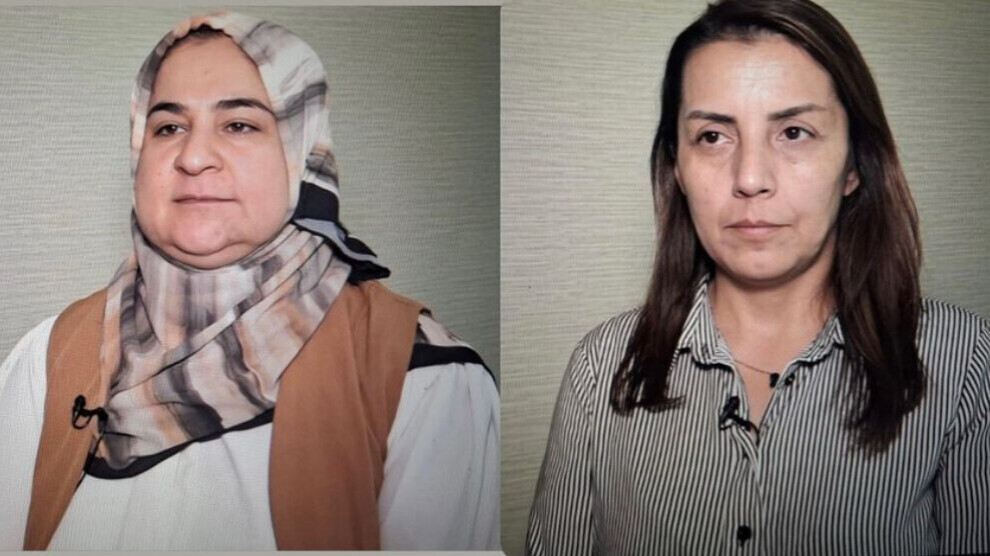
Hana Shwan, President of the Women’s Media and Enlightenment Organization,stated that there are no accurate statistics on the various forms of violence or how related complaints are registered, which posese a significant obastacle to assessing the current situation. “ At this stafe, the registered, which poses a significant obstacle to assessing the current situation. "At this stage, the forms of violence are changing—some are becoming more prevalent while others are declining."
She explained: "Through our monitoring and the findings we have reached, it has become clear that electronic violence has become one of the most common forms of violence against women, posing a great danger. The media has revealed many cases in which women have been blackmailed through social media platforms, forced to pay large sums of money, and subjected to various forms of violence."
"Media Are Irresponsible in Addressing Women's Issues"
Hana Shwan believes that the media deal with women's issues in an "irresponsible" manner, and that some are run by people who care only about views and interactions. For them, it is natural for women to be turned into victims or used as fuel to ignite controversy and conflicts.
She said that much of what is published in the media "violates women's dignity," noting that one media institution boasts of having two million views, yet these views came as a result of exploiting a woman's statements or private situations and turning them into material for mockery and bullying within society.
She pointed to 13 forms of violence, among which is what is known as the violence of severing family ties. "When a woman separates from her husband, some people may prevent her from seeing her children, or when she marries, she may be prevented from visiting her family and relatives. These are all forms of violence that are often not addressed or clearly penalized."
She stressed the importance of increasing community awareness of common forms of violence, affirming that awareness is one of the fundamental pillars of confronting violence.
Rise in the Number of Complaints
For her part, Klestan Ahmed, Head of the Human Rights Office in Halabja Governorate, said that the increase in the number of complaints can be explained from two sides. The first is the rise in community awareness, which has driven women to turn to the relevant authorities and register complaints. The second is the increase in social problems and crises, which has led to a general rise in complaints, as various institutions and departments are occupied daily with addressing these problems.
She added that previously, problems were limited to domestic violence, but today they have expanded to include economic and social violence. The media has also contributed to increasing various forms of violence, which has been reflected in the rise in the number of complaints in various fields.
She explained that women today have greater awareness, but many of them know that if a complaint reaches the court, changes or pressures may arise, leading some to withdraw their complaints and wait for the problem to be resolved through tribal reconciliation. Therefore, there is still hesitation among many women to resort to the judiciary, which is a problem that requires further treatment and awareness.
"Violence Is Increasing"
Our interlocutor also noted that cases of violence during 2026 continue to rise because society is "undergoing continuous transformations and changes." She explained that violence through the media, social media, and artificial intelligence technologies has increased significantly. "Although these technologies represent modern innovations, they have brought with them new forms of violence and contributed to causing disturbances within society."
She affirmed that society needs to learn proper use of social media, criticizing some media institutions for their irresponsible handling of women's issues, and stressing the need for the Ministry of Culture and relevant authorities to oversee the media in a more professional manner.
She added that some media outlets, when addressing or analyzing cases of violence, "sometimes act in an irresponsible manner that leads to an increase in this phenomenon rather than reducing it," noting that women's problems remain confined within narrow frameworks. "Although there is a law against domestic violence, it has not been implemented as required."
She noted: "In Halabja Governorate, we find that only a few articles of the Domestic Violence Law have actually been implemented, and enforcement mechanisms have not been fully activated, which has limited the possibility of bringing about real changes in issues related to violence. Ongoing social changes and differences in customs and traditions between different regions also constitute additional obstacles to addressing these problems."
"If a Woman Is Aware, the Family and Society Will Be More Aware"
Klestan Ahmed added that the presence of an aware woman in the family means a more aware family, and therefore "women should constantly seek to enhance their knowledge and awareness, because women's awareness is an important foundation for protecting the family and contributing to reducing violence within society."
Klestan Ahmed affirmed the need for new legislation, continuous awareness campaigns, and the protection of various sectors from manifestations of violence.