
Leader Öcalan: Consultation (Shura) and Women’s Freedom Are the Foundation of Democratic Society in Islam
Leader Öcalan affirmed to the Mesopotamian Islamic Research Federation that Islam's essence carries liberating, moral values based on justice, equality, women's freedom, and brotherhood.
News Center — The conference of the Mesopotamian Islamic Research Federation (MÎA‑FED) constituted a prominent intellectual milestone in the ongoing debates surrounding the concept of democratic Islam and its role in building a society based on freedom, justice, and equality.
The Mesopotamian Islamic Research Federation (MÎA‑FED) held its third conference today, Saturday, June 20, under the slogan "Democratic Islam: Sincerity in Faith and Freedom in Society," at the Ali Amiri Hall of the Greater Améd Municipality in northern Kurdistan.
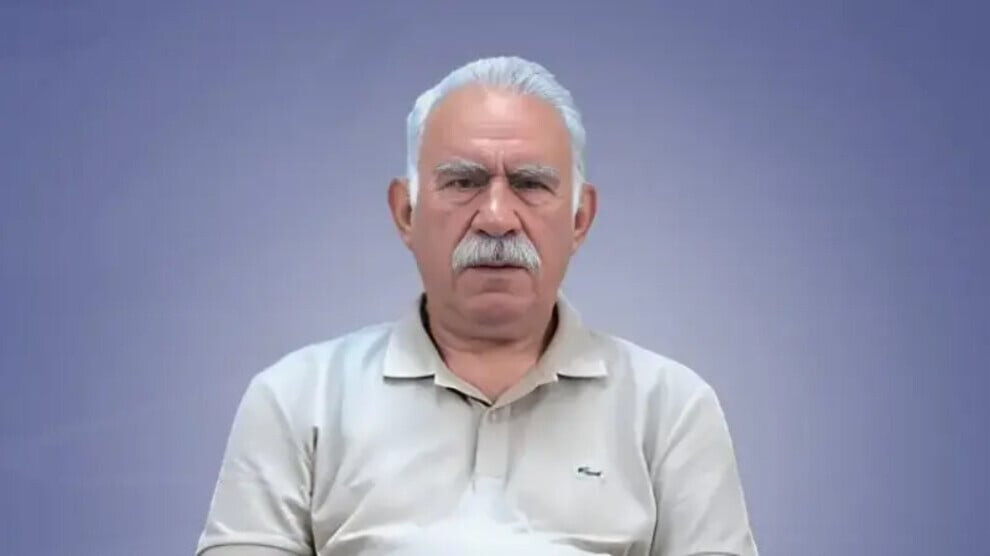
The opening session featured the reading of a message from leader Abdullah Öcalan, in which he affirmed: "Islam, in its essence, is a social movement for truth, built on the values of freedom, justice, and equality in the moral and political society. The first Islamic society, established under the leadership of the Prophet Muhammad, was an important step toward democratic society, developing against class hierarchy, despotism, and tribal partisanship.
However, over time, this liberating and social essence of Islam was besieged by state authorities. From the period beginning with the Umayyad state, religion was alienated from its moral system and from social life, and was transformed into a tool for legitimizing the state. Thus, the democratic and liberating roots of Islam were weakened. Today, whether through the official Islam adopted by the state or through sectarian currents seeking power, this historical deviation continues in various forms.
The meaning and philosophy of democratic Islam lie in returning to the moral, emotional, and liberating values originally inherent in the essence of Islam. One of the most important historical references for this is the Medina Document (Constitution of Medina), which is a democratic social covenant. It preserved the essence of different beliefs, identities, cultures, and communities, and brought them together within a framework of shared life rules. In this regard, it is considered one of the earliest models of pluralism and democratic unity in human history.
True jihad (struggle) is the human struggle against oneself—a permanent struggle against tendencies of domination, selfishness, the desire for hegemony, and all forms of injustice. The greatest jihad is for a person to struggle against themselves, transform themselves, and attain truth. Without the entrenchment of a culture of self-criticism, neither individual freedom nor societal freedom can be achieved.
The principle of shura (consultation) in Islam represents one of the fundamental values of democratic society. Shura means the existence of a shared moral framework for society and collective decision-making, as well as society's ability to monitor and hold power accountable. From this perspective, the historical roots of democratic politics, local democracy, and communal life lie here. What must be done is not to allow Islam to serve the state, power, or capitalist forces, but to return it to its essence—to serve the moral society, democratic politics, and free life. Religion should be the conscience of society, not the conscience of power. Truth can only be attained through the free organization of society.
Any thought that stands against women's freedom, views nature as an object of unlimited domination, and fuels hostility between peoples does not represent the essence of Islam at all. Democratic Islam is based on a perspective of moral life and makes women's freedom, environmental life, societal solidarity, and brotherhood among peoples fundamental principles. From this perspective, it is not only an important source of democratic civilization for Islamic societies but for all of humanity.
In the face of the escalating crises in the Middle East—sectarian wars, ethnic conflicts, and competition between authorities—the solution lies not in strengthening state forces and hegemony but in developing democratic society.
The perspective of democratic Islam can open the way for peoples to live together, each with their identity, their belief, and their free will.
I am certain that the discussions you will conduct on this basis and the conclusions you will reach will contribute to building democratic society, consolidating shared life among peoples, and supporting the peace process and democratic society we have initiated. I wish you success in your work."