
Turkish Media… Between Denying a Solution and Ignoring the Struggle of Kurdish Women.
Attacks on Kurdish neighborhoods exposed Turkey’s deep media and political rift, as opposition and government narratives converged while silencing Kurdish women’s struggle and Rojava’s achievements.
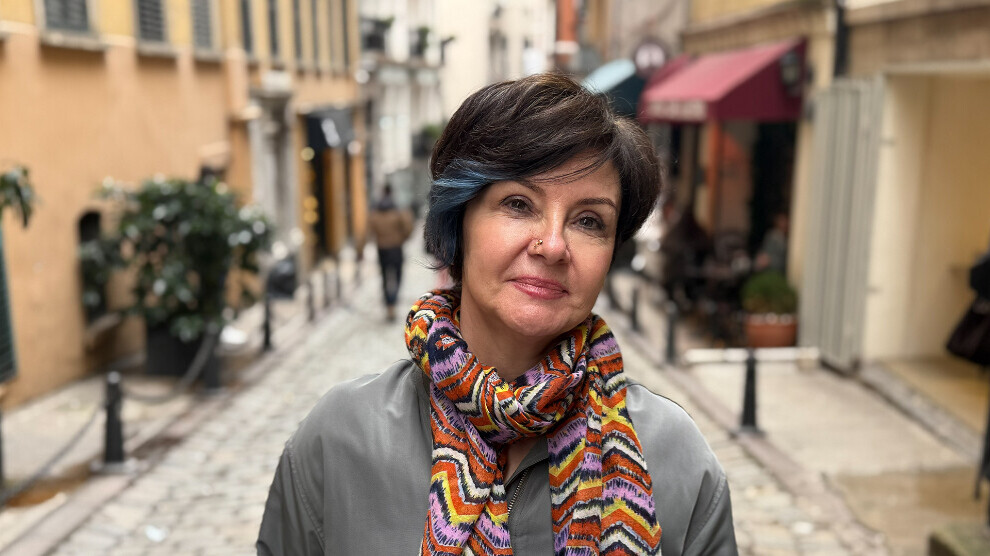
Elif Akçul
Istanbul — The attacks that began in the Sheikh Maqsoud and Ashrafieh neighborhoods of Aleppo and spread to North and East Syria revealed not only the nature of the military conflict, but also the regional balance of power, the political landscape within Turkey, and the reflections of this on local media. While developments on the ground were striking, the language used, the alliances formed, and the prevailing silence clearly exposed the positions of different actors regarding peace, democracy, women’s rights, and the collective rights of the Kurds. The stance toward crimes against humanity committed against Kurdish women reopened the debate on the moral, political, and ideological boundaries of media in Turkey.
In the Turkish media landscape, it is clear that the Kurdish issue and Kurdish rights make the picture even more complex. The differences between opposition media and pro-government media quickly disappear when the topic is the Kurds, especially Kurdish women. This convergence in discourse reveals that media language and reactions constitute one of the main obstacles to transforming peace into a societal issue. The shared disregard for the societal model established in Rojava—founded under women’s leadership on principles of equality and pluralism—reflects not only attitudes toward Syria but also sends significant signals about the limits of the peace that is, or is not, intended to be established within Turkey.
“In Turkish media, there are those who do not want a peace process”
Sevda Çetin Kaya, General Director of İlke TV, emphasizes that the position of Turkish media at this stage is not coincidental. She describes the fundamental divide within the media as follows:
“From the very beginning, there have indeed been those in Turkish media who do not want a peace process. There is also what we call pro-government media, which supports a ‘terror-free Turkey’ within the framework drawn by the People’s Alliance. However, when it comes to peace, democracy, women’s freedom, equality, and the constitutional and collective rights of the Kurds, it says ‘beware.’ This has been the picture from the start.”
According to Kaya, the attacks in Aleppo made these media positions even clearer. Lines that once seemed different converged at one point:
“In North and East Syria, and with the attacks on the two Kurdish neighborhoods in Aleppo, they revealed everything they had been hiding. This time, media that defines itself as opposition united with pro-government media. When the issue is Kurdish rights, and when Kurds defend a democratic, free, and pluralistic Syrian model led by women, the Kurds who fought ISIS and saved the world from its brutality are labeled terrorists—while yesterday they were calling ISIS terrorists.”
“Its most brutal form was directed against women”
Kaya notes that the discourse used was particularly harsh toward women. Women who defended their lands and the rights their community had achieved faced severe war and crimes. These violations were either justified, granted legitimacy, or at best ignored. Voices that attempted to expose these realities were confronted with rhetoric once again labeling them enemies or terrorists.
She explains that the essence of this stance is linked to the women’s struggle in Rojava, which caused widespread concern because women had become institutional actors in society. In North and East Syria, women have consistently held leadership positions. While the Middle East is accustomed to scenes of destruction and war, Rojava presented an entirely different societal model—one led by women, based on equality and guaranteeing freedom. Kurdish women have clearly declared that they are not only struggling for individual rights but also seeking to be fundamental partners in building a new Syria. This transformation posed a serious challenge to patriarchal mentality and male-dominated alliances, whether for the government or the opposition.
Kaya adds that the shift in opposition media—despite its previous strong criticism of the Syrian interim administration following a U.S. visit—stems from deeply rooted historical reflexes. When the issue concerns Kurds and their rights, a century-old monolithic nationalist reaction becomes evident.
She notes that it may not be surprising for pro-government media to adopt such rhetoric. What is striking, however, is that some voices that long spoke of secularism and women’s rights—and described groups such as Hay’at Tahrir al-Sham and ISIS as grave threats to women—remained silent when the issue involved Kurdish women. According to Kaya, this silence reflects a dangerous blindness toward an existing women’s struggle.
“You must be anti-racist”
Kaya highlights that the roots of this blackout lie in nationalism and racism, recalling Angela Davis’s words: “It is not enough to be non-racist; you must be anti-racist.” She adds:
“It is not enough to say ‘I am not racist’ and withdraw into a corner. One must take a clear position and show solidarity when such events occur.”
She stresses that the struggle of Kurdish women is one that all women should embrace. However, due to racist reactions toward Kurds, no genuine solidarity has been built.
She also addressed the agreement that followed the clashes, noting that women’s solidarity gained strength despite limited broader societal response. The reaction symbolized by braiding hair was meaningful, even if not embraced by the entire society. The arrest of a sixteen-year-old girl over such a video reflects the extent of repression, making solidarity even more crucial.
Regarding the agreement reached on January 30, Kaya stated:
“The January 30 agreement stopped a massacre and a major war. The Kurds did not fall from the table. They declared that they will continue their struggle to preserve the rights and status they have gained so far.”
“Half of the administration and representation are women”
Kaya particularly emphasizes women’s achievements, noting that the administrative model established in Rojava carries not only symbolic but also tangible and institutional value in terms of women’s struggle. Women participate equally in all spheres, from politics to social life, marking a critical threshold in discussions about a new Syria.
She affirms that the gains achieved by women in Rojava remain intact and have not been rolled back. Describing the negotiation scene, she says:
“Today, women constitute half of the administration in Rojava in practice, and half of political and social representation as well. If we look at the delegation that participated in the integration negotiations with Damascus, we see that opposite three men from the other side, the Rojava delegation included one man and two women. This is a major achievement, and the women did not give this up.”
In closing, Kaya returns to the Turkish context, emphasizing that what happens in Syria will also be decisive for Turkey:
“Kurds in Syria will continue their own struggle. Now we will see what will be done in Turkey regarding the collective rights and status of the Kurds. We will observe how those who delay by saying ‘Let’s look at Syria’ will build peace and a solution here.”