
Moroccan Researcher Urges Women’s Inclusion in Environmental Planning for Equity
Including women in environmental assessment and participatory planning shifts them from policy recipients to key actors shaping climate adaptation strategies and promoting just, sustainable development.
Raja Khairat
Morocco – The Tensift Regional Development Center is working on developing practical tools, including the “Women’s Climate School”, an initiative dedicated to training women on climate change and water security. The program also trains women in sustainable water management and water-saving irrigation techniques, qualifies them to become local mediators between communities and institutions, and enables them to transform climate knowledge into field projects within villages and cooperatives.
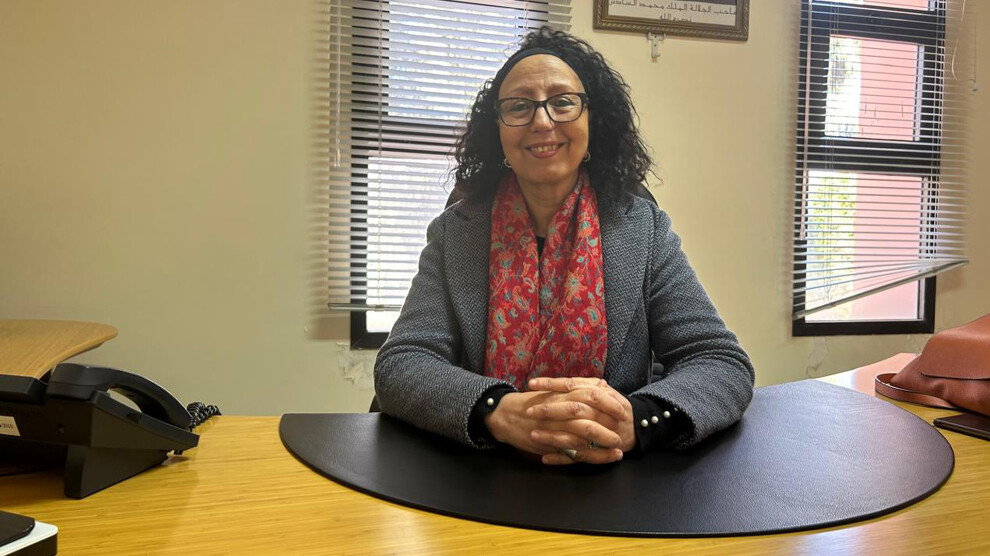
Leila Mandi, President of the Tensift Regional Development Center and Observer Member to the United Nations Framework Convention on Climate Change (UNFCCC) in Morocco, stated that drought, desertification, and climate change in Morocco directly affect women, particularly in rural areas, as they are at the heart of managing water, food, and energy within households and communities.
She explained that with the decline of water resources and soil degradation, women’s daily burden of fetching water and securing food increases, while the time allocated to education or economic activities decreases. Their incomes linked to subsistence agriculture and local products are also affected, which negatively impacts the health of women and girls and their ability to continue education.
However, she emphasized that women are not merely a vulnerable group; they possess precise local knowledge of resources, making their inclusion in environmental assessment and planning a necessity rather than an option. “Women can be practically involved in developing solutions by integrating them into water and land management committees, enabling their access to green finance and income-generating projects linked to the environmental economy, and training them in water-saving techniques, sustainable irrigation, and renewable energy,” she said.
She also called for encouraging local women-led innovation and supporting civil society initiatives that provide on-the-ground support to women. She noted that this shift from a social approach to a participatory approach transforms women from policy recipients into key actors in devising effective solutions for climate adaptation and achieving more equitable and sustainable development.
Women’s Inclusion in Environmental Policies
Regarding the exclusion of women and their lack of participation in defining environmental problems and solutions, Leila Mandi stressed that this is not merely a matter of representation but has deep and direct repercussions on women’s quality of life, especially in rural and fragile areas. “When women are not involved in diagnosing environmental challenges, their daily realities are overlooked.”
She explained that women are the most closely connected to natural resources such as water, energy, food, and soil. In Morocco, data from the High Commission for Planning shows that rural women spend an average of two to four hours per day fetching water and firewood and managing household activities related to natural resources. “When policies are designed without considering this time burden, proposed solutions are often inadequate or unfair.”
She noted that this exclusion exacerbates economic vulnerability, as women rely on environmentally linked activities such as subsistence farming, small-scale livestock breeding, and gathering forest products. In the absence of their participation in decision-making, these activities are not sustainably supported, negatively affecting women’s income and food security.
UN reports indicate that women constitute approximately 43% of the global agricultural workforce. In Morocco, a significant share of unpaid agricultural labor is carried out by women, without equitable access to climate support programs.
On the impact of excluding women, she explained that it also affects “health and education, as water scarcity and environmental degradation increase women’s exposure to diseases linked to unsafe water, and lead to girls dropping out of school due to the time spent fetching water or performing domestic work. Several studies indicate that households located more than one kilometer from a water source have significantly higher dropout rates among girls compared to boys.”
At the psychological and social levels, Leila Mandi affirmed that the absence of women’s voices in environmental policies generates a sense of marginalization and loss of trust in institutions, and limits women’s ability to adapt to climate shocks such as droughts and floods. Women, she stressed, do not only need services, but recognition of their role as local experts in resource management.
Women as Friends of the Environment
On whether women are more environmentally friendly and contribute less than men to greenhouse gas emissions, she stated that several international studies have confirmed that the carbon footprint of female-headed households is often lower than that of male-headed households. This is attributed to differences in consumption and mobility patterns, as women tend to rely more on public transportation and walking, consume less household energy, and are more inclined to conserve water and food and reduce waste.
Women’s relationship with the environment is not only behavioral, but also functional and livelihood-based. “In rural Morocco, women represent a significant proportion of actors in managing household and small-scale agricultural water use, collecting firewood and fodder, preserving local seeds, and managing the household economy related to food and energy. This places women in daily and direct contact with natural resources, making them more aware of their scarcity and of the impacts of climate change, whether in terms of drought, soil degradation, or water scarcity.”
Women as Drivers of the Ecological Transition
Leila Mandi emphasized that investing properly in this “women’s environmental capital” would make women drivers of the ecological transition rather than marginal actors, whether through the green economy, environmental entrepreneurship, or climate education within families and communities.
Regarding water security, she pointed out that Morocco has taken important steps to address access to water, including the National Water Strategy 2030. While this strategy has contributed to improving access to drinking water, it has failed to achieve balance between urban and rural areas, leaving rural regions more vulnerable to climate variability and declining resources, which has affected the quality of life of rural women.
She noted that rural access to drinking water has improved to exceed 96% nationwide; however, this figure masks significant territorial disparities, as many rural women are still forced to travel long distances daily to fetch water, especially during consecutive drought years.
She attributed this to water policies focusing relatively on large-scale solutions, while insufficiently addressing the challenges faced by women in rural, mountainous, and fragile areas.
Major Challenges
She highlighted that current policies are often designed from a general national perspective, while women experience vastly different environmental conditions depending on location. “Rural women in water-stressed areas do not face the same challenges as women in cities or coastal regions, yet they are often treated within a unified framework that does not reflect this disparity.”
This underscores the need to apply climate justice for women, whose integration has often remained sectoral or symbolic, limited to formal inclusion or pilot projects, without real linkage between climate, water, agricultural, educational, and health policies. As a result, the impact on women’s lives—especially in fragile areas—remains limited.
Ensuring Women’s Access to Resources and Land
To move toward genuine climate justice, she called for adopting a territorial approach that takes into account regional specificities and fragile areas, linking climate policies with social and economic justice, and involving women—especially in rural areas—in assessment and planning. She also emphasized strengthening the role of civil society as a bridge between national policies and local realities.
Leila Mandi concluded by calling for the inclusion of women and civil society in local water governance, stressing that technical solutions alone are insufficient. “There must be a shift toward participatory governance in which women have a real role in planning, implementation, and monitoring