
Turkish Human Rights Association at Forty: The Struggle Continues and Violations Remain Unchanged
On the fortieth anniversary of its founding, the Turkish Human Rights Association (İHD) continues its journey that began in the aftermath of the September 12 coup, affirming its commitment to defending rights and freedoms and demanding justice.
ELIF AKGÖL
Istanbul — The Turkish Human Rights Association (İHD) is celebrating its fortieth anniversary. It was established in 1986 in the aftermath of the September 12 coup, and has since been one of Turkey's most prominent human rights institutions, documenting violations, preparing reports, and defending issues such as enforced disappearance, prohibition of torture, freedom of expression, and violations of prisoners' rights.
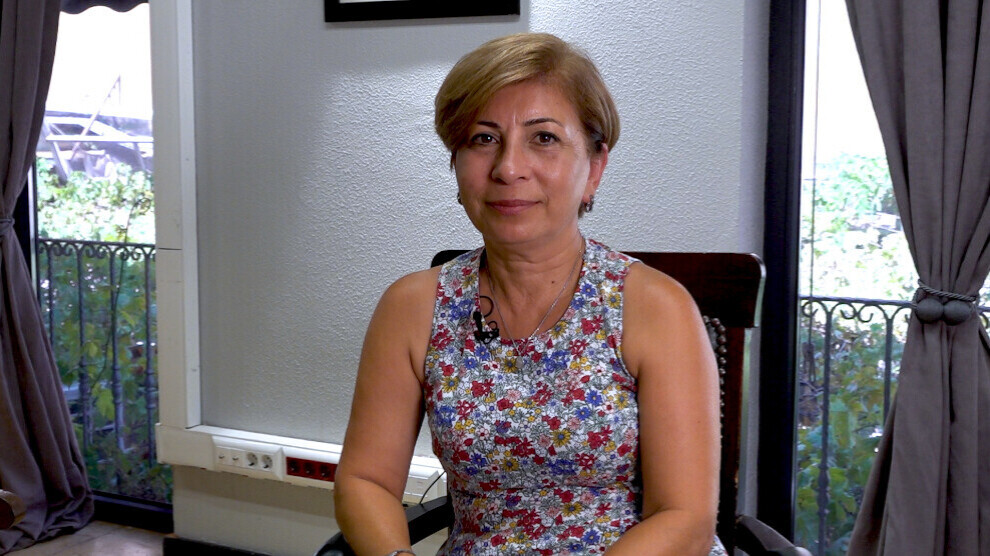
On its fortieth anniversary, the association reviews its struggle since its founding, affirming that human rights problems continue unabated. In this context, Gülsern Yoleri, a member of the association's Central Executive Committee, spoke about the evolution of the rights struggle and the association's legacy over the past four decades.
A Legacy of Forty Years of Human Rights Advocacy
Gülsern Yoleri affirmed that the association's history represents not only the history of an institution but also the memory of the human rights movement in Turkey. She explained that the struggle has continued despite grave violations, pressures, and losses, and that what has been achieved today is the fruit of the resilience of previous generations, noting that the association continues to carry this historical legacy.
She said: "For forty years, the Human Rights Association has continued its struggle without interruption. Over these years, it has become clear that human rights violations stem from structural problems in the state and the system, and confronting them has required, and still requires, great sacrifices. A deep-rooted tradition of persistence and continuity has been established, and we remember with full respect all our comrades and human rights defenders whom we have lost along this journey."
"A Struggle in Which Women Were at the Forefront"
Our interviewee also explained that the association was founded in what she described as the "darkness of September 12"—a period marked by the spread of torture, deaths under torture, executions, the closure of political institutions, and the prohibition of political activity in Turkey and North Kurdistan.
She added that women were at the forefront of the resistance, particularly the mothers and wives of detainees who demanded the safe return of their loved ones. This solidarity later evolved into an organized rights movement embodied in the founding of the Human Rights Association. "We have inherited a struggle that began with limited demands concerning prisons and detainees, and then transformed into a broad movement for the defense of human rights. Today, we continue this struggle on the foundations laid during that phase."
"The Authoritarian Structure of the State Continues"
She believes that the nature of violations has changed over time, but the fundamental rights that were violated forty years ago continue to be violated today. "When we compare past and present, we find that the same basic rights are still being violated. Due to its undemocratic, authoritarian, and monolithic structure, the state continues these violations. That is why we are still raising the same demands after forty years."
She noted that many ask: "After forty years of struggle, what has been achieved?" She explained that the state has shown consistency in continuing violations, while human rights defenders continue their struggle with determination, because genuine change "requires radical reforms that touch the very structure of the system itself."
She affirmed: "We seek to entrench human rights within this system, but the system is extremely rigid, and our demands can only be achieved through fundamental changes. Therefore, our determination to continue the struggle stems from our awareness that these changes will not be achieved easily or quickly."
"The Scope of the Rights Struggle Has Expanded"
According to Gülsern Yoleri, one of the association's most important achievements is the dissemination of rights awareness within Turkish society. "Today, human rights are no longer limited to discussions of freedom of expression or torture; they now include women's rights, children's rights, environmental rights, animal rights, and others. People now say: 'This is my right' and 'I want my right.' This is evidence that a culture of rights has become part of societal consciousness."
She added that the presence of new generations of human rights defenders and the continued activism of veteran defenders is evidence of "the association's success in entrenching a culture of claiming rights."
"We Wish for a World That Does Not Need Human Rights Defenders"
In concluding her remarks, Gülsern Yoleri stated that they do not favor the phrase "to many more years" when celebrating the association's anniversary, because their ultimate goal is to reach a world where there are no human rights violations, and thus no need for defenders of these rights. "We wish for a world where there are no human rights violations and no need for defenders. However, the current reality shows that this goal remains distant. Therefore, we hope that this struggle will continue with strength and determination as long as the need for it persists.i