
The Phoenix of the Alawites… When Identity is Reshaped from the Ashes of Captivity and Kidnapping
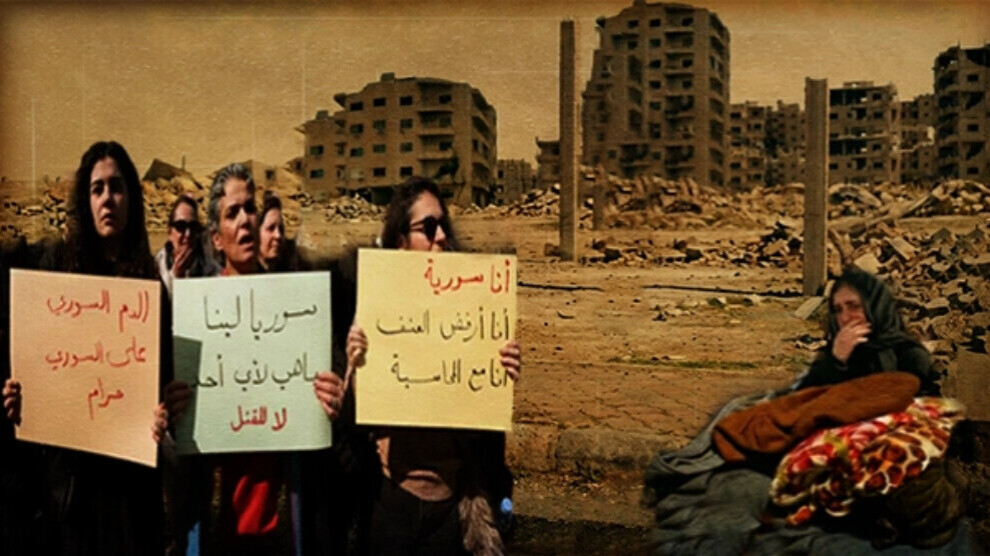
Opinion piece by journalist Inana Youssef
Since the outbreak of the Syrian conflict and the fall of the Baathist regime from the stage of power, the Alawite community has been transformed into a ready‑made accused, upon whom responsibility for everything that has happened and is happening in the country is thrown. This was not the result of a calm political reading, but rather the fruit of the rise of extremist jihadist ideology, which treated the Alawites as a single monolithic bloc.
Excessive explanation and detail do not provide a real solution to the tragedy. The dark jihadist ideology that extended its control over the region from the very first moment of its arrival to power worked systematically to demonise the Alawites by all available means. This ideology was not content with kidnapping members of the community — elders, women, and children — but first began by kidnapping the Alawite identity itself, attempting to strip it of its meaning and depth, and attaching all the crimes associated with the previous regime to it, ignoring that the previous regime was based on a broad and diverse social base, not on a single sect.
However, the jihadist mentality that seized the reins of power promoted the idea that the Alawites alone bear responsibility for everything that has happened from the very first moment of the so‑called Syrian revolution until today. If we return to the map of events, we find that the Alawites were among the biggest losers in this conflict, and that they have paid a heavy price on both the human and social levels. More than a year after the usurpation of power by jihadist groups, systematic campaigns against the members of this sect have escalated, from daily incitement to displacement, kidnapping, and identity‑based killing.
From Fahil to the Black March… A Memory Laden with Blood
The Fahil massacre in Homs was among the first attacks to target Alawites directly, and it was met with suspicious silence from the Syrian street. Then came the "Black March" massacres to form a pivotal turning point in the life of every Alawite family, as a person's life was no longer measured by their citizenship, but by their religious or ethnic affiliation. With the new government consolidating and obtaining regional and international legitimacy, the campaigns of distortion and marginalisation targeting the Alawites increased. Incitement turned into daily practice, kidnapping into a tool of pressure, and killing into a political message.
Kidnapping Identity Before Kidnapping the Body
Among the most heinous methods — which have become exposed even to those who do not wish to see — is the use of kidnapping cases and dressing them in a religious garment. When a young man, girl, or child is kidnapped, it is said that it was done with the victim's consent, and they are always presented as a smiling, satisfied person, as if they are embracing their fate by their own will, not that they are under the threat of weapons. One of the most widely debated cases is that of Batoul Aloulouch, a twenty‑year‑old girl from the Baniyas — Harisoun area. Two weeks after her disappearance inside the university campus in Latakia, she suddenly appeared wearing the Afghan veil, an outfit that is alien even to conservative Syrian environments, speaking about her "migration" for the sake of the creed adopted by extremists.
With this case, a new term emerged: "The House of Sisters" (Bayt al‑Akhawat). The Ministry of Social Affairs and Labour quickly denied its existence, but many testimonies from residents of the area confirmed the existence of this place in the city of Jableh, and that it enjoys support and funding from figures working to spread extremist jihadist ideology, specifically targeting areas with Alawite, Druze, and Christian majorities. Many believe that the goal of these campaigns is to strike at the depth of Alawite spirituality, distort different beliefs, and weaken the social bonds that these communities have maintained for decades.
Kidnapping and captivity are but two sides of the same coin: exclusion, marginalisation, and an attempt to uproot human groups from their very foundations. This is what makes exclusionary takfiri ideology an existential danger, as it has evolved to the point of justifying the captivity of a girl of a different creed, then presenting her as having "returned to the true religion." Here the essential question arises: What value does any belief have if belonging to it is achieved under pressure and threat? And why are specific girls targeted over others? In many cases, girls are selected from simple social backgrounds and difficult living conditions, so that their families find themselves facing limited options that amount to no more than submitting to the kidnappers' conditions or resigning themselves to the fait accompli.
What Alawite women in particular, and girls in general, are living under this authority and this mentality — of restrictions on freedom of belief and attempts to distort the image of the Alawite woman — places those who carry the Alawite identity before a difficult crossroads. The battle is no longer merely a battle for existence; it is a battle for identity, dignity, and the right to life.
What Alawite women are subjected to today is not merely individual violations, but an organised attempt to strike at the cultural structure of the community, to distort the image of its women, and to transform them from partners in public life into beings stripped of will.
The Alawite Woman Between Her Heritage and Attempts to Erase Her
In Alawite culture, woman is regarded as a mother, a fighter, an educator, and a companion. But extremist ideology seeks to reduce her to a single role: a subordinate subject to absolute male authority. This struggle between a heritage that grants woman a central position and a system that wants to turn her into "booty" places Alawite society before a real crossroads.
Despite all attempts at erasure, the women of the community continue to rise from the ashes, like the phoenix. They carry their collective memory, cling to their right to exist and to choose, and confront attempts at intellectual and physical captivity with a determination to survive. The battle of the Alawites today is not only a political battle; it is a battle for identity.
And the battle of their women is the harshest, because it is fought over the body, memory, and dignity. But history proves that identities targeted with this level of violence often return stronger and more self‑aware.
.