
“The Mattress Revolution” … Citizens Sleeping on Pavements to Protest the Deterioration of Services in Aden
Aden residents suffer over ten daily hours of power cuts, prompting street sleep-ins in a “Mattress Revolution” demanding basic service and an end to the crisis.
RANIA ABDULLAH
Yemen_Participants in the protests unanimously agreed that the electricity crisis in Aden has turned into a humanitarian catastrophe that compounds the suffering of families, Particularly women, amid widespread demands for radical solutions that ensure the provision of basic services and protect the population from the consequences of continuous power outages.
This summer, homes became too cramped for their inhabitants, and people could no longer bear staying inside their houses in the city of Aden, southern Yemen. Large groups of citizens took to the streets, spreading out on the streets and pavements to protest the prolonged power outages under the slogan of “The Mattress Revolution”
Power outages, lasting more than 10 hours daily, have presented residents with a difficult choice.
Most men have taken to sleeping on pavements and streets at night to escape the heat inside their homes during power cuts, seeking a breath of air, while women remain trapped behind hot walls resembling ovens, suffering in silence.
This spontaneous and painful scene reflects the magnitude of the escalating crisis inside homes due to the prolonged power cuts, with with electricity available only two or three hours on some days amid unbearable heat. Women and mothers bear the greatest burden in this crisis, facing immense daily challenges in caring for children, infants, the elderly, and the sick inside homes that lack even the most basic cooling and ventilation facilities.
"We suffer double the hardship this summer. Unfortunately, our suffering increases in the very place where we are supposed to find comfort—our homes, which have become like ovens. Even doing daily tasks and preparing food has become extremely difficult, and standing over the gas stove exhausts us even more," said Ihsan Ali.
She added: "We are only demanding the most basic service—the provision of electricity, which is a fundamental right guaranteed to any people in the world. Yet we are still searching for our most basic rights amid the negligence and lack of response from the relevant authorities, or any sense that this is their responsibility."
Demands for Basic Rights
For her part, television correspondent Afrah Qaid explained that the electricity crisis is no longer merely a service crisis but has become a humanitarian crisis, almost catastrophic. "We are witnessing a severe rise in temperatures, particularly with climate change, which has significantly affected developing countries. Aden is one of the most affected cities, and today the power outages have exacerbated people's suffering."
She noted that difficult financial circumstances limit residents' ability to secure alternative energy sources, and therefore the relevant authorities must resolve the problem, which has worsened considerably this year. Alternative solutions have become difficult and nearly impossible for citizens due to their inability to afford the cost of alternative energy.
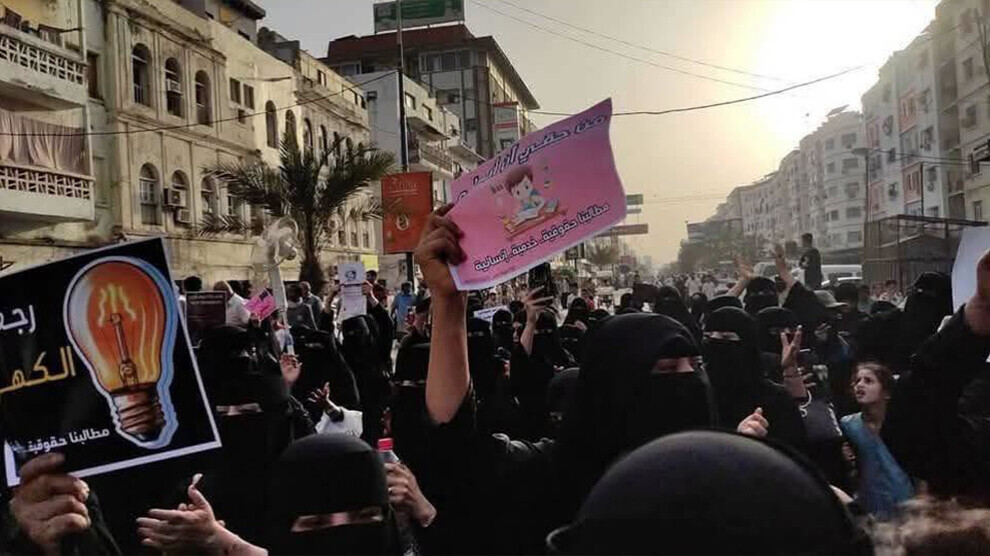
Popular anger did not stop at sleeping in the streets but translated into angry protests and gatherings that swept through several districts of the city. Protesters blocked main roads with stones and car tires, prompting a security deployment to attempt to reopen them and restore traffic flow.
Popular demands have escalated to include a package of rights that guarantee family stability and protection, foremost among them: providing radical solutions for the electricity sector and securing fuel for power plants, ensuring potable water supplies, developing health services, and addressing the economic and living conditions that have become a heavy burden on citizens.
These ongoing protests and the "Mattress Revolution" serve as a voice reflecting a bitter living reality, placing the relevant authorities before an urgent humanitarian and moral responsibility to secure the basic rights of citizens in Aden, far from temporary stopgap solutions.