
The legal Innovation Forum redefined the future of law in the age of artificial intelligence
The African Legal Innovation Forum is a regional platform examining digital transformation’s impact on justice, uniting legal experts, technologists, artists to explore how digitization reshapes legal services in Al age.
NAJWA RAHM
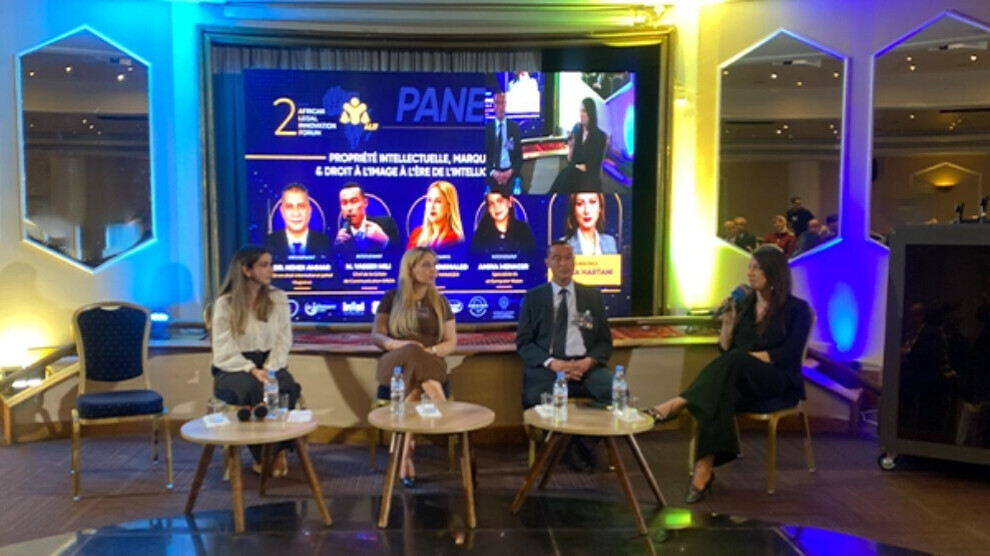
Algeria-The second edition of the African Legal Innovation Forum continues in the Algerian capital, under the supervision of Dr.Nahla Hartani, President of the Forum Foundation. This year’s event features a revewed vision that reshapes the relationship between law and technology, opening the door to a wide discussion on the future of the justice system in light of artificial intelligence and digital transformation.
The African Legal Innovation Forum, which began its work yesterday, Saturday, June 6, adopts in this edition a deeper approach to digital transformation within the legal system, through axes ranging from legal technology, legal operations, and legal design, to issues of personal data protection, electronic evidence and signature, digital payment, artificial intelligence, as well as open innovation and open data, and arbitration and dispute resolution mechanisms in digital environments.
Within this accelerating context, Rania Nachar, a lawyer and member of the National Council, presented a realistic vision of the transformation of the relationship between the citizen and legal services under digitization, considering that this transformation is no longer an option but a daily reality taking shape gradually.
She says: "The digital platforms launched by the Ministry of Justice today have changed the form of access to justice, as citizens can now file complaints or submit inquiries without always having to go through traditional complex procedures." However, she maintains a necessary caution, adding: "It is true that there are startups and applications that provide simplified and continuously available legal content, and this is an important development. However, legal information remains sensitive, and its accuracy must be verified through official channels or traditional procedures before relying on it, so that it is not used incorrectly."
In another corner of the forum, plastic arts were present as a parallel space for reflection on digital transformation, through the works of artist Safia Khelfalli Linda, who presented a visual experience blending Algerian identity with artificial intelligence techniques.
Safia Khelfalli Linda explains: "Artistic creativity today is no longer separate from technology. Rapid changes require the artist to keep up with the tools of the era." She adds that she worked on paintings that combine the image of the thoughtful Algerian woman and tattoo as a symbol of memory, while reshaping this visual heritage through the use of artificial intelligence.
She points out that "artificial intelligence is not a side option; it is a reality we live, and it is better to use it professionally. For me, tattoo is not just an aesthetic element; it carries stories from the memory of grandmothers. I tried to evoke them in my works and connect them to a contemporary language without losing their identity."
For her part, Meroua Ben Khaled, IT and digital transformation project manager, explained that this edition of the forum represents a qualitative shift in the discussion on artificial intelligence, data, and cybersecurity within the justice sector.
She says: "Artificial intelligence and open data have become practical tools that help lawyers and judges speed up case processing, improve access to information, and increase the efficiency of judicial work."
She added: "Today, technology is not limited to facilitating services; it also contributes to enhancing digital awareness, especially among women, by enabling them to use digital platforms to file complaints in sensitive cases such as threats or blackmail, without the need to travel, while ensuring the protection of personal data until legal procedures are initiated."