
The Kurdish Woman Proved That Freedom Is a Collective Right, Not a Privilege for a Select Few
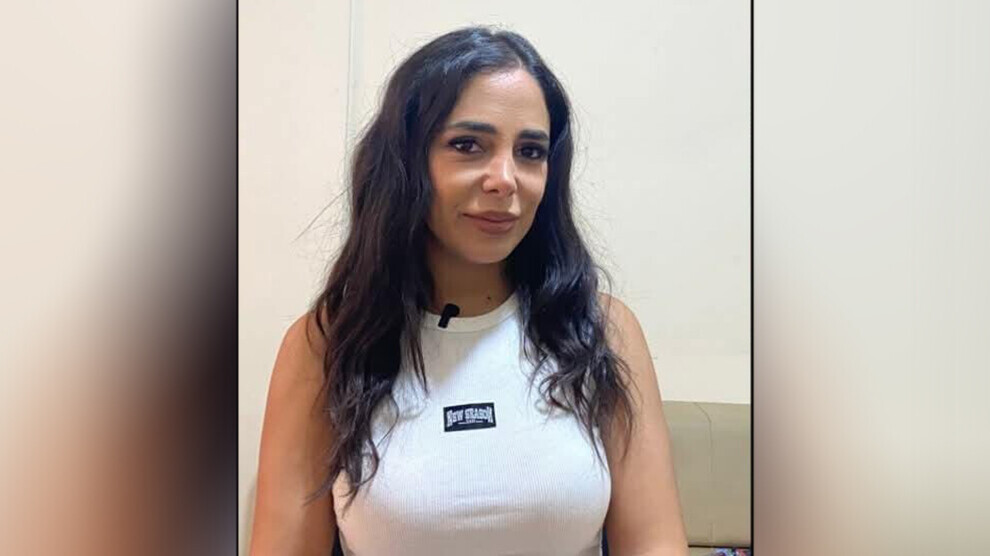
An article by Joya Hadshiti, member of the Jineology Academy in Lebanon
The Kurdish cause is not merely a conflict over land; it is the story of a people long deprived of their right to a name, a language, and a sense of belonging. It is the story of steadfast mountains and an identity that policies tried to erase—only for it to become clearer; of songs that were forbidden, only to turn into anthems of freedom. The Kurds have demanded nothing more than what all peoples demand: to have their voices heard and their stories written by their own hands, not by the pens of others.
At the heart of this story stands the Kurdish woman—not as a shadow of the man, but as one of the pillars of the cause. She has never been a mere spectator to her people’s suffering; she has been a partner in both pain and resistance. She bore arms when fighting was imposed, carried her child when displacement was forced upon her, and preserved her language in her memory when schools denied it. She was the mother who raised her children to love the land, the fighter who guarded the mountains, and the intellectual who defended identity with pen and thought.
The Kurdish woman has become a symbol of freedom because she confronted two forms of oppression at once: the oppression of occupation and the oppression of rigid traditions. Her revolution was therefore twofold: a revolution for her homeland and a revolution for herself. From refugee tents to battlefields, from folk songs to political discourse, she proved that she is not merely a victim, but a maker of history.
At its core, the Kurdish cause is a cause of justice and human dignity. The role of women within it is neither marginal nor incidental; it is proof that peoples do not become free unless their women become free alongside them. The Kurdish woman did not write her history with tears alone, but with patience, awareness, and determination to ensure that freedom is a collective right, not a privilege reserved for a select few.
The symbolism of the Kurdish woman is also embodied in her braid—those strands woven from hair, patience, and memory. The braid has never been merely a feminine adornment; it is a mark of belonging and identity, carrying within it the history of mothers and grandmothers. It is tied in celebrations and tightened in times of war; sometimes hidden out of fear of repression, and sometimes displayed proudly in defiance of those who sought to erase Kurdish culture. The Kurdish braid has become a symbol of resilience, as if each strand tells the story of a burned village, a forbidden song, or a language resisting oblivion. It is not merely braided hair, but a silent banner declaring: We are here, enduring like the braids of our women—neither unraveling nor breaking.
Women have become essential partners in the struggle. The Kurdish cause has granted women the space to become political voices, fighters, intellectuals, and decision-makers, after having been marginalized within their own society as well as within broader conflicts.
Moreover, the Kurdish cause has helped break the stereotype of the weak woman, as the Kurdish woman emerged as a militant defending her land and identity, linking the liberation of the homeland with the liberation of women, on the understanding that a society’s freedom cannot be complete if half of it remains in chains.
Through her participation in political, cultural, and military work, women have asserted their presence in decision-making centers and transformed their suffering into a public cause rather than a private matter. Thus, the Kurdish cause has become a means of women’s empowerment—not merely a battlefield, but a tool for redefining their role in society and in history.