
Sheikh Maqsoud and Ashrafieh Under the Fire of Forced Displacement and Global Silence
New waves of forced displacement are flowing from the neighborhoods of Sheikh Maqsoud and Ashrafieh toward the Jazira Canton, where displaced families are facing suffocating conditions in shelters and private homes.
Asmaa Mohammad
Qamishlo — The neighborhoods of Sheikh Maqsoud and Ashrafieh in the Syrian city of Aleppo continue to witness a dangerous escalation that has once again brought scenes of forced displacement and massacres against civilians back to the forefront. This escalation has forced thousands of families to flee once again toward the Jazira Canton, amid harsh humanitarian conditions, unprecedented overcrowding in shelters, and ongoing international silence regarding the violations being committed.
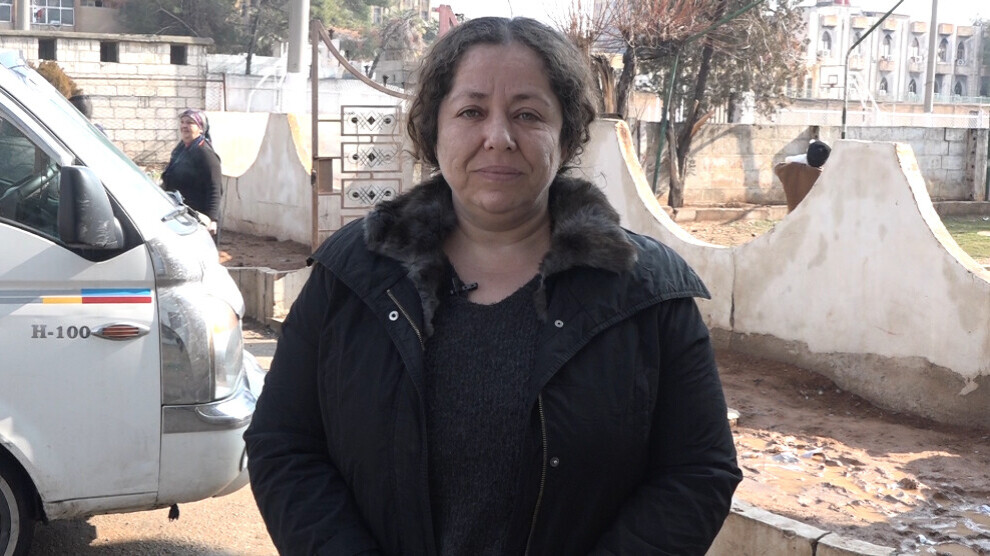
Speaking about the challenges faced by those displaced from these neighborhoods, Meshira malarashed , an administrator at the Afrin Social Association concerned with the affairs of the displaced, stated that what is happening today is not an isolated incident, but rather a new chapter in a long series of systematic displacement targeting the population of the region, particularly those displaced from Afrin and Shahba.
“Jazira Canton is now suffering severe population and humanitarian pressure due to the influx of tens of thousands of forcibly displaced people, amid ongoing attacks, deteriorating security conditions, and the absence of any effective international action to put an end to these violations,” she said.
Continued Targeting
Meshira malarashed confirmed that the Kurdish neighborhoods in Aleppo have witnessed a new wave of forced displacement in recent days, adding to a long record of repeated displacements imposed on residents over the years. This reflects the scale of the escalating humanitarian tragedy experienced by the regions of North and East Syria as a result of the brutal offensive carried out by jihadists of Hay’at Tahrir al-Sham.
She explained that Jazira Canton has become densely populated with residents and forcibly displaced people due to repeated displacement from one area to another.
“Families barely have time to recover from a previous displacement before finding themselves once again forced to flee under military attacks and intimidation policies practiced by armed factions loyal to the occupying Turkish state, alongside regional interventions and suspicious international silence regarding the grave violations committed against civilians.”
She added that these attacks coincided with extremely harsh humanitarian conditions during a bitterly cold winter.
“Shelters have become overcrowded beyond their capacity, and civilian homes in the city of Qamishlo and surrounding towns are filled to the brim. Some homes are hosting no fewer than five families, while in other cases more than ten families are living in a single house—an image that reflects an unprecedented level of humanitarian pressure.”
Stripping the Project of Its Substance
According to Meshira malarashed, what the areas of the Autonomous Administration are experiencing—particularly those that have adopted the Democratic Nation project—comes within the framework of systematic attempts to undermine this project and strip it of its substance. This is carried out through targeting the indigenous population, imposing a new demographic reality based on forced displacement, systematic extermination, and the perpetration of massacres against unarmed civilians.
She noted that the displaced people of Afrin have been subjected to a long series of forced relocations, starting from their displacement from Afrin to Shahba, then to Aleppo, and finally to the areas of the Jazira Canton—what she described as “an endless cycle of displacement,” imposed by ongoing attacks and military pressure carried out, she emphasized, by armed factions with direct support from the occupying Turkish state, under political cover and international silence, and even indirect legitimization by the transitional government in Damascus.
Old Partition Scenarios
She believes that what is happening today cannot be separated from the regional and international political context.
“A number of meetings and agreements held abroad, particularly in France, have revived old partition scenarios reminiscent of the Sykes–Picot and Lausanne agreements, where maps are once again redrawn according to the interests of dominant powers, far removed from the will of peoples, the rights of civilians, and the future and unity of Syria.”
Crisis Cell
On the humanitarian front, Meshira ملا رشيد explained that local councils formed emergency committees and a crisis cell from the very first moments of displacement and have been working around the clock to secure shelter and basic necessities for the displaced. She pointed out that more than one hundred shelters are distributed across Qamishlo, Amuda, Derik, and surrounding areas, hosting tens of thousands of displaced people, amid limited resources that she said “do not correspond to the scale of the catastrophe.”
She estimated the number of displaced people at more than 100,000 individuals, distributed across over 10,000 families, with the continued influx of displaced persons exceeding the region’s capacity to absorb them. This is despite ongoing efforts by local committees and the significant popular support provided by the people of Jazira, who opened their homes and offered assistance, in addition to support from some humanitarian organizations and the Kurdistan Region.
Meshira malarashed concluded by emphasizing that the primary demand of the displaced goes beyond food and shelter, focusing instead on their right to a safe and dignified return to their original areas under genuine international guarantees. She affirmed that “the Syrian people, who have made sacrifices, confronted terrorism, and liberated vast areas from ISIS, deserve peace, security, and stability today—away from projects of sedition and attempts to undermine the brotherhood of peoples and sow division among the components of society.”