
Rojava Between the Reality of the Syrian Conflict and the Path of Historical Transformation
Rojava remains an example of a political entity formed through its own will and led by women, one that has managed—through the harshest phases of the Syrian crisis and up to the current diplomatic moment—to alter the course of history.
MIZGIN ÇIÇEK
News Center – The emergence of the Autonomous Administration model in Rojava is directly linked to the political and administrative vacuum that resulted from the Syrian crisis after 2011. However, explaining this emergence cannot be limited to merely pointing to the retreat of state authority; at its core, the experience represents a continuation of a historical struggle waged by the Kurdish people against policies of denial and destruction imposed on them for decades. In this context, the Autonomous Administration was not merely an ideological choice, but a practical approach aimed at protecting civilians, ensuring the continuity of basic services, and safeguarding the social contract.
Before 2011, a large segment of Syrian Kurds was deprived even of citizenship, lacking official identification and political or social recognition. Under policies of marginalization, security repression, and cultural pressure, Kurds lived in a continuous state of “non-existence.” With the effective withdrawal of the Syrian government from northern regions in 2012, steps toward building mechanisms of self-administration accelerated, and local administrative structures emerged in areas such as Afrin, Kobani, and Hasakah, marking a historic turning point.
As the dynamics of war shifted and extremist forces such as ISIS rose, the issue of “self-defense” became an existential necessity. In this context, the establishment of the Syrian Democratic Forces (SDF) and the construction of Autonomous Administration institutions emerged as a political and practical response—not only for Kurds, but for all communities living in the region.
The Resistance of Kobani and Rojava’s International Emergence
The international presence of the People’s Protection Units (YPG) and the Women’s Protection Units (YPJ) became particularly prominent during the Battle of Kobani between 2014 and 2015. The resistance against ISIS demonstrated the influence of the Kurds in the Middle East before global public opinion and constituted a pivotal moment that strengthened the political trajectory of the Rojava experience. The resistance of Kobani was not merely a military victory, but a symbol of social and political resistance that cemented its place in historical memory.
Despite the fact that the Autonomous Administration established strong administrative, social, and military power on the ground, it continues to face the dilemma of international legal recognition. Hence arises the need to transform military strength and achievements into a recognized political status—a process that becomes increasingly complex over time.
Negotiations with Damascus and the Political Status Dilemma
With the announcement of the Syrian interim government, a new phase began for Rojava. On March 10, 2025, a series of agreements were signed between the SDF and Damascus within the framework of diplomatic negotiations. Although the agreement initially appeared to aim at resolving disputes, reducing centralization, and integrating institutions, it failed to provide a clear framework guaranteeing political recognition of the Autonomous Administration.
The agreement included key points, namely:
(a ceasefire and declaration of a truce – integration of the SDF and Autonomous Administration institutions into the state structure – a commitment to recognize the constitutional rights of Kurds – state control over border crossings, airports, and strategic resources – the return of displaced persons and the guarantee of security).
Although the agreement was considered an opportunity for a political solution, its implementation quickly stalled and disagreements became evident. While the Autonomous Administration demanded official recognition, Damascus insisted on centralized authority, which obstructed the negotiations.
On the ground, tensions escalated in areas such as Aleppo, Sheikh Maqsoud, and Ashrafieh between December 2025 and January 2026, revealing that the agreement had not been effectively implemented. Despite Damascus accusing the SDF of obstructing the agreement, realities demonstrated the continuation of pressure policies against the Autonomous Administration, prompting Kurds to remain wary of the risk of political elimination.
The Rojava Experience Is Not a Temporary Phenomenon
The Rojava experience was not merely a circumstantial outcome of war. Since 2012, the Autonomous Administration has been built through community organization, popular mobilization, and collective protection mechanisms. The region paid a heavy price in the war against ISIS and endured displacement, massacres, and destruction, yet it succeeded in establishing a clear line of existence and freedom. Therefore, the future of the Autonomous Administration cannot be confined to military balances alone; it is a societal will formed through a long historical struggle.
Tactical Cooperation, Not a Strategic Alliance
From the outset, the relationship between the United States and Rojava has been complex. Washington supported the SDF as an effective force against ISIS but did not offer long-term strategic commitment. The events of Afrin in 2018 and Serêkaniyê and Girê Spî in 2019 demonstrated that the United States could withdraw at critical moments. Rojava recognized this reality and therefore relied on its societal strength rather than dependence on external support.
Moreover, Turkey’s position within NATO affected Washington’s stance, as it prioritized maintaining alliance balances over protecting Rojava from airstrikes and security threats.
Debates on Integration: Surrender or Tactical Step?
The issue of integrating Autonomous Administration institutions into the Syrian state sparked wide debate. Some viewed it as a threat to Rojava’s achievements, while others considered it a political necessity. However, judging integration as “surrender” is a misleading simplification; the essence of the issue lies in the conditions, guarantees, and political framework upon which any agreement would be built.
With the presence of significant military and societal power, integration under certain circumstances could represent a tactical step or a means of activating new political tools.
Women in Rojava: From the Battlefield to Building a New Model
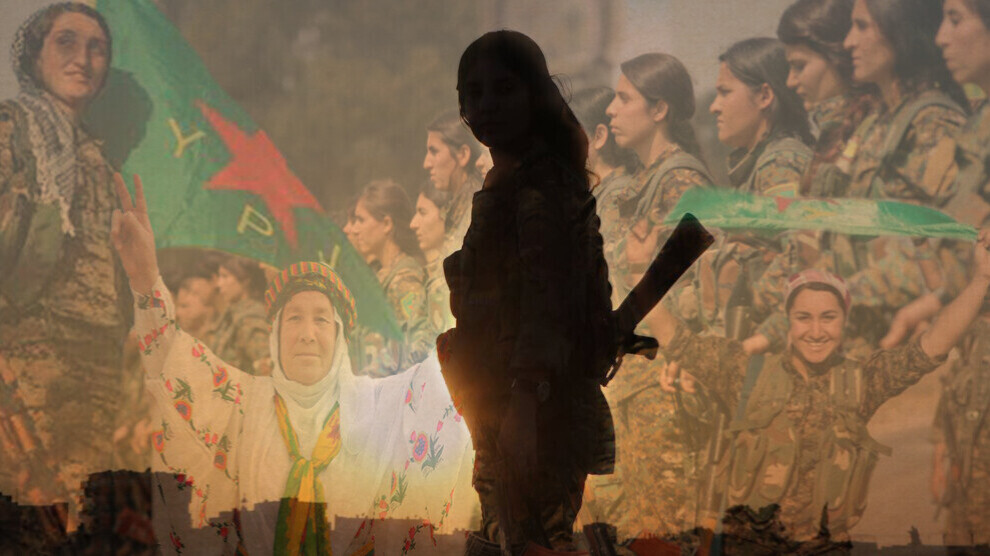
One of the most prominent features of the Rojava experience is the foundational role of women. In the darkest stages of the war, women were not merely fighters confronting ISIS; they were a political and social force that broke the boundaries imposed by patriarchal systems. Recent attacks targeting women—whether through killing or cutting their hair—are not merely acts of violence, but political messages aimed at women’s identity and the memory of resistance. Hair here is not a religious or ethnic symbol, but a symbol of identity and dignity.
In Rojava, women are no longer subjects of war; they have become founding forces of a new social model. Through the co-chair system, women’s organizations, communal life, and self-protection mechanisms, Rojava has presented a social alternative to the traditional male-dominated state model.
The strength of Rojava lies in the dynamics of social transformation led by women and in its ability to turn a local experience into a new historical model for the pursuit of freedom and democracy in the Middle East. Today, Rojava remains a space of resistance, an example of a new social contract, and a path toward a free life led by women.