
Ronahi Hassan: Women are essential partners in shaping Syria’s future.
Ronahi Hassan, spokesperson for Kongra Star, highlighted that the campaign with the Zenobia Women’s Gathering reached regional and international levels, emphasizing that ongoing support for Syrian women is crucial to ensure they achieve all their rights.
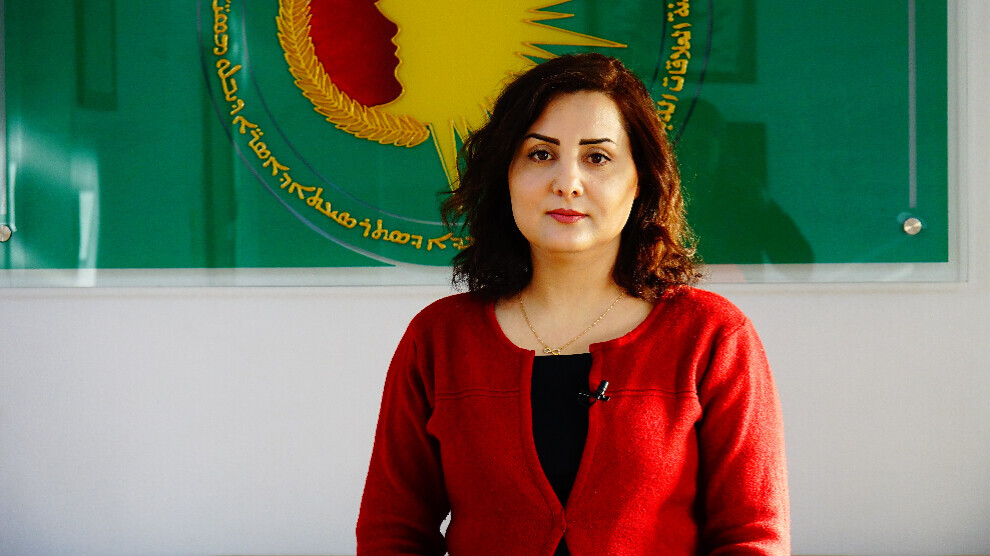
Surkhal Sheikho
Qamishlo — On September 20, Kongra Star and the Zenobia Women’s Gathering in Northern and Eastern Syria held a conference under the slogan “The Women’s Alliance: A Foundation for Justice and Democracy in a Unified, Decentralized Syria”, with broad participation from Syrian women.
The conference concluded with several resolutions, most notably the launch of a comprehensive campaign for women inside and outside Syria, aimed at building a democratic, decentralized, pluralistic Syria based on freedom and social justice.
Following this resolution, the Committee for Democratic Political Relations and Agreements in Kongra Star launched its campaign on October 12, continuing until November 12. Spokesperson Ronahi Hassan provided a detailed explanation of the campaign’s course and achievements.
Launching a campaign for a democratic, decentralized Syria
Hassan explained that the campaign “Through Women’s Alliance, We Will Build a Free, Democratic, Decentralized Syria” stemmed from the conference’s resolutions and represented a unifying decision for Syrian women. Its goal is to pressure the Syrian Interim Government to establish a broad foundation for democratic transition, ensuring a Syria governed by women’s will and inclusive of all communities.
The campaign began with statements in Qamishli and Raqqa, with wide participation from activists, politicians, independent women, and women’s organizations inside Syria, who presented their visions and demands for Syria’s future to the relevant committee. The campaign also involved prominent figures, political parties, and independent personalities from Northern and Eastern Syria, strengthening its participatory character.
Key objectives include building a new Syria, drafting a modern constitution guaranteeing the rights of all communities, and explicitly protecting women’s rights, especially given their marginalization in past political processes. One core aim is 50% representation of Syrian women in decision-making positions, reflecting their real presence in political and social life.
Hassan emphasized that uniting Syrian women against war, violence, and genocide is pivotal for the country’s future, and that building a democratic model in Syria could serve as an example across the Middle East, allowing diverse peoples to coexist equally and participate in collective governance.
Campaign reaches regional and international levels
According to Hassan, the campaign extended beyond Syria to the Middle East and worldwide, gaining support from dozens of countries, including Iraq, Lebanon, Egypt, Balochistan, other Middle Eastern countries, and Europe. Kongra Star and the Zenobia Women’s Gathering, together with Syrian women in the region, wrote a message outlining their vision for Syria’s future and constitution, sending it to relevant authorities.
The campaign resulted in over 90 statements, numerous supporting messages from women’s organizations, independent women, intellectuals, and politicians. It included five online webinars and one in-person seminar, giving the campaign significant momentum and broad impact.
Documents and evidence collected were sent to international bodies, including the United Nations, the Security Council, Human Rights Watch, women’s and human rights organizations, and parliaments, highlighting women’s role in building a democratic Syria with active participation in decision-making.
Hassan stressed that continued support is essential, noting that the campaign’s end does not signal the end of efforts. Women in the Middle East and worldwide must continue showing solidarity with Syrian women and participate in political change, as hundreds of women remain missing, face killings and rape, and human trafficking exacerbates the crisis.
She concluded by emphasizing that the need for a democratic system is more urgent than ever, requiring ongoing campaigns and activities until Syria becomes decentralized, pluralistic, and democratic. Support for Syrian women must continue until they achieve full constitutional, social, political, and cultural rights, which is fundamental for achieving justice and equality.