
Khadija Bağcı: The Turkish Judiciary’s Stance Increases Police Violence
After assessing the recent images of police violence in many cities, Khadija Bağcı stated that the judiciary is paving the way for the continuation of the growing violence by the police.
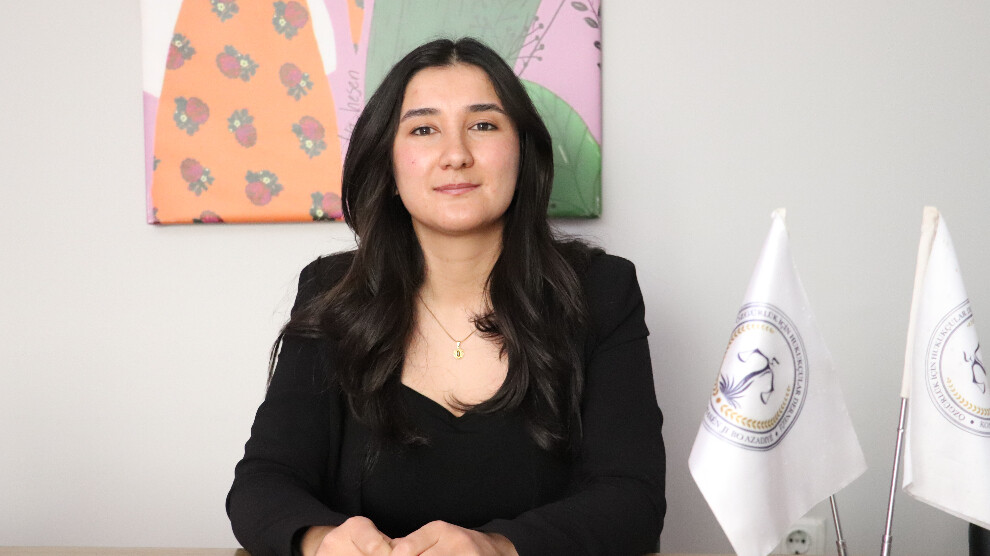
MEMİHAN HİLBİN ZEYDAN
Van – Nearly a year has passed since leader Abdullah Öcalan made his call on February 27, 2025. While many significant developments have taken place over the past year, the parliamentary commission established to resolve the Kurdish issue has reached the final stage of its work. However, images of police violence across many parts of the country—particularly in Kurdish cities—are casting a shadow over this process.
Police responded with violence to people who took to the streets in Northern Kurdistan to protest developments in North and East Syria and the attacks on Rojava. According to a report by the Lawyers for Freedom Association (ÖHD), at least 842 people were detained, 118 were arrested, including at least 25 children, and 106 people were subjected to beatings and ill-treatment while in custody.
Targeting Peaceful Actions
Khadija Bağcı, Co-Chair of the Van branch of the Lawyers for Freedom Association, referred to the “Peace and Democratic Society” process, stating that peaceful actions had been targeted and that the public had faced harsh police intervention.
She pointed out that the attacks on Rojava last January had sparked a widespread reaction:
“In all four parts of Kurdistan and in the diaspora, the Kurdish people and many segments of society wanted to exercise their right to protest peacefully in response to the attacks on Rojava. Numerous demonstrations were held, exercising the right to assembly and march, demanding an end to the attacks, calling on the international community to take action, and demanding that the attacks on the achievements of the Kurdish people in Rojava be exposed.”
She explained that the fundamental right to “assembly and demonstration” had been obstructed:
“These interventions hinder many basic rights, including freedom of expression, particularly the right to assembly and demonstration. Arbitrary detentions took place during the interventions. There are allegations that those taken into custody were subjected to torture and ill-treatment.”
Bağcı cited examples from several detention cases she closely followed, stressing that what happened was extremely serious and “restricts fundamental rights and freedoms and violates the prohibition of torture and ill-treatment.”
“Kurdish Rights Have Faced Strong Opposition in Turkey”
Khadija Bağcı emphasized that the police intervention was disproportionate:
“The protests were met with harshness in Turkey because they were actions defending the achievements of the Kurdish people in Rojava. Recently, Turkey has witnessed grave violations of fundamental rights against people seeking to exercise their right to freedom of expression through meetings and demonstrations.”
She stated that police interventions during the ongoing process were the result of state policies “oriented toward security” regarding the Kurdish issue and the Kurdish people:
“We have witnessed disproportionate interventions, physical violence, and torture against members of the free press who tried to cover the protests, followed by their detention and arrest. Once again, many lawyers, including members of our association, were subjected to violence and taken into custody.”
She added that violence also targeted representatives of political parties and human rights organizations, and that freedom of the press and the right to defense are also being violated in Turkey.
She stressed that “there is no national or international legislation that grants law enforcement the right to intervene against groups seeking to exercise their fundamental rights and freedoms in a way that exceeds their authority,” underlining the necessity of conducting investigations into law enforcement agencies that commit such crimes and abuse their power.
The Role of the Judiciary in Police Violence
Diyar Koç was subjected to torture at the Syrian–Turkish border during the protests that took place in the Nusaybin district on January 20 against the attacks on Rojava. The press reported on the police violence against protesters.
Recalling Diyar Koç’s experience, Khadija Bağcı said:
“Subjecting a person to physical violence and torture to the point of falling into a coma is a serious violation of the authority and limits of law enforcement.” She pointed to the role of the judiciary in incidents of violence and torture involving the police:
“This paves the way for the continuation of police violence in other cases. We are living in an age of advanced technology, and there are images recorded by the press and even by passersby. These images are evidence. Despite the presence of many recordings of these acts in the case files, no effective investigation is conducted. For this reason, the scale of violence continues to increase.”