
‘Political Islam Exposes Women and Children to Violence and Killing’
The impact of political islam about women and children is one of the most debated issues in the Kurdistan Region, amid differing opinions on its role in shaping social values and lifestyles.
Sulaymaniyah_In every society, the family constitutes the fundamedtal pillar for building social life and nurturing future generations. Therefore, any political or social change reflects, above all, on the family and its members. Over the past decades, the rise of political Islam and the assumption of power by some of its movements have raised wide-ranging questions about the impact of this pattern of governance on the lives of women and children and on relationships within the family.
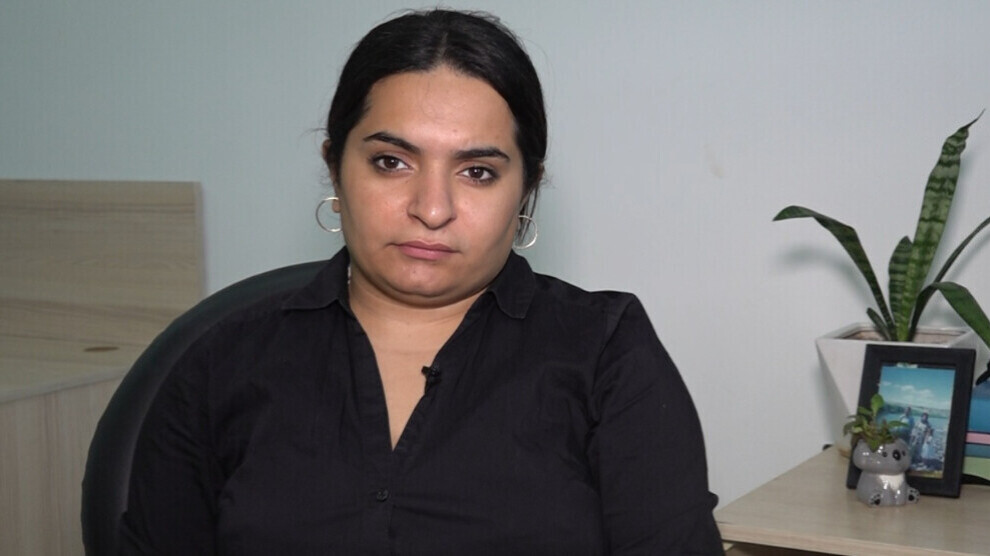
Various experiences indicate that these transformations were not limited to the political sphere but extended into homes and affected the details of daily life. Journalist Didar Shahla believes that political Islam sought, through a systematic vision, to penetrate society through clerics, organizing summer religious courses for children, and directing them toward political Islam ideas, exploiting the weak awareness of some families regarding the content of these courses, which, in her view, makes children more susceptible to adopting religious ideas with political dimensions.
"Political Islam Targets the New Generation"
Didar Shahla stated that the issue of political Islam and its impact on society has been a subject of debate for many years, and its effects appear evident in a number of countries, as these influences permeate individuals' consciousness in complex ways, affecting their ability to face challenges and preserve their social values.
She added that after 2008, the presence of media outlets affiliated with political Islam currents in the Kurdistan Region contributed to the wider spread of this ideology. Their goal, according to her, was to introduce political Islam's ideology into the core of society. She noted that the emergence of media channels affiliated with these currents, along with the spread of Turkish dramas and the marketing of certain styles of dress that she believes differ from Kurdish religious traditions, left tangible social impacts.
She also believes that parliamentary election results show that a wide segment of citizens do not support political Islamic parties. However, these currents, in her view, have managed over the years to consolidate their ideas through imposing social restrictions on women.
She added that the majority of citizens have maintained their religiosity and religious customs within the framework of Kurdish traditions, but the influence of political Islam remains present, especially through media and social media platforms, which, in her opinion, have contributed to increasing hate speech and division within society, with women and children being among the most targeted groups.
"Political Islam Imposes Control Over Children"
Didar Shahla points out that political Islam seeks, through strict laws and procedures, to influence children from an early age. These currents target children through multiple activities, including encouraging the wearing of the niqab for girls under the age of eight, and spreading ideas that consider a girl after this age to be a source of temptation for men.
She believes that this ideology deprives women of their independence and reduces them to being subordinate to men, considering that the spread of these ideas has contributed to an increase in acts of violence against women. She stated that news of killing, imprisonment, and violence against women has become recurrent, and that institutions and centers linked to this orientation work, in her view, to establish patterns of control over women within the framework of political Islam.
She also pointed out that some laws in Iraq contribute to the entrenchment of forms of physical and psychological violence against women and children. Therefore, political Islam focuses heavily on targeting children, as the future of society begins with new generations.
She affirmed that raising children's awareness is not easy, but it is essential to raise parents' awareness of the distinction between Islam as a religion and political Islam as a political project, considering that the two are not the same thing.
"The More Society Does Not Reject Political Islam, the More It Penetrates"
Didar Shahla said that political Islam seeks to build a social base that enables it to influence society and individuals, adding that it relies on creating a sense of social shame to pressure people, and that unless society rejects these practices, they will become increasingly entrenched, making it difficult to find effective mechanisms to confront them.
She added that society bears a great responsibility in guiding its members, and that political forces alone cannot impose this change if society is not willing. She also considered that religious schools represent, in her view, one of the challenges, because they direct children toward political Islam ideology through collective prayer and group Quran memorization, which may put a child who does not wish to participate under social pressure within the group.
She believes that children's will is often marginalized, and a large number of them do not choose this environment willingly but are sent to it in response to their families' wishes.
Journalist Didar Shahla noted that many families today direct their children toward educational courses that they themselves desire, not those chosen by the children. She gave an example from her family circle, where a child said: "Thanks to technological development, I can now listen to the Quran, and there is no need to spend a long time memorizing it. I would rather learn more about the Islamic religion." However, she explained that the child faced criticism from his parents because of this opinion.
This example demonstrates children's ability to think and bring about change, but the spread of political Islam ideas within some families, in her view, limits the freedom of the new generation—extending even to interfering in how girls wear the hijab.
Journalist Didar Shahla concluded by saying that political Islam operates in a manner based on tight control, making it difficult for individuals to free themselves from its influence. She called for raising family awareness and strengthening community consciousness to build families more capable of protecting their children and making decisions freely.