
One Month of Protests and Arrests Amid Uncertainty Over the Number of Victims
After one month of protests in Iran and Eastern Kurdistan, human rights and international reports document escalating repression, mass arrests, a deepening humanitarian crisis, and stark contradictions between official and independent accounts .
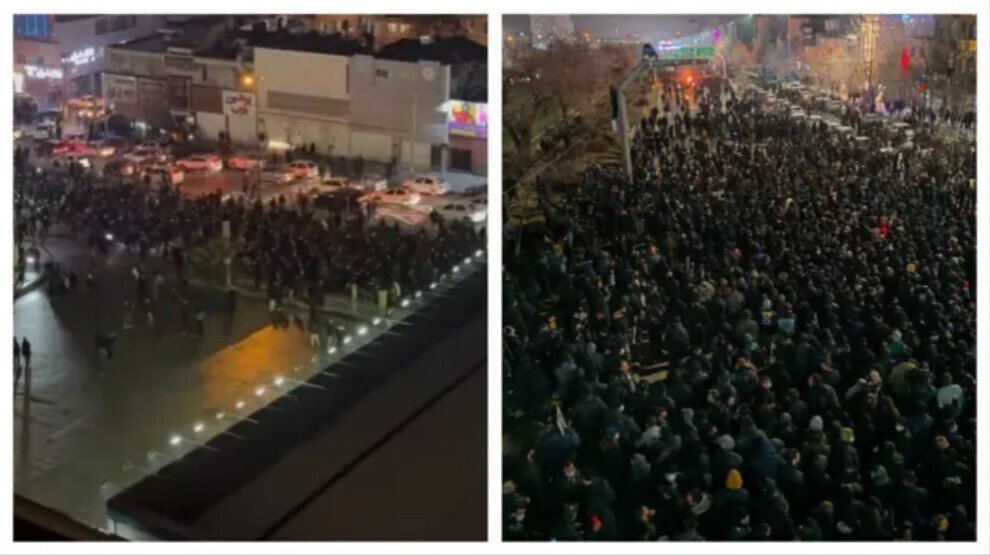
News Center — On Monday, January 26, the Human Rights Network of Eastern Kurdistan announced that, despite severe security restrictions and threats directed at families, it had succeeded in documenting the identities of 126 Kurdish citizens who were killed during the suppression of popular protests in various cities.
The Network stated that most of the deaths occurred in Kermanshah, Ilam, Tehran, Alborz, Lorestan, Razavi Khorasan, Isfahan, Markazi, Hormozgan, and Khuzestan, noting that the humanitarian situation continues to deteriorate amid official concealment of the scale of violence.
According to the Network, findings obtained through interviews with informed sources, eyewitnesses, and relatives of victims indicate that Iranian military and security forces widely used military-grade weapons to suppress the protests. In many cases, demonstrators were deliberately targeted in the head and chest.
The report further revealed that, in several cases, security agencies demanded large sums of money from families in exchange for handing over the bodies of the victims. In other instances, families were forced to register false causes of death, such as “falling from a height.” Reports also indicate that families were pressured and threatened to blame protesters themselves or to falsely identify the deceased as members of the Basij forces. The names and personal details of all Kurdish citizens killed have been published on the Human Rights Network’s website, categorized by province and city.
Meanwhile, the Human Rights News Agency (HRANA) reported that at least 19 citizens were arrested in Ilam city in recent days. Their identities and arrest dates were published, and they are residents of Dehloran, Darreh Shahr, Abdanan, Badreh, Ivan-e Gharb, Shirvan and Chardavol, Sirvan, and surrounding villages. Among those arrested were individuals who were injured at the time of arrest, as well as a student in Ilam.
At the same time, the “United Students” channel reported the arrest of Parisa Hariri, a 19-year-old student, during nationwide protests in Urmia. She was transferred to an unknown location, and her condition remains unknown.
On the other hand, Tasnim News Agency, affiliated with Iran’s Islamic Revolutionary Guard Corps (IRGC), reported that IRGC Intelligence arrested 27 individuals, including four women, in Ilam Province. Additionally, a Kurdish citizen from Oshnavieh was transferred to prison to serve a one-year sentence, while two other citizens from Mariwan and Ivan-e Gharb were imprisoned to serve previous sentences.
Taken together, these arrests—along with the complete lack of information regarding detainees’ conditions—indicate an intensification of security measures in Eastern Kurdistan and the continuation of intimidation policies, mass arrests, and systematic human rights violations against citizens and political prisoners.
Wave of Arrests, Forced Confessions, and Security Cover-Up
According to the latest data compiled by HRANA, affiliated with the Human Rights Activists Association in Iran, the total confirmed death toll from the protests has reached 5,848, including 5,520 protesters, 77 children under the age of 18, 209 security personnel, and 42 civilians. An additional 17,091 deaths remain under investigation.
The total number of detainees has reached 41,283, with 7,804 people suffering serious injuries. At least 240 forced confessions have been documented, while 11,023 individuals were summoned to security institutions. The total number of recorded protest incidents stands at 645, across 197 cities in 31 provinces.
In Yazd Province, the Iranian Broadcasting Authority (IRCC) also reported the arrest of 150 citizens, including several Baha’i citizens, by the Intelligence Department. These individuals were described in official statements as “leaders of the protests” and “linked to foreign media.”
Forced Confessions
Fars News Agency, citing information from the Quds Force, reported the arrest of 18 individuals and released video footage of their confessions, the circumstances of which remain unclear. Similar cases of forced confessions have been reported in the provinces of Qom, Borujerd, and Semnan. At least 11 videos of coerced confessions have been broadcast by media outlets affiliated with security agencies.
According to the “United Students” report, a student in Arak was arrested along with his father, mother, and brother. His mother and brother were later released on bail. The “Amir Kabir Bulletin” also reported the arrest of at least three students in Tehran, Tabriz, and centers affiliated with the Ministry of Intelligence.
Growing Fears Over Human Losses
Videos published from the Kahrizak Forensic Medicine Center and the makeshift morgue at Khorramabad Hospital show piles of bodies of those killed during the protests, once again revealing the scale of violence used to suppress demonstrations.
In this context, Baharan Taherkhani, a 23-year-old medical student at Qazvin University of Medical Sciences, died from gunshot wounds. Reports indicate that her family was pressured to surrender her body and faced severe restrictions on holding a funeral.
Meanwhile, the director of Farabi Eye Hospital in Tehran announced that by January 10, the hospital had admitted nearly 1,000 patients with severe eye injuries caused by bullets and high-velocity projectiles. Medical staff reported a shortage of beds due to the high number of injured, forcing them to use corridors to accommodate patients.
As families of detainees continue to gather for weeks in cities such as Karaj in front of prosecutors’ offices to seek information about their loved ones, government officials persist in refusing to provide accurate and transparent statistics regarding the number, whereabouts, and conditions of detainees.
Expansion of the Security Sphere and Militarization of Cities
Alongside the wave of arrests, reports indicate a widespread deployment of military and security forces across multiple cities. Videos published from Zahedan, following internet shutdowns, show armored vehicles, special units, and repressive motorcycle patrols on major roads. These movements—particularly in peripheral and remote areas—have heightened fear and public anxiety.
In the north, images from protest marches in Lahijan, despite strict internet restrictions, demonstrate that protests continue and that security controls have not prevented citizens from taking to the streets.
The Iran Human Rights Organization reported that security forces arrested doctors and raided makeshift medical shelters in an attempt to intimidate and prevent injured protesters from receiving treatment.
According to the report, Amina Soleimani, a physician and director of a dermatology and hair clinic in Ardabil, was arrested for treating injured protesters. The situation in Ardabil was described as “extremely critical.” Another source reported the arrest of four doctors for assisting injured protesters, and their fate remains unknown.
The report also noted that a volunteer relief worker who had turned his home into a shelter for the injured was arrested and beaten.
Internet Shutdowns: A Tool of Concealment in Ongoing Repression
The organization NetBlocks announced that after 17 days of widespread internet shutdowns in Iran—measures the organization said were aimed at concealing the violent suppression of protests—restrictions remain in place.
According to the organization, some users can access only a limited number of pre-approved services, and in some cases, only a few messages can be sent or received via censorship circumvention tools. NetBlocks emphasized that temporary and intermittent increases in connectivity create a misleading impression of a return to normalcy, while systematic disruptions and deliberate outages continue.
A Shocking Statistical Gap
According to a report published by Time magazine, two senior officials from Iran’s Ministry of Health stated that within just two days, as many as 30,000 people may have lost their lives during the anti-government protests.
Officials said the death toll during that period was so high that some medical facilities ran out of body bags, forcing them to transport bodies by trucks instead of ambulances. Time added that this estimate aligns with confidential statistics collected by doctors and emergency teams in Iranian hospitals based on recorded deaths.
The magazine stressed that due to severe media restrictions and widespread internet shutdowns in Iran, it was unable to independently verify the data, further deepening uncertainty and concerns over the true scale of human losses.