
Legal Vacuum and Lack of Protection… Women Targeted by Digital Bullying
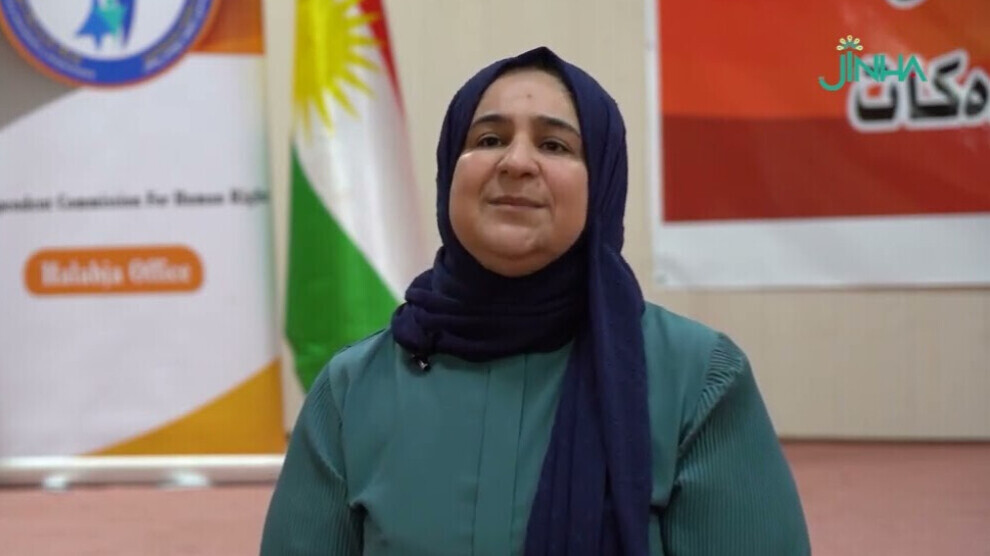
Gulistan Mohammed, head of the Human Rights Office in Halabja, warned the digital age enables widespread violations, stressing awareness and self-protection as the first line of defense.
Mehriban Salam
Halabja – At a time when digitalization is accelerating and the details of daily life are increasingly shifting into an open electronic space, women find themselves facing a new form of targeting. The violence that was once practiced against them in traditional society now appears through more advanced and dangerous tools.
The mindset that constantly carries the intention of targeting women finds in songs throughout the ages a means to nourish this mentality, continuing to cause harm to women. In today’s world, despite digital progress, misogynistic attitudes remain entrenched in their backwardness and exploit digital tools to target women. Digital bullying has become like a weapon in the electronic world; it accompanies us constantly. Therefore, awareness and proper management are necessary to confront it; otherwise, many violations will occur, making vigilance and self-protection essential.
Just as folk songs in the past were used to reinforce stereotypical images against women, digital platforms today have become an open arena where new forms of violence and abuse are practiced.
Society as a Victim, Women at the Frontline
Speaking about digital bullying, Gulistan Mohammed, head of the Human Rights Office in Halabja, says that this type of violation can be directed at anyone, whether a political or social figure or any member of society. She points out that the world is moving rapidly toward digitalization: employees’ salaries have become digital, work has become digital, and even travel and daily tasks now rely on technology.
“This development has made many things easier for citizens and freed them from the old classical model.”
However, she notes that a lack of sufficient awareness, along with the absence of laws protecting users, has made society unable to benefit easily from this development. “Because of the absence of laws, society as a whole has become a victim.”
She stressed that women continue to face various forms of violence despite technological advancement. “Women are victims because they are subjected to harassment and exploitation. For example, groups and pages have appeared claiming to offer job opportunities, but when we visit the addresses we find they do not exist and that it is merely deception. Children have also become victims and are heavily exploited. Political figures are subjected to digital violence through hacking bank accounts and similar acts. Women who attempt to reach political positions also become victims of bullying through social media and digital platforms.”
Citizens Without Protection in the Face of Digital Openness
Gulistan Mohammed explained that the current legal framework is unable to keep pace with the scale of digital openness. “We have a law related to the misuse of communication devices issued in 2008, but today, with all this digital openness, we still lack a law that protects us. If a journalist is subjected to digital violence, or if children and women face violations, there are no laws protecting them. Laws on digital violence and bullying must be amended, and parliament must issue a special law or amend the existing one so that citizens can resort to it when facing problems.”
She emphasized that digital awareness has become an urgent necessity, as citizens need to know how to use electronic devices and platforms safely. She also pointed to the emergence of companies claiming to provide protection against hacking without any guarantees of their credibility, creating another problem without clear solutions.
She further referred to artificial intelligence (AI) applications that can now imitate voices or produce content in someone else’s name, which opens the door to new forms of exploitation. “We all need to protect ourselves, because social media pages have no filters, and anyone can use them.”
In conclusion, Gulistan Mohammed stressed the importance of institutions and responsible authorities remaining vigilant to prevent the recurrence of such cases. “In Halabja, there is a special unit within the security forces that works on addressing these issues and tries, as much as possible, to protect citizens from falling into digital problems.”