
Lawyer Warns: Gains of the Women’s Revolution Are at Risk Unless Legally Protected
Lack of clear legal provisions and protection mechanisms in the SDF–Transitional Government agreement threatens women’s leadership in decision-making, demanding human rights action to protect gains.
ASMAA MOHAMMAD
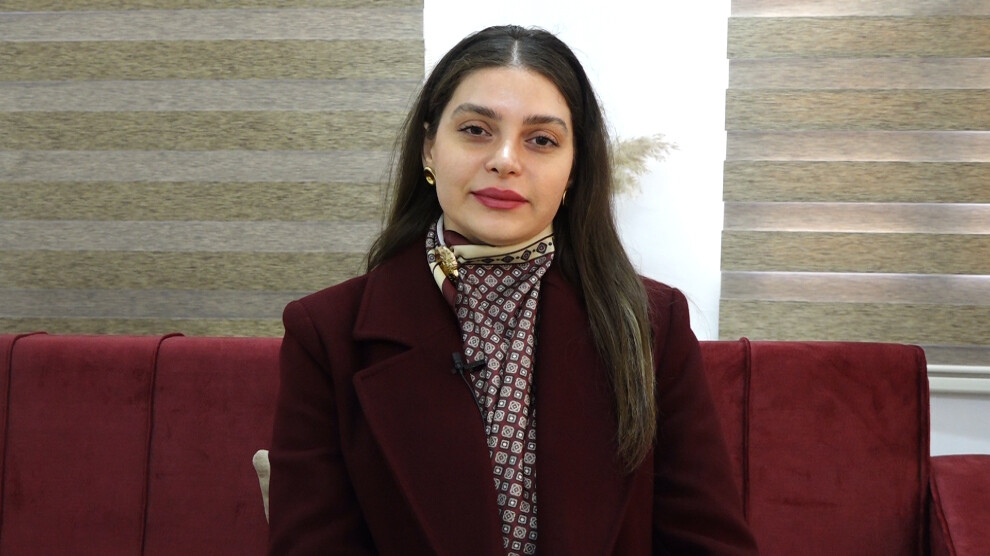
Qamishlo — Lawyer Jilan Hami from the city of Qamishlo affirmed that the agreement signed between the Syrian Democratic Forces and the Transitional Government carries both opportunities and risks for women’s rights in North and East Syria. She warned that the lack of clear legal texts and effective protection mechanisms places women’s role in political and social decision-making positions at risk of being marginalized or reduced to a merely symbolic role.
Fundamental questions are emerging regarding the future of women’s rights and achievements in North and East Syria. With the signing of this agreement—described as a conflict-management agreement—concerns persist over the extent to which women’s rights will be protected on the ground and whether their meaningful participation in political and social decision-making will be ensured, especially in the absence of clear provisions and binding implementation mechanisms.
To clarify these risks, lawyer Jilan Hami, a member of the Lawyers’ Union in the Jazira Canton, stated:
“What the current reality requires of us is to welcome the agreement between the Syrian Democratic Forces and the Transitional Government. However, this is not the end of the road; rather, it marks a new beginning and a renewed phase of political and social struggle. The agreement is not a sufficient guarantee of women’s rights unless it includes explicit provisions and clear protection mechanisms.”
From a legal perspective, she explained that rights-based evaluations are not based on political intentions, but on clear and binding legal texts supported by effective oversight and accountability mechanisms. She emphasized that “the absence of explicit legal provisions renders rights practically unguaranteed. Any commitment or agreement cannot be considered secure unless it is written, explicit, and not subject to suspension or interpretation.”
She further revealed that the current agreement suffers from clear gaps regarding women’s rights, as it does not include any explicit article or clear mechanism for the protection of women. Moreover, the roles of effective institutions and practical centers within the Autonomous Administration have not been announced, in addition to the absence of the co-leadership principle, which had played a key role in empowering women within previous administrative institutions.
Legal Gaps
Hami believes that these gaps pose a real threat to women’s active role, as they may lead to women being transformed “from essential partners in decision-making positions in the region into holders of a limited, symbolic role, with the potential re-emergence of patriarchal male dominance through new political methods, or the reduction of women’s issues to a humanitarian negotiation file.”
She added that moving from a conflict-management agreement to a genuine conflict-resolution agreement requires the precise documentation of all agreed-upon terms and the consolidation of all women’s rights within a new constitution and clear protection laws. Otherwise, women will face serious political and social risks, including exclusion from effective decision-making positions and the undermining of the Autonomous Administration model, which had stood as an example of resistance to dictatorial and fascist systems.
She stressed that civil society organizations and women’s rights groups are required to take clear legal steps to ensure that women are fundamental parties to negotiations, rather than secondary issues, stating: “We must make the women’s cause an integral part of the political process and the new legal frameworks.”
“Braids of the Struggling Woman”
Protecting women’s rights, she noted, is not a temporary issue but a foundation for sustainable social security. Accordingly, she emphasized the necessity of holding national women’s conferences across Syria to incorporate all legal, political, and social achievements into new laws and constitutions.
In conclusion, lawyer Jilan Hami stressed that any amendment or repeal of laws concerning women is invalid unless women are essential partners and decision-makers in the process. She stated:
“This revolution was the fruit of women’s struggle and carried the slogan ‘Woman, Life, Freedom.’ Women have always been the heart of the struggle and its backbone. We will continue this struggle under a new slogan: ‘Braids of the Struggling Woman,’ which requires a genuine legal and rights-based revolution to ensure the continuity of women’s role, achievements, and protection at all levels