
Three Years After the Turkey Earthquake… Absent Justice and an Unhealed Wound
Three years after Turkey’s 2023 earthquake, the wound remains open: thousands live in prefabricated housing, families seek justice, and the state faces accusations of crime.
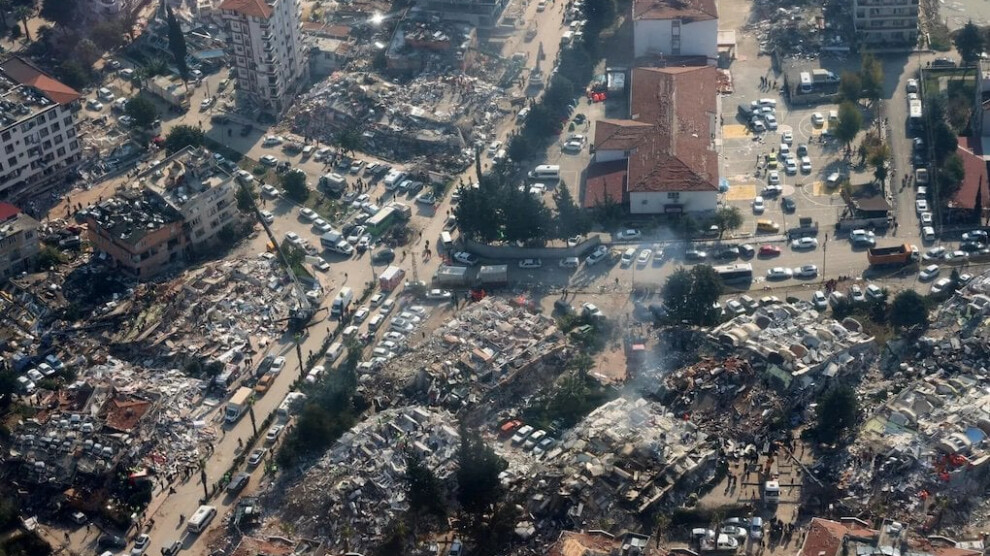
Istanbul — On February 6, 2023, at 4:00 a.m., Turkey witnessed one of the most devastating disasters in its history, when two consecutive earthquakes struck the province of Kahramanmaraş with magnitudes of 7.7 and 7.6. According to official figures, more than 50,000 people lost their lives, hundreds of thousands were injured, and millions across 11 cities were left homeless.
The tragedy was not limited to the force of the earthquake itself, but was compounded by a chain of negligence: delayed arrival of aid, people left to face death alone, and images of fragile buildings collapsing within moments—images that remain etched in memory as evidence of a failure to confront disaster.
Three years on, the scars of the catastrophe have not faded. Thousands of people still live in prefabricated containers, bodies continue to be recovered from beneath the rubble, and victims’ families persist in their search for justice. Yet no one has been held accountable for the losses, and no serious investigation has been launched into the series of failures that led to the high death toll.
The February 6 earthquake has gone beyond being a “natural disaster,” exposing a deep crisis in the state’s management of emergencies and a lack of accountability and oversight of buildings that turned into “houses of paper,” leaving this tragedy as an open wound in the collective memory.
Not a Natural Disaster, but a Collective Crime
One of the most symbolic cases associated with the February 6 earthquake is that of the Kırçuval Hotel in Malatya. Within seconds, the building collapsed, killing 21 people, including several players from the Malatyaspor sports club. Among the victims was 27-year-old volleyball player Muhammed Ağırbaş, who was preparing to get married.
His mother, Zeliha Ağırbaş, has been demanding justice for years, objecting to the defendants being tried on charges of “conscious negligence.” She insists the case is not merely about the collapse of a building, but a collective crime for which those responsible for the lost lives and institutional failures must be held accountable.
Following complaints filed by victims’ families, the hotel owner and then–Deputy Mayor of Malatya, Zafer Kırçuval, was detained, but released after three months. Later, the Malatya Public Prosecutor’s Office filed a lawsuit against several officials, engineers, and public employees.
All were charged with “causing death and injury through conscious negligence.” However, families continue to argue that the case should be classified under intent, not mere negligence, asserting that what happened was not an accident but a preventable collective crime.
“I Didn’t Believe It Until I Saw the Hotel with My Own Eyes”
Zeliha Ağırbaş recounts her story with bitterness, explaining that at first the news seemed like an ordinary tremor, and she did not grasp the scale of the disaster until reaching Malatya.
“We live in Istanbul, but my son Muhammed went to Malatya for sports. The municipality placed them in the hotel, and they couldn’t get out during the earthquake. He was engaged at the time. We tried calling him after the quake, but he didn’t answer. We didn’t expect the destruction to be this severe; we thought they were still asleep. Then his fiancée’s mother called me and said, ‘Did you hear there was an earthquake in Malatya?’ I said, ‘No.’ I didn’t believe it at all until I arrived in Malatya and saw the hotel with my own eyes. All that time, I was waiting for a call from Muhammed.”
She describes the journey to Malatya after the earthquake, highlighting the absence of official coordination or effective government presence at rescue sites:
“Airports weren’t operating. We bought plane tickets, but they were canceled. We bought bus tickets, and they told us we couldn’t go. We couldn’t travel by car either. On the morning of the second day after the earthquake, we managed to get a ticket to Sivas, then continued to Malatya. It was evening when we arrived, but the city seemed to have no streets. Navigation systems were useless, people were absent, and we saw no official rescue teams.”
“When I Saw the Hotel, I Collapsed”
Zeliha describes the moment she saw the Kırçuval Hotel after the earthquake, overwhelmed by shock and denial. She believed her son, with his physical strength and athletic experience, could survive—but the sight of the rubble erased all hope.
“The hotel was eight stories high, but it had sunk into the ground. When I arrived in Malatya and saw the hotel, I collapsed. Until that moment, I believed Muhammed would come out alive.”
She argues that the charges in the case are insufficient and that real responsibility—especially that of public officials—is being ignored. She stresses that the hotel owner was also the deputy mayor, making the case far bigger than an individual mistake, and insists the defendants must be tried.
“I went through nine months of shock. I couldn’t fight or even think properly. Then I asked myself: what can I do? Through Instagram, I found a group of families seeking justice and joined them. They helped guide me, and we began to struggle together, exchanging ideas and supporting one another in court. Then I met a lawyer in Malatya, and we agreed to work together. Our eighth hearing is on February 13, but we haven’t moved a step forward. The defendants are still living their normal lives outside prison, and the courts aren’t proceeding as they should. Sometimes I feel like we are the ones on trial, while they are the rightful ones. What kind of justice is this?”
“No Inspections Were Conducted”
Zeliha emphasizes that the collapsed building was a hotel and should have been subject to annual inspections by the Ministry of Environment and Urbanization.
“Were inspections actually conducted? And if they were, why weren’t they real inspections? Responsibility doesn’t lie only with those who built the building, but also with those who neglected oversight. In court, everyone acts as if they see nothing. For me, all these cases should be tried on the basis of probable intent. There is no such thing as ‘conscious negligence.’ Earthquakes are a reality in this country—didn’t they know that?”
Responding to defense lawyers who claim that “all of Malatya collapsed,” she says:
“You lived in Malatya too, and you’re still alive. So not all of Malatya collapsed. The building next to my son’s was damaged but didn’t collapse. Our relatives there are still alive. But my son lost his life there.”
“The State Should Protect the Victims, Not the Defendants”
Zeliha stresses that her pursuit of justice has continued for three years, yet the trials have made no tangible progress. She believes that the hotel owner’s position as deputy mayor directly influenced the course of the case, and that his influence persists to this day.
She explains that her struggle is not only for her son, but to prevent similar tragedies from happening to other families:
“We know expert reports were manipulated, but we can’t prove it, and the courts won’t accept it. This is the first time in my life I’ve needed justice. I was a simple woman—I worked honestly, raised my children, and was happy with a piece of bread. Now they’ve taken my simple bread, my happiness—they’ve taken my son. I will never give up this struggle.”
She affirms that what happened should not be considered fate, but a direct result of state and institutional negligence, and that she will continue demanding her rights:
“I attend court hearings, but they always try to silence me. In the last hearing, they placed a police officer next to me so I wouldn’t speak. If I can’t say what I know, if I can’t defend my rights, what is the point of my presence? I will continue this struggle as long as I am alive.”