
Women-Led Initiatives Drive Community Response to Combat Dengue Fever in Sudan
As dengue risks escalate in Sudan, women lead the community response, playing a pivotal role from the first cases.
Maysaa Al-Qadi
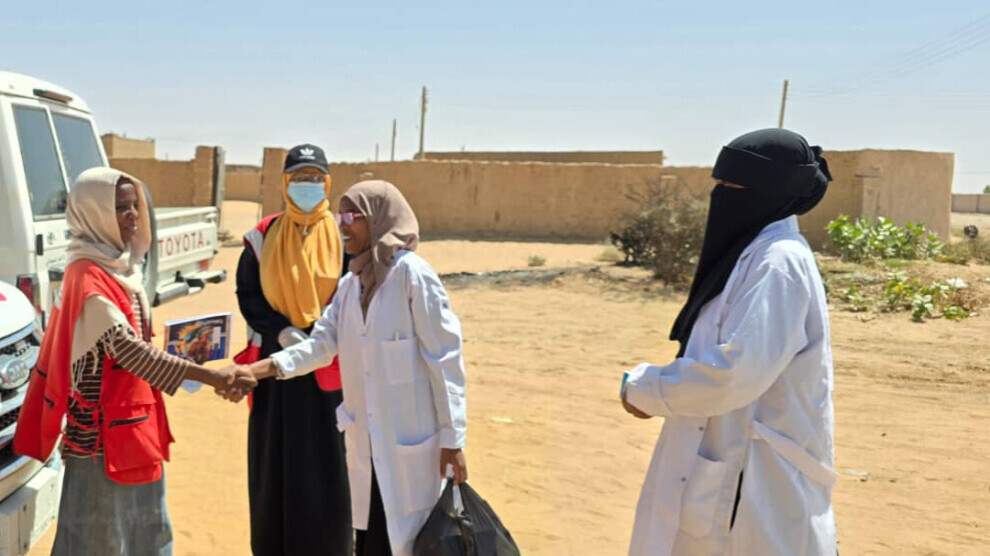
Sudan — Sudanese women have contributed to reopening health centers, organizing work within them, and following up on cases daily. This is in addition to their role in mobilizing the community, urging families to adhere to health guidelines, and participating in cleaning campaigns, spraying, and combating mosquito breeding sites.
Women also undertook a fundamental role in community awareness through home visits and direct communication with families, especially the most vulnerable groups, amidst limited resources and weak health coverage. Their role was not confined to the health aspect alone but extended to providing psychological and social support to patients and their families, and fostering a spirit of solidarity and mutual aid within the community.
This role was prominent in the efforts of the Sudanese Red Crescent Society in the Ghareeba area, where Shaimaa Bashir, head of the Red Crescent unit there, leads a field team that has been working non-stop since the first cases appeared. Efforts have included environmental sanitation, removing mosquito breeding sites, along with educating families on prevention methods and protecting children inside homes.
She affirmed that the society organized a free treatment day and set up an emergency tent operating 24 hours a day, providing medicine and medical support. This was an integrated effort involving neighboring Red Crescent units, volunteers, and official and community bodies.
Meanwhile, Salma Awad Fadil, a media figure and community activist, stated that the move was driven by a high sense of community responsibility, emphasizing that the core principle is to be present where needed, despite limited resources and the inability to cover all requirements.
She explained that the initial move came after receiving information from the Health Ministry about confirmed dengue fever cases in the area, prompting a group of women and activists to quickly coordinate and carry out an urgent field visit to assess the scale of the problem.
She added that documenting the situation and publishing distress calls via media and social media platforms helped spur the official response. A doctor was assigned and an ambulance was provided on the same day, along with the Red Crescent's intervention, which carried out spraying operations and combated disease vectors, especially mosquitoes.
Sustaining Efforts Without Interruption
For her part, Halima Fadl Al-Mawla, representing the Development Authority of Ghareeba Area – Social Office, said the local community mobilized immediately upon the appearance of cases. She explained that the old health center was reopened after equipment and supplies were transferred from the higher-level center to accommodate patients and provide urgent treatment services.
She added that health workers and volunteers continued working without interruption, affirming that efforts were sustained "day after day without absence" to follow up on cases and provide necessary care, praising the spirit of solidarity and cooperation among the area's residents.
She commended the significant role played by the Red Crescent, whose efforts included spraying, house inspections, combating disease vectors, community awareness, in addition to services provided by health authorities in Merowe.
The speakers emphasized that the next phase requires continued coordination between official and popular efforts, prioritizing health awareness, spraying, and providing treatment, aiming to contain the disease within the area and prevent its spread to neighboring regions.
This movement reflects the leadership role of women in facing health crises and underscores the importance of community initiatives in bridging health gaps in peripheral areas.