
Farmers’ suffering in Syria worsens between high costs and low crop prices
After heavy rains revived crops, the Syrian interim government's decision to set wheat and barley prices disappointed farmers like Wadhah Muhammad, facing exorbitant production costs unmet by the price.
Surkol Sheikho
Tel Tamer _ The Jazira region, famous for its vast plains and golden fields, is the country’s breadbasket. Despite its exceptional soil fertility, farmers there wage a daily battle to continue their work and preserve agriculture, which is an economic lifeline for thousands of families who depend on it for their livelihood.
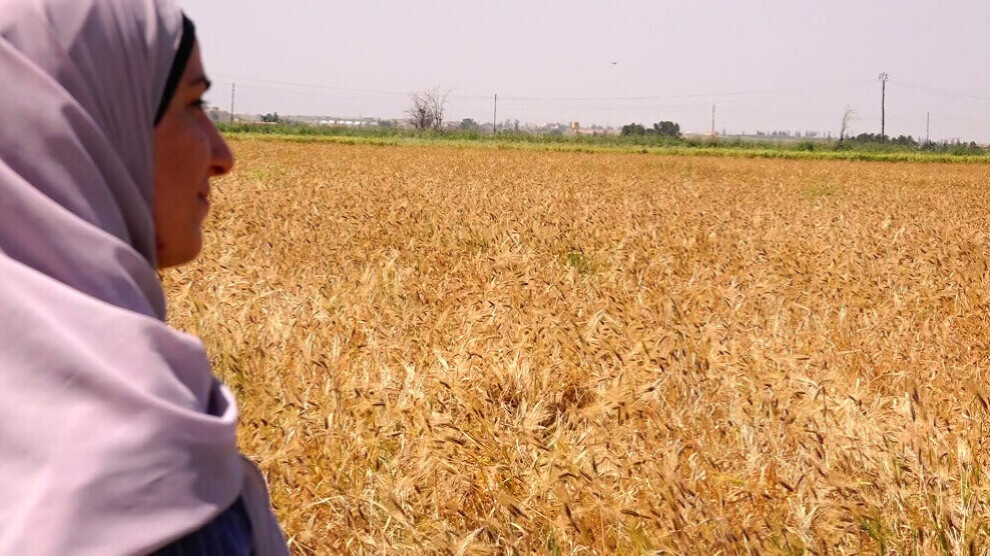
The farmers’ joy this year over the heavy rains and abundant wheat and barley harvest did not last long. That joy quickly turned into resentment following decisions taken by the Syrian interim government a few days ago. It set the purchase price of a ton of wheat at 46,000 Syrian pounds (approximately 300$), which came as a great shock to farmers. They saw this price as unfair, reducing their returns, especially since the decision came before they could even plow the land. After a season weighed down by plowing costs, rising fertilizer prices, and expensive production inputs, the pricing decision extinguished what remained of farmers’ hope. That is what happened to Wadhah Muhammad, one of the women from the Tel Tamer area in Hasakah province, who planted her land with barley this year – a crop known among farmers as “yellow gold.” She expressed her disappointment, pointing out that this price does not equal a full year of effort and expenses.
She explained that she planted 615 donums of land with barley this year, noting that the rainfall was very beneficial for the crop, but hailstones struck the barkey ears and damaged part of her planted land.
In her account of the hardships and challenges she faced, she said: “This season we endured great difficulty in planting barley – from river irrigation to operating water generation and consuming diesel at exorbitant prices. However, this year’s rains saved the land from drought and barrenness; without them, the soil would still be dry and barren to this moment.
Production costs are exorbitant compared to low purchase prices
Wadhah Muhammad explained that the purchase prices for the crop are very low and do not match at all the exorbitant costs incurred by the farmer to maintain irrigation generators and buy diesel at high prices. “Compared to the hard work we put in, it is necessary to raise the purchase prices of barley and wheat. buying these crops at cheap prices is a great injustice and oppression against farmers. Therefore, we call on the relevant authorities to lend a helping hand and support to farmers.”
She stressed the strategic importance of the two crops: "Wheat and barley are the yellow gold and the most important mainstay of food security in Syria. They also represent the historical and oldest source of livelihood for farmers. From this standpoint, the prices of these two golds must be given higher value. For us farmers to be able to continue production and have the capacity to farm again next season, the relevant institutions must pay attention to our suffering and support us."
She stressed the need to take necessary precautions against fires as the harvest season approaches. "The grain will start turning yellow after Eid al‑Adha, and then it will be time for harvest. We hope no fires break out in the fields this year. We will fill water coolers and place them near the fields so we can extinguish any fire quickly."
She indicated that the barley ears will turn yellow in a few days, marking the beginning of the harvest season. Regarding the preventive measures they intend to take, she said: "We hope that agricultural lands will not witness any fires this year. On our part, we will work to fill water tanks and place them close to the fields, so that we are ready to extinguish any fire quickly and in a timely manner."
Crop protection
Wadhah Muhammad warned drivers about the dangers of causing fires, saying: "Drivers must be careful and not throw cigarette butts on roads or near fields to avoid fires. We have put great effort into these lands, and it is everyone's duty to protect them so that our work is not lost in vain." She affirmed that protecting fields from fires is a shared responsibility, especially as the harvest season approaches.
Regarding harvest costs, Wadhah Muhammad hopes that the Syrian interim government will raise the purchase prices of barley and wheat, explaining the scale of burdens awaiting them during the harvest season. "We will need to buy a large number of sacks, and we will also pay for grain transport trucks. This will be very costly. Sack merchants and truck drivers must lower their prices, because high sack and transport costs combined with low barley and wheat prices cause great harm to farmers. Therefore, the interim government must raise the prices of barley and wheat and appreciate the farmers' effort. This land cannot continue to produce except through the cooperation of farmers and the government together."