
Kobanî… Humanitarian Challenges Amid the Ongoing Siege
The water crisis and the severe shortage of medicines have placed Kobanî in a catastrophic situation under the imposed siege.
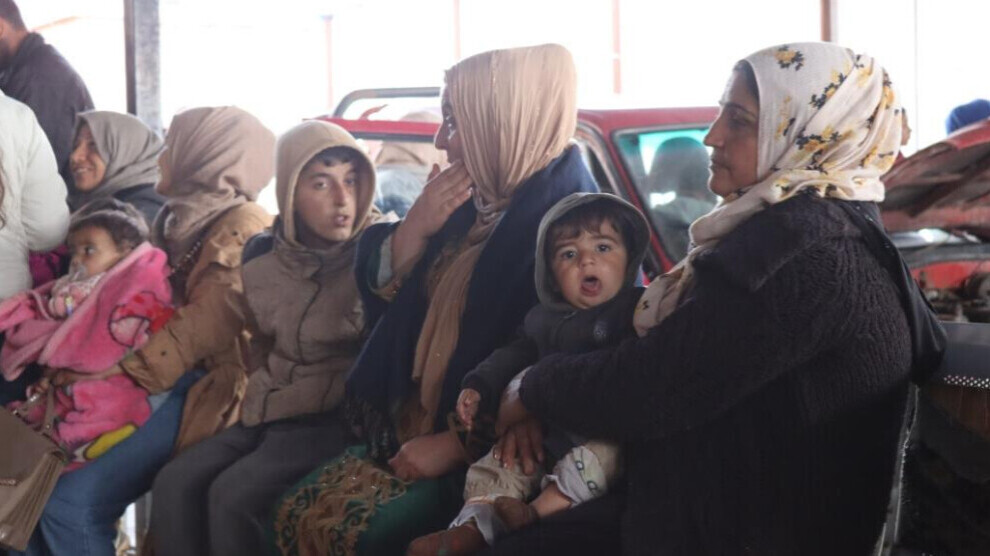
Kobanî – The interruption of water supply to the city of Kobanî for 27 days has created a humanitarian crisis, as civilians have been forced to resort to unhealthy methods to secure water, amid a sharp shortage of medicines and a suffocating siege on the city.
For 27 days, the city of Kobanî in Rojava has been living under a tight siege, one of its most serious aspects being the water cut-off, along with the depletion of medicines and food supplies in shops. This has negatively affected the lives of residents, especially in terms of health, as people have been using untreated well water, which has led to poisoning among a large percentage of the population—mostly women and children. Meanwhile, Kobanî Municipality and the Water Authority are working to restore electricity to the water stations and bring them back into service after a long outage.
27 Days Without Water
Zozan Khalil, co-chair of the Water Institution in the Euphrates Canton, said:
“On January 18, electricity was cut off from all water stations supplying the city of Kobanî and its countryside. This coincided with a wave of displacement toward the city, which increased the population density.”
She pointed out that:
“The lack of water forced residents to find alternative solutions, mainly bringing water from wells. Because the water was not sterilized, diseases spread among civilians. Water is the main lifeline; its absence or unsafe consumption negatively affects human health.”
She confirmed that the Water Institution:
“tried to provide water to residents by operating the stations on generators, but we failed because the stations require a high level of electrical power. We were forced to use unclean well water and distribute it by tankers to residents and displaced people, and even that did not meet the needs of everyone in the city, which caused the water crisis.”
After electricity returned to the city, the municipality and the water institutions began efforts to reconnect power to the water stations, and it is expected that they will resume operation in the coming days.
Provision of Medical Services
In this context, Aziza Ibrahim, co-chair of the Health Authority in the Euphrates Canton, said:
“For more than three weeks, a suffocating siege has been imposed on Kobanî, marked by the cut-off of water and electricity. This has negatively affected the residents and particularly the health sector.”
She confirmed that:
“The health centers still operating are the National Hospital, the Maternity Hospital, two private hospitals, and Mishtenur Hospital. Due to the recent attacks launched by the Damascus interim government, many health centers in the countryside—such as Sarrin, Jilabiyah, Qaderiyah, and Khanak—have gone out of service, while the Qinya clinic has returned to operation after being out of service for several days.”
She added that:
“Residents from the front-line villages moved to the city center and are staying in schools and mosques. They are suffering from very difficult health conditions amid the severe cold, the lack of water, and unhealthy food, which has contributed to the spread of diseases among them.”
She stressed that they are:
“providing all possible services with the available resources despite the severe shortage of medicines. The Maternity Hospital is running out of anesthetics and laboratory supplies, and diabetes medications such as insulin have become completely unavailable in the city.”
She emphasized the need to lift the siege on the city, warning that if the situation continues, hospitals will go out of service, especially with the number of patients at the National Hospital reaching no fewer than 400 per day.
High Rate of Poisoning Cases
For her part, a nurse at Kobanî Hospital, Hêvîdar Sheikh Mohammed, said:
“The rate of water poisoning among residents has recently increased significantly due to drinking unsterilized water, and the lack of medicines has further worsened the health situation.”
She pointed out that:
“The population increase in the city as a result of the recent wave of displacement caused by the attacks has put us in front of a health disaster, in addition to the severe shortage of medicines. The hospital can no longer accommodate the number of patients.”
She called for lifting the siege on Kobanî and allowing medicines to enter the city, warning that the continuation of the current situation will lead to a humanitarian catastrophe in the region.