
How Can It Be Ensured That Women's Rights Do Not Remain Hostage to Political Transformations?
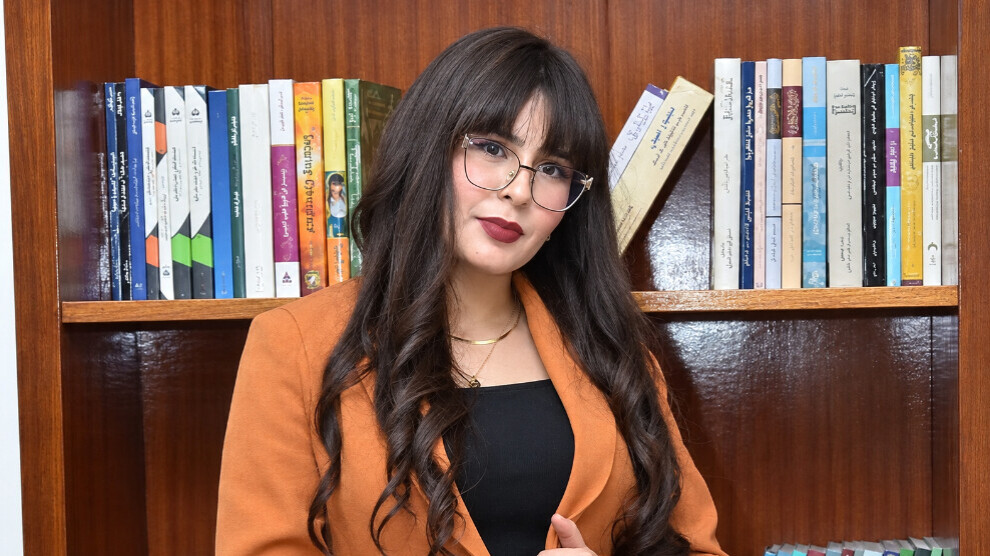
An Article by Tunisian Jounalist ZOHOUR-AL MASHRAQI
When a Kurdish woman ties her braids in preparation for resistance, it does not appear as merely a detail in her appearance, but as an image that encapsulates a political and social experience that has tried over years to redefine women's position in society and their participation in decision-making.
In northern and eastern Syria, where the Rojava experience was formed, women's presence was not limited to confrontation arenas, but extended to administration institutions, community work, and culture, within a model that sought to transcend the traditional marginalization of women and involve them in managing public affairs.
However, the transformations that Syria is witnessing place this experience before a question that transcends the limits of military confrontation: What is the fate of women's gains, when the balances of power change and institutions and political alliances are reformulated? Can these gains withstand in light of a reality whose final features have not yet become clear?
The Rojava experience was not merely an emergency response to war conditions, but was linked to a political and intellectual project that sought to reorganize the relationship between women, society, and authority. The co-presidency model, alongside women's institutions and structures, provided a space for women's participation in positions of responsibility and decision-making, in an attempt to transcend political and social patterns that have long confined their roles to the private sphere.
The experience acquired additional importance through the presence of women belonging to multiple national and cultural components, from Kurdish to Arab, Syriac, and others, in a political and societal space that sought to build forms of joint administration. The bet here was not limited to increasing the number of women in positions of responsibility, but included raising a broader question about the possibility of changing the rules that produce marginalization and redistributing power based on gender and affiliation.
Today, this question is increasing with fears about the future of women's institutions in northern and eastern Syria. News related to targeting women's symbols and vandalizing some monuments and statues also raises questions about the place of women's memory in the struggle over the region's identity and future.
The connotations of these attacks deserve a reading that goes beyond the act of vandalism itself to researching the context in which it occurred, the messages it may carry, and the parties responsible for it. Public symbols are not just physical markers; they are part of the way societies remember their history and determine the figures and values that deserve presence in their shared space.
When women are the subject of this representation, the discussion also becomes connected to their right to recognition of their role in history and politics, not as victims of war only, but as actors in shaping society and its future. However, reducing everything the experience faces to a conflict between women and their opponents is not enough to understand the complexity of the scene. The future of women's institutions is affected by military and political power balances, the nature of existing understandings, and the position of women's rights in any upcoming political arrangements. The fundamental challenge remains knowing whether women's participation will be treated as a principle that should be guaranteed, or will remain linked to political circumstances that may change from one phase to another.
Hence, the discussion should not be limited to defending the Rojava experience or celebrating what it achieved, but should include evaluating its gains and limits, and listening to the women who lived this experience with their various affiliations. What has actually changed in the lives of Kurdish, Arab, and Syriac women? What does each of them fear losing? And what guarantees do they need so that political participation does not turn into a temporary gain imposed by exceptional circumstances?
Answering these questions is necessary because protecting women's rights cannot be based on symbolism alone, however strong these symbols are. It needs institutions capable of continuing, rules that guarantee representation and accountability, and political and social recognition of women's right to independent and effective participation in determining the fate of their societies.
The responsibility for defending these rights does not fall on the women of Rojava alone. Women's experiences that open new spaces for participation and equality raise questions that transcend their geographical borders, and call for the attention of feminist and human rights movements in the region and the world.
Statues and monuments may be vandalized, and institutions may face crises that threaten their continuity, but the fate of political experiences is not decided by symbols alone, nor can their survival be guaranteed by merely clinging to their memory. What decides it is the ability of societies to protect what has been achieved, transform participation from an exception into a rule, and turn rights from political promises into actual guarantees.
The questions raised by the Rojava experience are not separate from a broader discussion in the region about women's ability to protect their gains and ensure the independence of civil spaces that defend their rights.
In Tunisia, where the feminist movement has accumulated a history of legal and civil struggle, questions also emerge about freedom of civil work and the independence of human rights and women's organizations. Despite the difference in political and institutional contexts between the two experiences, they meet at a fundamental question: How can it be ensured that women's rights do not remain hostage to political transformations, and that they are based on independent institutions and legal and societal guarantees that protect their continuity?
For this reason, the braid that women weave remains more than an image of resistance. It is a reminder that freedom is not a moment that is wrested and then ends, but a path that needs protection, review, and renewal.