
Genologia launches the "Justice and Development" project to enhance women's rights and empowerment during 2027
The "Justice and Development" project, launched by the Genologia Center for Thought and Studies, combines research, training, and field work, and also includes activities within the 16 Days of Activism against Gender-Based Violence campaign.
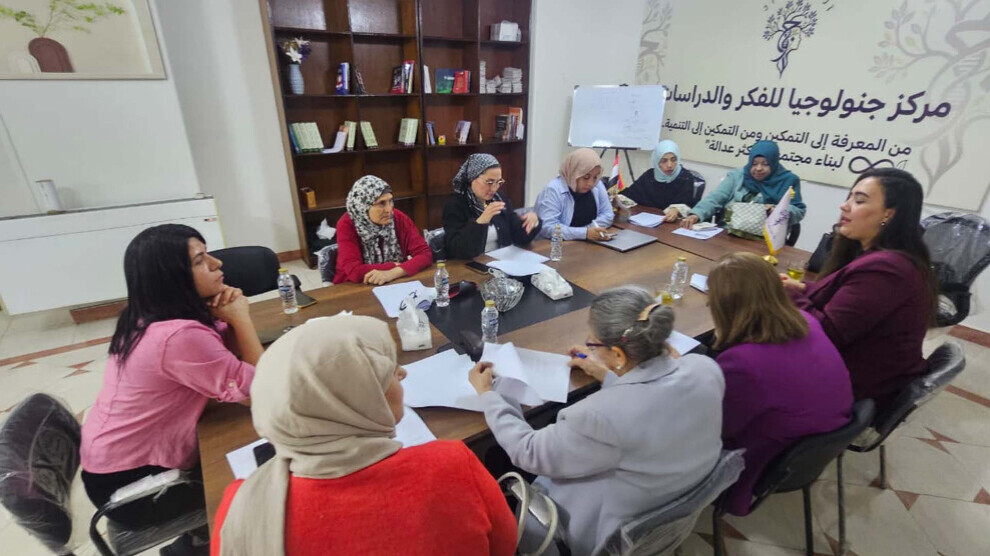
EGYPT— The "Justice and Development" project, launched by the Genologia Center for Thought and Studies, includes tracks comprising a series of awareness and community activities, a study of legislation related to women, monitoring various forms of violence, in addition to the economic empowerment of working women with the aim of enhancing rights awareness.
The Genologia Center for Thought and Studies launched the "Justice and Development" project, which extends from November 2026 until December 2027, and aims to enhance the rights of women and girls, support their participation in public life, and link legal and social justice with economic empowerment and sustainable development through a research, training, and field program.
The launch of the project came with the participation of a number of specialists, experts, and academics, including Dr. Dina Mohsen, head of the Genologia Center for Thought and Studies, Ms. Nujin Youssef, the center's executive director, human rights activist Karima Al-Hefnawi, Ambassador Amna Mohsen from Yemen, Dr. Mona Al-Hadidi, professor of media at Cairo University and member of the Supreme Council for Media Regulation, Palestinian writer and researcher Sonia Abbas, and researcher and journalist Nisreen Maatouk.
Dr. Dina Mohsen, head of the center, said that the project proceeds from considering justice as an entry point for achieving equality and equal opportunities and building a more cohesive society through the production of knowledge and rights research, and enhancing awareness and dialogue to confront violence, discrimination, and exclusion. She added that the project includes an axis for combating violence against women, part of whose activities is linked to the 16 Days of Activism against Gender-Based Violence campaign, through awareness and rights events addressing digital and domestic violence and electronic blackmail, and allowing listening to survivors' testimonies and introducing protection mechanisms.
The project includes six main axes, including legal and rights justice through "Her Right to Know" workshops and a study of legislation related to women, and combating violence through awareness campaigns, listening sessions, and monitoring various forms of violence, in addition to the economic empowerment of women workers in the informal sector and discussing issues of social protection, the wage gap, and entrepreneurship.
The axes also include women's issues and peace in conflict areas, documenting the experiences of women in Palestine, Sudan, Yemen, and Syria, and knowledge and media justice through "Women's Pens" workshops and training on artificial intelligence tools, in addition to supporting political and social participation and training young women in leadership, negotiation, and managing initiatives.
Expanding the scope of attention to women in conflict areas
The center's executive director, Nujin Youssef, stressed the importance of expanding the scope of addressing women's issues in conflict areas to include Syria, Yemen, Sudan, Palestine, and Afghanistan, while studying the laws, customs, and legislation affecting their rights, and highlighting women's models who have reached leadership and decision-making positions and rights and community work. The experience of Kurdish women under the Rojava revolution, which was called the "Women's Revolution," was also addressed.
The project targets women and girls, workers in the informal sector, women breadwinners, survivors of violence and conflicts, in addition to researchers, rights activists, media professionals, women leaders, and civil society institutions.
Within the framework of following up on implementation, the center has set indicators to measure the results of activities, including studies, seminars, training workshops, campaigns, and partnerships, and the extent of improvement in participants' knowledge of their rights and the arrival of research results to decision-makers. The project also aims to establish a knowledge observatory to monitor the situation of women, issue an annual report, and build a database of researchers, experts, and rights activists, in addition to creating a network for advocacy and networking, and transforming study results into policy and legislative proposals, provided that quarterly follow-up reports are issued to monitor achievement and challenges.
The project comes under the slogan "Justice and Development... From Rights to Participation... From Fairness to Development," based on the importance of enhancing women's rights and participation as a pillar for building a more equitable and sustainable society.