
Lorstan Darwish: Media Is the Living Memory of Society
Free media documents peoples' struggle and protects identity from erasure, while feminist vision adds human depth to the living archive, turning words into a bridge carrying truth and resistance across generations.
NAGHAM JAJAN
QAMISHLO_Responsible media is the force that builds a free consicoucness and critical thought in society, as its role transcends conveying abstract news to be a living witness to transformations, a voice for hidden facts, and an archive documenting the experiences and struggles of the people, ensuring the protection of their identity and collective memory from disappearance and transmitting them safely across generations.
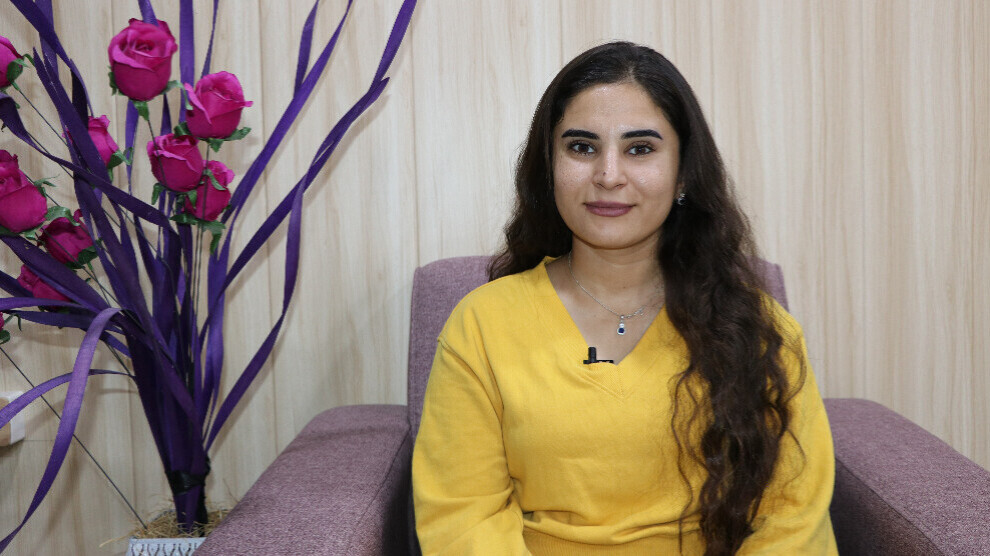
Regarding the role of media in building awareness and its importance in protecting societal memory, as well as transmitting historical facts from generation to generation, our agency conducted the following dialogue with journalist Loristan Darwish:
What is the impact of media in building an aware and perceptive society?
The foundation of media stems from society, and without a doubt, its impact — positive and negative — falls on society itself. Media is known as the fourth estate, but in the twenty-first century it has become in practice one of the main forces that directs and influences society. On the positive side, media plays a prominent role in protecting society's values, existence, identity, and gains, and becomes its voice.
Journalistic work is not easy, and the journalist faces difficult circumstances and conditions in their career. But despite all obstacles, it is necessary to be a voice for their society, meaning protecting culture, history, values, and identity and transmitting them.
From this standpoint, media must turn into a memory that preserves the events, experiences, and transformations of society for future generations. In this framework, and with the development of media amid the Rojava Revolution, we were able to closely learn about many cultures and societal values and broaden our horizons of understanding of the other, given the region's diversity with its different and multiple components.
Media plays a vital role in bringing closer and strengthening relations between components, and spreading common values. To this day, thanks to media, many people wish to learn each other's languages and learn about their cultures better. This indicates that media is not just a tool for conveying information, but is a bridge connecting societies, and helping build understanding, mutual acceptance, and societal progress.
How can media turn into memory and transmit the history of society from one generation to another?
The journalist's role is not limited to documenting events only, but also builds a living archive of history and protects its truth from disappearance. Thanks to research and media efforts, many historical facts that were previously obscure to us have been highlighted.
The history we knew before was often written according to the mentality and vision of states. Today we can look at our history with a different vision and learn about the facts that were hidden. This is the product of research, investigation, and the long struggle to reach the truth.
Through the struggle of the Kurdistan liberation movement, ongoing for nearly 50 years, we learned about many aspects of our hidden history, and we realized that protecting history is part of the struggle for our existence and identity. Without a doubt, this history will be an important legacy for future generations, so that they know under what circumstances our society lived, and what sacrifices it made to reach its current gains.
Every journalist not only conveys information to the people through the news, but also develops awareness, reveals facts, and makes the events of the era part of societal memory. In this context, the war that took place in Rojava was widely documented thanks to the media, despite all the difficult conditions and dangers.
Journalists in Rojava faced extremely harsh conditions that threatened their lives, but they continued working to convey the voice of truth and document events. Often, they headed to the sites of events and revealed the truth to the world, fully aware that they might not return from that path. This proves that journalism is not just a profession, but a historical responsibility that protects facts and conveys the voice of society to current and future generations.
How can female journalists convey women's voice and issues to society?
Women are the foundation of society and play a prominent role in all areas of life. In the media field as well, female journalists, through their own vision and deep understanding of societal problems, can shed light on different aspects of events and convey the voice of diverse societal groups to the people. Journalism for women is not just a profession, but an important opportunity to convey facts, protect rights, and participate in building societal awareness.
With the development of the Rojava Revolution, women took historic steps in the media field, given their role in founding television channels, news agencies, radio stations, and magazines, which shows that women are capable of bearing the responsibility of media institutions independently, and of having a role in decision-making.